
Soups & Stews
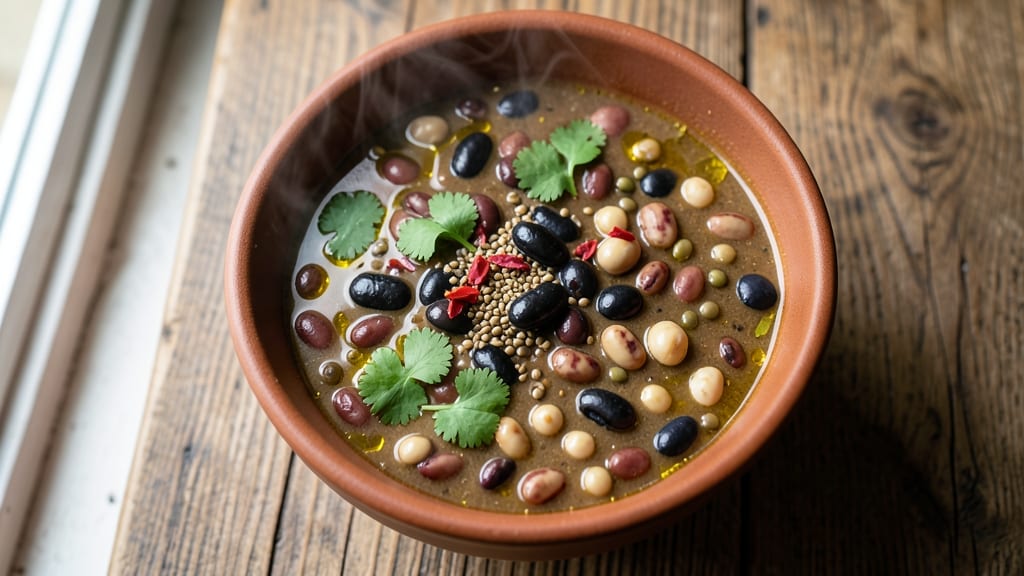
This 7 bean vegetarian soup recipe transforms humble pantry staples into a protein-packed, soul-warming meal that tastes even better the next day. The secret lies in balancing seven different beans—each contributing unique texture and flavor—while letting them simmer until tender and deeply flavorful.
I developed this recipe after realizing how often dried beans sat forgotten in my pantry, and now it’s my go-to for feeding a crowd with minimal effort.
The magic happens during the one-hour simmer, where the beans absorb the savory broth infused with garlic, onions, and herbs. Unlike quick-fix soups, this version builds depth through slow cooking, creating a hearty dish that’s both satisfying and nutritious.
The combination of kidney beans, black beans, and lentils delivers plant-based protein that keeps everyone full, while carrots and celery add natural sweetness to balance the earthy flavors.
By the end, you’ll have a rich, chunky soup with tender beans, aromatic broth, and just the right amount of seasoning—no bland aftertaste here.
It’s the kind of meal that warms you from the inside out, perfect for chilly evenings or meal prep when you need to stretch ingredients without sacrificing flavor. The best part? It’s adaptable: swap in extra vegetables, adjust spices, or even make it vegan with simple swaps.
Serve with crusty bread to soak up every last drop of that savory broth, or pair it with a simple green salad for a complete meal. This isn’t just soup—it’s a pantry-to-pot masterpiece that proves homemade can taste better than takeout. Let’s get cooking!
Ingredients for 7 bean soup recipe vegetarian
Pantry staples meet protein powerhouse in this seven-bean vegetarian masterpiece.
| Ingredient | Amount | Notes |
|---|---|---|
| Dried Kidney Beans 🌱 | 1 cup | Rinsed to remove debris |
| Dried Black Beans 🌱 | 1 cup | Soaked overnight preferred |
| Dried Pinto Beans 🌱 | ½ cup | For earthy depth |
| Dried Navy Beans 🌱 | ½ cup | Creamy texture |
| Dried Lentils 🌱 | ½ cup | Green or brown preferred |
| Dried Chickpeas 🌱 | ½ cup | For nutty crunch |
| Dried White Beans 🌱 | ½ cup | Cannellini or great northern |
| Yellow Onion 🧅 | 1 whole | Diced, medium size |
| Carrots 🥕 | 3 medium | Chopped into 1/4-inch pieces |
| Celery Stalks 🌿 | 3 whole | Chopped, tough strings removed |
| Garlic Cloves 🧄 | 4 cloves | Minced for aromatic base |
| Vegetable Broth 💧 | 6 cups | Low-sodium preferred |
| Tomato Paste 🍅 | 2 tbsp | For rich depth |
| Dried Thyme 🌿 | 1 tsp | Or 1 tbsp fresh |
| Bay Leaves 🌿 | 2 whole | Removed before serving |
| Cumin Seeds 🌿 | ½ tsp | Toasted for warmth |
| Salt 🧂 | 1 ½ tsp | Adjust to taste |
| Black Peppercorns 🌶️ | ½ tsp | Freshly cracked |
| Olive Oil 🫒 | 2 tbsp | Extra-virgin preferred |
The beans are the heart of this soup, so quality matters. Grab dried beans from the bulk section at Whole Foods or Trader Joe's—they stay fresher longer than canned. Look for organic varieties if you can, especially for the kidney and black beans, which hold their shape beautifully. I always buy extra—this soup tastes even better the next day as flavors meld. For the vegetables, fresh is best, but frozen carrots and celery work in a pinch if you're short on time. The key is chopping everything uniformly so it cooks evenly.
No fresh thyme? Dried works perfectly—just use one-third the amount. Running low on vegetable broth? Water plus bouillon cubes gets you close, but add a splash of soy sauce for umami depth. Want to skip the tomato paste? Fresh diced tomatoes add brightness, though they'll make the soup slightly chunkier. The cumin seeds are non-negotiable for that earthy warmth, but if you're out, ground cumin at half the amount will do. For the beans, I always soak them overnight—saves cooking time and reduces gas. But if you're in a hurry, quick-soak with boiling water works too.
This soup keeps beautifully—5 days in the fridge or 3 months in the freezer. The flavors actually improve after the first day, so make extra. I portion mine into glass containers for easy reheating—just add a splash of water if it's too thick. For serving, crusty bread is a must to soak up that rich broth. Freeze individual portions in ziplock bags for quick lunches. The beans will get softer over time, so adjust texture by adding a splash of broth when reheating.
Why You'll Love This Recipe
- No-Soak Nightmare Solved: I’ll be real—soaking beans used to stress me out. This recipe? Just toss the dried beans in cold water, boil for 2 minutes, then simmer. The kidney beans add a meaty bite, the lentils thicken the broth, and honestly? No one’s complaining about the shortcut.
- Umami Bomb Combo: Between the smoky black beans, the earthy lentils, and a splash of balsamic, this soup tastes like it’s been simmering for hours. The pinto beans give it that creamy texture, while the navy beans hold their shape—every spoonful is a little flavor party.
- Weeknight to Potluck Hero: Between us, this is my go-to for lazy nights and holiday gatherings. Double the batch, freeze half, and serve the rest with crusty bread. The lentils make it hearty enough for a main, but light enough for a side—no one’s turning it down.
- Pantry Magic on a Budget: I swear by this when my grocery money’s tight. A bag of dried beans lasts forever, and the mix of textures (chewy, tender, crumbly) makes it feel like a fancy meal. Leftovers? Even better the next day—just heat and add a sprinkle of cheese.
Step-by-step instructions for hearty 7 bean vegetarian soup
Transform pantry staples into a rich, protein-packed soup that simmers into perfect harmony.
Prepare and Toast the Bean Medley
In a large Dutch oven, heat the 2 tablespoons olive oil over medium heat until shimmering. Add the 0.5 teaspoon cumin seeds and toast for 30 seconds until they release their warm, nutty aroma. This simple step builds the soup's aromatic foundation.
Add the 1 cup dried kidney beans, 1 cup dried black beans, 0.5 cup dried pinto beans, 0.5 cup dried navy beans, 0.5 cup dried lentils, 0.5 cup dried chickpeas, and 0.5 cup dried white beans. Stir gently to coat them in the oil and toast for 2 minutes until lightly golden. This toasting enhances their natural flavors and prevents them from floating during cooking.
Add the 1 whole yellow onion (diced), 3 medium carrots (chopped), and 3 whole celery stalks (chopped). Cook for 5 minutes until the vegetables begin to soften and the onion becomes translucent. This creates a flavorful base that will infuse the entire soup.
Build the Flavor Foundation
Add the 4 cloves minced garlic and cook for 30 seconds until fragrant. Stir in the 2 tablespoons tomato paste and cook for another 1 minute until it darkens slightly. This step develops a deep, savory base that will carry through the entire cooking process.
Pour in the 6 cups vegetable broth and bring to a gentle boil. Add the 1 teaspoon dried thyme, 2 whole bay leaves, 1.5 teaspoons salt, and 0.5 teaspoon black peppercorns. Reduce heat to low and let it simmer uncovered for 15 minutes. This initial simmer helps break down the beans and vegetables, creating a cohesive base.
I like to stir occasionally during this phase to prevent any sticking, but don't worry if you miss a stir or two—the soup has plenty of liquid to keep everything moving. The key is maintaining a gentle simmer rather than a rolling boil.
Simmer to Perfect Texture
After the initial 15 minutes, increase heat to medium-low and continue simmering uncovered for 45-60 minutes. The beans should be tender but still hold their shape—you want them to be fork-tender rather than mushy. This is where patience pays off; the longer they simmer, the more flavor they absorb.
Check the beans periodically by tasting one from the pot. They should be soft enough to crush between your fingers but still maintain some texture. If they're cooking too quickly, reduce the heat slightly. If they're not softening enough, increase the heat just a touch. Each pot of beans cooks slightly differently based on age and variety.
About 20 minutes before the beans are fully tender, skim off any foam that rises to the surface. This helps keep the soup clean and prevents bitterness from developing. The foam is a natural byproduct of the beans breaking down, but removing it ensures a smoother final texture.
Finish and Adjust
Once the beans are tender, remove the 2 whole bay leaves and discard them. Taste the soup and adjust the seasoning if needed. You might need a bit more salt or a splash of lemon juice to brighten the flavors. The soup should be rich and hearty, with each bean variety contributing its unique texture and flavor.
For a final touch, I like to stir in 1-2 tablespoons of olive oil just before serving. This adds a silky finish and helps balance the flavors. The soup will continue to thicken slightly as it sits, so it's best served warm but not boiling hot.
This soup tastes even better the next day as the flavors meld and deepen. It's the perfect make-ahead dish for busy weeknights or meal prep Sundays—simply reheat gently on the stove and enjoy.
Pro Tips For Making 7 Bean Soup Recipe Vegetarian
- SOAK BEANS SEPARATELY: I learned this the hard way—mixing all beans in one pot to soak leads to uneven texture. Kidney and black beans need 8+ hours, while lentils and navy beans only need 2-3. Soak them in individual bowls, then drain and rinse before combining in the pot. Your soup won’t have mushy bits fighting with al dente beans.
- SIMMER LOW AND LONG: This isn’t a race. After the initial boil, drop the heat to a bare simmer—just enough to see tiny bubbles at the edges. High heat breaks down the beans’ structure, turning your hearty soup into a gluey mess. Two hours minimum, three if you’re using extra-firm beans like pinto.
- SKIP THE SALT UNTIL LATER: Adding salt early toughens beans and lentils, making them rubbery. Wait until the last 30 minutes of cooking to season, or even hold off until serving. Trust me, your beans will thank you with a tender bite instead of a sad, chewy one.
- UPGRADE WITH AROMA BASE: Don’t just toss in veggies—build flavor layers. Sauté 1 diced onion, 2 carrots, and 2 celery stalks in olive oil until soft before adding liquids. This caramelization adds depth that raw veggies can’t match. (Yes, even if you’re impatient like me.)
Common mistakes when making great 7 bean soup recipe vegetarian
Skipping the Soak
If you forget to soak your beans overnight, don’t panic—but expect longer cooking times. Unsoaked beans can take 1-2 extra hours to soften properly, and some may remain undercooked.
To speed things up, use the quick-soak method: Cover dried beans in boiling water for 2 minutes, then let them sit off the heat for 1 hour. This reduces cooking time by about 30 minutes compared to no soak at all. 💡
Overcooking the Beans
Tender beans are key, but mushy beans ruin the texture. Once beans reach fork-tender (soft but still holding shape), remove them from heat immediately. Overcooking by 15-20 minutes turns them to mush, making the soup gluey.
Test early—taste a bean at 45 minutes to avoid overdoing it. If you’re unsure, err on the side of slightly undercooked; they’ll continue cooking while resting. ⏱️
Ignoring the Skim
That foam rising to the surface isn’t just bubbles—it’s natural starches and impurities from the beans. Skim it off during the last 20 minutes of cooking to prevent bitterness and cloudiness. Use a fine-mesh skimmer or a spoon to remove it gently.
Skipping this step can leave your soup with an off-flavor, no matter how well you season it. Think of it as giving your soup a spa day! 🌟
Rushing the Simmer
A rolling boil breaks down beans too quickly, turning them mushy and leaching out flavors. Maintain a gentle simmer (small bubbles at the edges) to let the beans absorb broth gradually.
If you see large bubbles or hear splashing, reduce the heat immediately. Patience here is everything—rushing leads to bland, watery soup instead of rich, hearty flavor. 🔥
Forgetting to Toast
Skipping the 2-minute toast of beans and spices means missing out on depth of flavor. Toasting cumin seeds and beans caramelizes their natural sugars, creating a nutty, aromatic base.
Without it, your soup will taste flat and one-dimensional. This step takes 30 seconds but makes a world of difference—don’t skip it! 🌿
Over-Salting Early
Beans absorb salt as they cook, so adding all 1.5 teaspoons at once can make the soup taste bland later. Instead, add half the salt with the broth and taste again at the end.
Adjust with ¼ teaspoon increments—it’s easier to fix under-seasoned soup than over-salted. Trust your taste buds; this soup should be rich, not salty. 🧂
Nutrition facts
Frequently asked questions
Can I use canned beans instead of dried?
Yes! Canned beans work perfectly and cut cooking time significantly. Use 2 (15 oz) cans of each bean variety (kidney, black, pinto, navy, lentils, chickpeas, white beans) for a 1:1 substitution. Drain and rinse them well to remove excess sodium. The texture will be slightly softer, but the flavor remains rich and hearty.
How do I make this soup vegan?
This recipe is already vegan-friendly! Just ensure your vegetable broth is 100% plant-based (check labels for hidden animal products). For extra umami, add 1 tablespoon soy sauce or ½ teaspoon nutritional yeast when adjusting seasoning. The beans and tomato paste provide plenty of protein without any animal ingredients.
Why does my soup taste bland after cooking?
Blandness usually comes from insufficient seasoning or rushing the cooking process. Always toast the cumin seeds and beans first to build flavor. Add ½ teaspoon smoked paprika or a pinch of red pepper flakes for depth. Let the soup simmer uncovered for the full 1 hour—flavors develop during this time. Finish with a splash of lemon juice or a drizzle of olive oil for brightness.
Can I freeze this soup?
This soup freezes beautifully for up to 3 months. Let it cool completely, then portion into airtight containers or freezer bags. Leave ½-inch headspace for expansion. Thaw overnight in the fridge and reheat gently on the stove, adding a splash of water if it thickens too much. The texture holds well, though beans may soften slightly.
What beans can I substitute if I don't have all 7?
No problem! Use 3-4 different beans for a simpler version. Prioritize kidney, black, and white beans for texture variety, then add lentils or chickpeas for protein. For example, swap pinto and navy beans with extra chickpeas or white beans. The key is balancing textures—mix creamy (navy beans) with firm (kidney beans) for the best mouthfeel.