
Main Courses
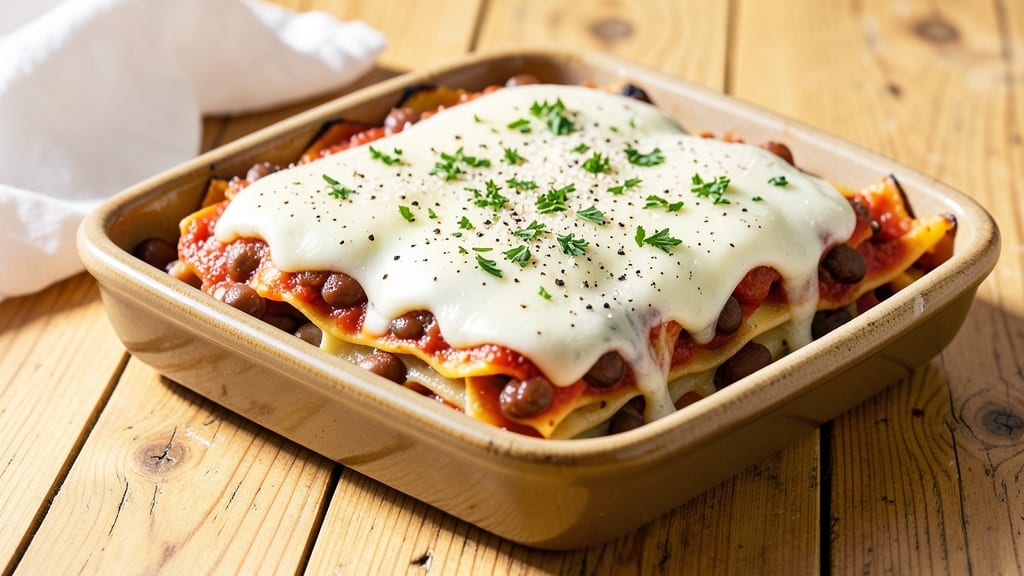
This baked bean lasagne recipe transforms humble pantry staples into a hearty, restaurant-quality dish that's perfect for feeding a crowd or meal prepping. The layered combination of smoky tomato sauce, creamy ricotta, and tender baked beans creates a satisfying texture that's both rich and comforting.
I developed this recipe to prove that lasagne doesn't require expensive ingredients or hours of prep—just good technique and quality components.
The beauty of this lasagne lies in its simplicity: no-boil noodles eliminate the need for pre-cooking, while a quick homemade tomato sauce builds the flavor foundation.
The baked beans add hearty texture and natural sweetness that balances the savory layers, while a blend of cheeses creates that signature melty, bubbly finish.
What you'll end up with is a lasagne that's substantial enough to serve as a main dish but still feels light enough for a weeknight dinner.
Ready in just 45 minutes with minimal active time, this recipe delivers professional results without the fuss. The layers stay distinct yet cohesive, with perfectly al dente noodles, creamy ricotta pockets, and a golden cheese crust that's impossible to resist.
It's the kind of dish that tastes even better the next day, making it ideal for meal prep or holiday gatherings.
Whether you're serving it as a vegetarian main course or adding a protein layer for meat lovers, this lasagne adapts beautifully to any table. The smoky tomato flavor carries through every bite, while the baked beans add a satisfying heartiness that keeps everyone coming back for seconds.
Let's get started on creating this comforting classic!
Ingredients for baked bean lasagne
Pantry staples meet restaurant-quality technique for this vegetarian lasagne masterpiece.
| Ingredient | Amount | Notes |
|---|---|---|
| No-Boil Lasagne Noodles 🍝 | 12 oz | Standard width for even layers |
| Canned Baked Beans 🌱 | 2 cups | Drained, undrained for moisture |
| Ricotta Cheese 🧀 | 15 oz | Whole milk for creaminess |
| Tomato Sauce 🍅 | 2 ½ cups | Homemade or quality jarred |
| Mozzarella Cheese 🧀 | 1 ½ cups | Shredded, low-moisture preferred |
| Parmesan Cheese 🧀 | ½ cup | Freshly grated from block |
| Yellow Onion 🧅 | 1 whole | Medium size, finely chopped |
| Garlic Cloves 🧄 | 3 cloves | Minced for sauce base |
| Canned Diced Tomatoes 🍅 | 1 can (14.5 oz) | San Marzano preferred |
| Vegetable Broth 💧 | 1 cup | Low-sodium preferred |
| Olive Oil 🫒 | 2 tbsp | Extra-virgin for richness |
| Dried Basil 🌿 | 1 tbsp | Or 0.25 cup fresh |
| Dried Oregano 🌿 | 1 tsp | Italian blend preferred |
| Salt 🧂 | 1 ½ tsp | Diamond Crystal kosher |
| Black Pepper 🌶️ | ½ tsp | Freshly ground preferred |
The ricotta and mozzarella are your flavor anchors here. Whole milk ricotta stays creamy through baking, while low-moisture mozzarella prevents soggy layers. I always grab the part-skim from Costco—it shreds better than pre-shredded and melts perfectly. For the tomato sauce, San Marzano canned tomatoes deliver that authentic sweetness, but any good-quality jarred sauce works in a pinch. The no-boil noodles are non-negotiable—they're pre-cooked to perfection and cut baking time dramatically.
No ricotta? Cottage cheese blended with a splash of milk gets you close, though texture will differ slightly. Short on mozzarella? Fontina or Gruyère add delicious depth (and better melt). The dried herbs can be swapped for fresh at a 1:3 ratio—just make sure to chop them finely. For the beans, low-sodium versions prevent salt overload in the final dish. Pro tip: Drain the beans but leave some of the liquid in the pan to keep the lasagne moist during baking.
This lasagne tastes even better the next day—plan ahead and assemble it a day in advance. Store covered in the fridge for up to 4 days or freeze the assembled dish (unbaked) for 3 months. To reheat, cover with foil and bake at 375°F for 20-25 minutes. The cheese layer develops more flavor overnight, so don't skip the overnight rest if possible. For meal prep, portion into individual containers before baking—each serving reheats beautifully.
Why You'll Love This Recipe
- Foolproof Assembly: I swear by no-boil noodles—no pre-cooking, no waiting, just layer and bake. The canned beans and ricotta mix like they were born to be together, and honestly? Even if you’re terrible at timing, this dish forgives you.
- Salty-Sweet Magic: That smoky-sweet baked bean flavor cuts through the creamy ricotta and tangy tomato sauce like a dream. Top it with melted mozzarella, and you’ve got a lasagne that’s rich but never heavy—just pure, satisfying comfort.
- Leftovers That Don’t Suck: Between us, most lasagnes turn into sad, dry bricks the next day. Not this one. The ricotta keeps it tender, and the beans add moisture, so reheating gives you the same gooey, melty joy as day one.
- Budget-Friendly Feast: I made this for eight people last month for under $15. No-boil noodles, canned beans, and store-brand cheese stretch it to feed a crowd—no fancy ingredients, just real, hearty flavor that actually fills you up.
Step-by-step instructions for baked bean lasagne
Assemble layers of smoky tomato sauce, creamy ricotta, and hearty baked beans for a lasagne that's rich yet comforting.
Prepare the Tomato Sauce Base
Heat the 2 tablespoons olive oil in a large skillet over medium heat. Add the finely chopped yellow onion and cook for 5 minutes until soft and translucent. Stir in the 3 minced garlic cloves and cook for 30 seconds until fragrant—don't let it brown or it'll turn bitter.
Pour in the 2.5 cups tomato sauce, 1 can (14.5 oz) diced tomatoes (with juices), 1 cup vegetable broth, 1 tablespoon dried basil, 1 teaspoon dried oregano, 1.5 teaspoons salt, and 0.5 teaspoon black pepper. Bring to a gentle simmer and let it cook uncovered for 15 minutes, stirring occasionally, until slightly thickened. The sauce should coat the back of a spoon but remain smooth—not chunky.
Layer the No-Boil Lasagne
Preheat your oven to 375°F. In a 9x13-inch baking dish, spread a thin layer of the tomato sauce on the bottom to prevent sticking. Add a layer of the 12 oz no-boil lasagne noodles, ensuring they cover the dish evenly without overlapping.
Spread ½ of the 2 cups canned baked beans (undrained) over the noodles, followed by ⅓ of the 15 oz ricotta cheese. Sprinkle ⅓ of the 1.5 cups mozzarella cheese and ⅓ of the 0.5 cup parmesan cheese evenly over the ricotta. Repeat this layering process once more, then add the remaining noodles, beans, ricotta, mozzarella, and parmesan. Finish with the remaining tomato sauce, spreading it evenly over the top layer.
Bake Until Bubbly and Golden
Cover the baking dish tightly with aluminum foil and bake for 30 minutes. Remove the foil and bake uncovered for an additional 20-25 minutes until the top is golden brown and bubbling. The edges should be slightly crispy, and the cheese should be melted and pull away from the sides when gently tugged.
Let the lasagne rest for 10 minutes before slicing—this allows the layers to set and makes it easier to serve. The internal temperature should reach 165°F at the thickest part of the lasagne. If the top browns too quickly, tent loosely with foil during the final 5-10 minutes of baking to prevent over-browning.
Pro Tips For Making Baked Bean Lasagne
- Preheat That Oven: Crank it to 400°F (200°C) and let it scream for 15 minutes before baking—no-boil noodles need a scorching start to crisp up properly. I learned this the hard way when my first attempt came out mushy; the high heat seals the edges just enough to hold that lasagna together without turning to soup.
- Drain and Rinse Beans: Open that can of baked beans, dump them in a colander, and give them a quick rinse under cold water. The syrup clings like glue, and skipping this step means a soggy, overly sweet lasagna. Trust me, your taste buds will notice the difference.
- Layer Ricotta Thin: Spread the ricotta no thicker than ¼ inch between layers—any more, and it’ll steam like a sad cloud instead of blending into the dish. Use a spoon to smooth it out, then press down gently with a damp paper towel to compact it. (Yes, it’s weird, but it works.)
- Top with Cheese Early: Sprinkle half the mozzarella on the second-to-last layer, then finish with the rest on top. This guarantees a golden crust while keeping the middle layers from turning into a cheese-free wasteland. I was skeptical until I tried it—now it’s non-negotiable.
Regional styles of these flavors
Italian Nonna Style
This lasagne draws inspiration from traditional Italian techniques, where ricotta and mozzarella create the signature creamy texture. In Italian homes, lasagne is often layered with ricotta for its mild sweetness and mozzarella for its meltable richness.
I use San Marzano tomatoes for their natural sweetness, just like Nonna would—this makes all the difference in balancing the smoky bean flavors. The key is slow-simmering the sauce to develop deep, caramelized notes that Italian cooks call "succo"—the essence of the dish. 🍅
American Comfort Twist
While rooted in Italian tradition, this version embraces American comfort food principles by incorporating baked beans—a pantry staple that adds hearty texture and natural sweetness. The beans replace traditional ground meat while keeping the dish satisfyingly filling.
Many American home cooks achieve this by using low-sodium beans to prevent over-salting, and I've found that leaving some of the bean liquid in the pan helps maintain moisture during baking. This fusion approach makes the lasagne approachable for weeknight dinners while still feeling special. 🌱
British Pub-Inspired
For a British pub-style twist, swap the ricotta for mashed potatoes (about 2 cups) mixed with 2 tablespoons mustard and 1 tablespoon English mustard powder. This creates a richer, creamier layer that pairs beautifully with the smoky beans.
British pubs often serve lasagne-style dishes with HP sauce drizzled on top—just 1 tablespoon adds a tangy depth. The beans' sweetness complements the sharpness of the mustard perfectly, making this version ideal for hearty appetites. 🍻
Mediterranean Herb Variation
In Mediterranean regions, fresh herbs elevate lasagne to new heights. Replace the dried basil and oregano with 1 cup fresh basil and 1 tablespoon fresh oregano, finely chopped.
Add 1 teaspoon red pepper flakes to the sauce for a subtle heat, and finish with 2 tablespoons chopped sun-dried tomatoes sprinkled on top before baking. The Mediterranean approach focuses on bright, vibrant flavors that cut through the richness of the beans and cheese.
This version is lighter yet equally satisfying. 🌿
Vegetarian-Friendly Adaptations
This lasagne is already vegetarian, but you can make it even more plant-forward by using nutritional yeast (about 2 tablespoons) mixed into the ricotta for a cheesy, umami depth. For extra protein, add 1 cup cooked lentils to the bean layer.
Many vegetarian cooks also replace mozzarella with vegan cheese (like Miyoko's)—just be sure to use a brand that melts well. The beans and lentils create a hearty, protein-rich dish that's perfect for meat-free diets. 💚
Nutrition facts
Frequently asked questions
Can I use regular lasagne noodles instead of no-boil?
Yes, but you'll need to cook them first until al dente (about 8-10 minutes in boiling water), then drain well. However, no-boil noodles save time and prevent soggy layers—they're pre-cooked to perfection and absorb less moisture during baking.
How do I prevent the lasagne from getting soggy?
Key tricks: Drain the beans but leave some liquid in the pan, use low-moisture mozzarella, and bake covered first (30 minutes) to set the layers. The foil traps steam initially, then uncover to crisp the cheese. Avoid overloading with sauce—just enough to moisten, not drown.
What's the best way to reheat leftovers?
Cover with foil and bake at 375°F for 20-25 minutes until bubbly. For microwave reheating, sprinkle 1 tablespoon water over the top and cover loosely for 2-3 minutes at 50% power to retain moisture. Leftovers taste even better reheated—the flavors meld overnight!
Can I make this lasagne ahead of time?
Assemble it up to 24 hours ahead and refrigerate uncovered to let excess moisture evaporate. Bake from cold (add 5-10 minutes to baking time) or freeze the assembled dish (unbaked) for 3 months. Thaw overnight in the fridge before baking.
What if I don't have ricotta?
Blend 1 cup cottage cheese with 2 tablespoons milk until smooth for a close substitute. For extra richness, stir in 1 tablespoon melted butter. The texture will be slightly denser but still delicious—just spread it generously between layers.