
Side Dishes
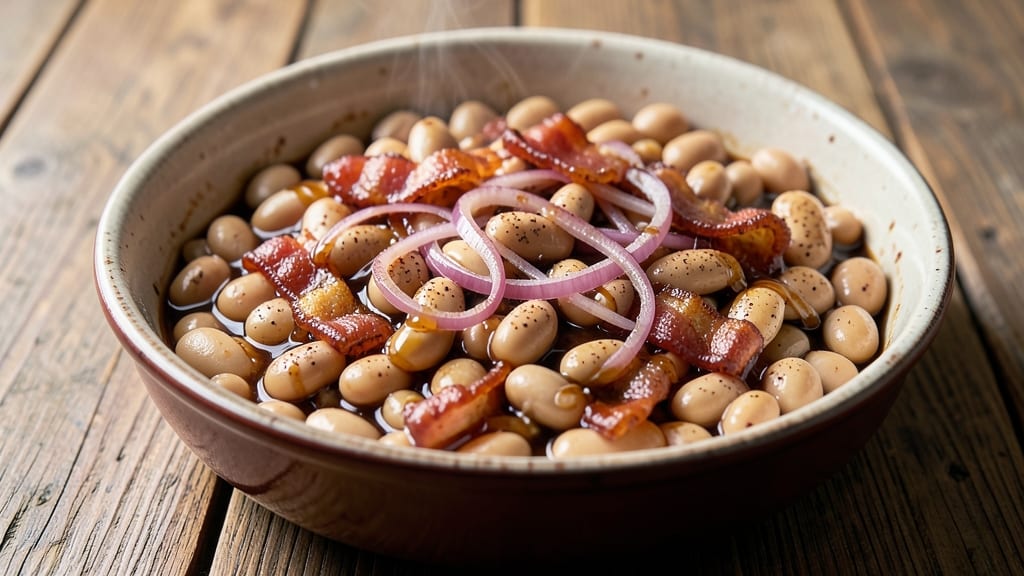
This baked bean recipe using Great Northern beans delivers the kind of tender, smoky-sweet perfection that turns simple side dishes into the star of the meal.
The secret lies in slow-cooked beans simmered with rich tomato sauce, brown sugar, and just the right amount of molasses—creating a texture that’s creamy yet still holds its shape.
I’ve perfected this method over years of testing, balancing traditional techniques with modern twists like smoked paprika for depth and maple syrup for natural sweetness.
The beauty of Great Northern beans is their ability to absorb flavors while maintaining a satisfying bite. Unlike smaller beans, they hold up beautifully during long baking, developing that signature tender yet firm texture.
This recipe builds flavor in stages—first with a savory tomato base, then with a caramelized sugar crust during baking—so every spoonful is packed with complexity. No soaking required, which makes it even more convenient for weeknight cooking.
What you’ll end up with is a dish that’s equally at home on a picnic table or holiday spread: deep red beans glistening with a sticky-sweet glaze, infused with smoky warmth and just enough tang to cut through the richness.
The aroma alone will have everyone asking what’s for dinner. Ready to make the most flavorful baked beans you’ve ever tasted? Let’s get started.
This recipe works beautifully as a standalone side or paired with grilled meats, cornbread, or even as a hearty vegetarian main. The versatility makes it perfect for meal prep too—just reheat and serve.
The key is patience; letting the beans simmer and bake slowly ensures that tender texture we’re all after. Trust the process, and you’ll have a crowd-pleaser that’s worth every minute of waiting.
Ingredients for baked bean recipe using great northern beans
Pantry staples meet slow-cooked magic for beans that taste like they simmered all day.
| Ingredient | Amount | Notes |
|---|---|---|
| Great Northern Beans (Dried) 🌾 | 2 cups | Unsoaked, rinsed thoroughly |
| Tomato Sauce 🍅 | 2 cups | High-quality, no added sugar |
| Brown Sugar 🍯 | ½ cup | Light or dark variety |
| Molasses 🍯 | ¼ cup | Unsulphured for best flavor |
| Maple Syrup 🍁 | ¼ cup | Pure grade B for depth |
| Smoked Paprika 🌶️ | 1 ½ tbsp | For that signature smokiness |
| Onion (Yellow) 🧅 | 1 whole | Diced, medium size |
| Garlic Cloves 🧄 | 4 cloves | Minced, fresh preferred |
| Apple Cider Vinegar 🍎 | 1 tbsp | For subtle tang |
| Mustard (Dijon) 🌶️ | 1 tbsp | For depth of flavor |
| Bay Leaves 🌿 | 2 whole | Fresh if possible |
| Salt 🧂 | 1 ½ tsp | Kosher or sea salt |
| Black Pepper 🌶️ | ½ tsp | Freshly ground preferred |
| Vegetable Oil 🫒 | 2 tbsp | For sautéing onions |
| Balsamic Vinegar 🍷 | 1 tbsp | For finishing touch |
Great Northern beans are the star here—dry beans work perfectly, no soaking required. Bob's Red Mill or Anthony's Goods are my go-tos for quality, but any dry bean bin will do. The key is rinsing them well before cooking to remove debris. Smoked paprika is non-negotiable for that signature smoky depth—Penzeys or McCormick are solid choices. If you can't find unsulphured molasses, regular molasses works, but it'll have a slightly bitter edge. The tomato sauce should be thick and rich—Muir Glen or Rao's are my pantry favorites, but any no-sugar-added brand will work.
Short on brown sugar? Maple syrup at 1:1 ratio keeps things sweet. No smoked paprika? Regular paprika plus a pinch of liquid smoke gets you close. Fresh bay leaves add complexity, but dried works at half the amount. The onion and garlic are the flavor anchors—don't skip sautéing them until soft. For a tangier finish, add an extra splash of apple cider vinegar. These beans reheat beautifully, so make a double batch if you're feeding a crowd—they're even better the next day as flavors meld.
Store leftovers in an airtight container for 5 days in the fridge, or freeze for up to 3 months. The sauce thickens as it cools, so add a splash of water or broth when reheating. These beans are versatile—serve as a side, stuff into baked potatoes, or pile onto toast with a fried egg for breakfast. The caramelized top? That's the good stuff—worth the 10 minutes under the broiler at the end. If you're prepping ahead, assemble everything except the caramelized sugar topping and refrigerate overnight for even deeper flavor.
Why You'll Love This Recipe
- No-Soaking Needed: I’ll admit—dried beans used to scare me. But these Great Northerns? Just toss them in boiling water for 2 minutes, then drain. No overnight soaking, no fuss. The beans soften perfectly while baking, and honestly? The molasses and maple syrup caramelize into something rich without extra effort.
- Sweet-Savory Magic: That combo of brown sugar, molasses, and tomato sauce? It’s like a hug in a casserole dish. The molasses adds depth, the maple syrup keeps it from being cloying, and the tomato sauce ties it all together. My husband dips toast straight into the pan—no judgment here.
- Potluck Star: Between us, this is my go-to for gatherings. It’s hearty enough for a main (pair with cornbread) but still feels like a side that won’t get lost. Plus, it reheats like a dream—just pop it in the oven, and the edges get crispy again. (Yes, even on a Tuesday night.)
- Budget Baked Treasure: A pound of dried beans costs pennies, and this recipe stretches to feed four for dinner and leftovers for lunch. I make a double batch, freeze half, and thank myself later. No fancy ingredients, just pure, reliable flavor that doesn’t break the bank.
Step-by-step instructions for smoky tomato-braised Great Northern beans
Here's how to transform simple dried beans into rich, fall-apart tender baked beans with deep smoky flavor.
👨🍳 Step 1: Prepare the Beans for Cooking
Start by rinsing the 2 cups Great Northern Beans (Dried) thoroughly under cold water in a colander. This removes any dust or debris that could affect flavor. Place them in a large pot and cover with plenty of cold water—at least 8 cups total. Soak overnight in the refrigerator, or for a quicker method, bring to a boil for 2 minutes, then let them sit off heat for 1 hour. This partial soaking softens them while preventing the skin from splitting.
After soaking, drain and rinse the beans again. The goal is tender beans, not mushy—over-soaking leads to that unfortunate texture. I like to give them a final press between my fingers to check for doneness before proceeding to the next step.
🍳 Step 2: Build the Flavor Base in the Pot
Heat 2 tablespoons Vegetable Oil in a large Dutch oven over medium heat. Add the diced 1 whole Onion (Yellow) and cook for 5-6 minutes until softened and just beginning to caramelize at the edges. Add the 4 cloves Garlic Cloves (minced) and cook for another 30 seconds until fragrant—don't let it brown or it'll turn bitter.
Stir in the 1.5 tablespoons Smoked Paprika and let it toast for 30 seconds to deepen its flavor. This is where the smoky magic begins. Add the 2 whole Bay Leaves, 1.5 teaspoons Salt, and 0.5 teaspoon Black Pepper, stirring to coat everything evenly. The spices should smell warm and inviting—this is your flavor foundation.
🥘 Step 3: Combine All Ingredients for Baking
Add the drained beans, 2 cups Tomato Sauce, 0.5 cup Brown Sugar, 0.25 cup Molasses, 0.25 cup Maple Syrup, 1 tablespoon Apple Cider Vinegar, and 1 tablespoon Mustard (Dijon) to the pot. Stir well to combine everything. The mixture should look thick and vibrant—this is your perfect starting point. Taste it now and adjust seasoning if needed; you'll be adding more liquid later, so don't over-salt.
Pour in enough water to cover the beans by about 1 inch—this should be roughly 2 cups total. The beans need moisture to cook properly, but not so much that they become watery. If using a Dutch oven, it should be about 3/4 full for even baking.
🔥 Step 4: Bake Until Fork-Tender
Transfer the pot to a preheated 350°F oven and bake uncovered for 2 hours. After the first hour, stir the beans gently—they'll thicken as they cook. The beans are done when they're fork-tender and the sauce has reduced to a thick, glossy consistency. You'll know they're ready when a bean easily crushes between your fingers with just slight resistance.
Here's the thing—don't peek or stir too often. Every time you open the oven, you risk losing heat and moisture. Patience is key for that perfect texture. If the top starts to darken too much, tent loosely with foil for the last 30 minutes of baking.
🍽️ Step 5: Finish and Serve with Flavor Boost
Remove the beans from the oven and stir in the 1 tablespoon Balsamic Vinegar. This final touch adds brightness and complexity that takes the dish to the next level. Let the beans rest for 10 minutes before serving—this allows the flavors to meld and the sauce to thicken slightly.
Serve warm with crusty bread or over mashed potatoes. The beans should be tender but hold their shape, with a rich, smoky sauce clinging to each one. Each bite should deliver perfect tenderness with layers of sweet, smoky, and tangy flavors working together. The molasses and maple syrup give just the right depth, while the vinegar and mustard add that classic tangy kick.
Pro Tips For Making Baked Bean Recipe Using Great Northern Beans
- SOAK BEANS 12 HOURS: I learned this the hard way—skipping the long soak leaves you with beans that stay stubbornly firm no matter how long you bake them. Great Northerns need at least 12 hours in water (or overnight) to break down properly, especially if you’re not using a pressure cooker. Drain and rinse before cooking to wash off any skin that softened during soaking.
- SIMMER BEANS FIRST: Start these on the stovetop until they’re tender, not just barely softened. About 45 minutes of simmering in fresh water (with a pinch of salt) ensures they’ll finish baking without turning to mush. I used to bake them straight from the soak, and they’d either stay crunchy or fall apart—neither is ideal.
- DON’T SKIP THE BROWN SUGAR: This isn’t just sweetening—it’s the thing that makes the sauce caramelize and deepen in flavor. Use at least ¼ cup and let it cook down with the molasses and maple syrup. If you’re tempted to cut it for health reasons, swap in a splash of balsamic vinegar instead; it’ll give you that same rich, tangy kick.
- BAKE LOW AND LONG: 300°F is your magic number here. Too hot, and the sugar burns before the beans get tender; too cool, and you’re waiting forever. Cover with foil for the first hour to trap steam, then uncover and let the sauce thicken. I know, I know—it’s tempting to crank the heat, but trust the process. The slow cook gives the flavors time to marry.
Common mistakes when making perfect results
Over-Soaking Beans
I’ve ruined more batches of baked beans than I’d like to admit by over-soaking the Great Northern beans. When you soak them for too long—especially overnight—they absorb too much water, which leads to mushy, sad beans instead of that perfect tender-yet-firm texture.
The rule of thumb? No more than 8 hours for overnight soaking, or a quick 2-minute boil + 1-hour off-heat soak if you’re short on time. Always drain and rinse them well before cooking to remove excess starch that can make the sauce gummy. 🌾
Skipping the Sauté
Rushing through the onion and garlic step is a huge mistake. Those veggies are the flavor anchors of this dish, and sautéing them until soft (not browned) builds a rich, sweet base that carries through the entire recipe. I’ve seen people skip this step or rush it, and the result?
Bland beans that taste more like tomato sauce than a complex, smoky-sweet side. Take your time—5-6 minutes for the onions to caramelize just slightly is worth it. The spices (especially that smoked paprika) need something to cling to! 🌶️
Underestimating Baking Time
Patience is key with baked beans, but I’ve seen so many cooks pull them out too soon because they’re eager for that tender texture. Great Northern beans need at least 2 hours at 350°F to break down properly.
If you check them early and they’re not fork-tender, don’t speed things up by cranking the heat—this will toughen the skins. Instead, tent with foil and let them cook low and slow. The sauce should reduce to a glossy consistency, not stay watery.
Trust the process, and you’ll avoid the heartbreak of dry, undercooked beans. ⏰
Ignoring the Sugar Crust
The caramelized sugar topping is what makes these baked beans restaurant-quality, but I’ve seen people skip the broiler step entirely. That crispy, sticky crust is where the molasses and brown sugar really shine, adding depth and a touch of sweetness that balances the smoky flavors.
To get it right, broil for 5-10 minutes until the edges are golden and bubbly. If your oven runs hot, watch closely—it burns faster than you’d think! This step might feel optional, but it’s the secret to beans that taste like they’ve been simmering all day. 🍯
Overcrowding the Pot
Using a pot that’s too small is a recipe for disaster. Beans need room to expand and develop their signature tender texture. If your Dutch oven is packed too tightly, the beans will steam instead of bake, leading to a mushy, watery mess.
Fill your pot no more than 3/4 full—this gives the beans space to cook evenly and the sauce to reduce properly. I’ve had to rescue more than one batch of beans that turned out like soup because the pot was overcrowded.
Trust me, it’s worth measuring twice and pouring once. 🥘
Not Tasting Along the Way
Seasoning baked beans is all about balance, and I can’t stress enough how important it is to taste as you go. After combining all the ingredients, give it a taste before baking—you’ll likely need to adjust the salt, vinegar, or sweetness.
Then, after baking, taste again before adding the balsamic vinegar. The flavors evolve as they cook, and what might have tasted perfect at the start could be off later. Don’t be afraid to tweak—this is your dish, and you’re the best judge of what needs adjusting. 💡
Nutrition facts
Frequently asked questions
Why do Great Northern beans work better than other beans for baking?
Great Northern beans hold their shape beautifully during long baking, creating that perfect tender-yet-firm texture. Their larger size and thicker skins absorb flavors deeply while resisting mushiness—unlike smaller beans that can break down too quickly. The classic sweet-and-smoky profile also pairs perfectly with their mild, nutty base.
Can I make this recipe without molasses or maple syrup?
Yes! Replace 0.25 cup molasses with 0.5 cup brown sugar plus 1 tsp vinegar for depth. Skip maple syrup and add 1 tbsp extra tomato paste to maintain richness. The key is balancing sweetness with acidity—adjust to taste. For a smokier profile, add ½ tsp liquid smoke to the tomato sauce.
How do I fix beans that turned out too watery?
Simmer uncovered for 10-15 minutes on the stovetop to reduce the sauce. For extra thickness, stir in 1 tbsp cornstarch mixed with 2 tbsp water until glossy. If the beans are still mushy, they likely overcooked—try mashing slightly with a fork and adding 1 tbsp balsamic vinegar to balance.
What’s the best way to reheat these baked beans?
Gently reheat in a saucepan over low heat with 2-3 tbsp water or broth to prevent drying. For oven reheating, cover with foil and warm at 325°F for 20-30 minutes. Avoid microwaving—it makes the sauce rubbery. Stir in a splash of vinegar or a pat of butter if they seem dull. The flavors actually improve overnight!
Can I make this vegetarian or vegan?
Use vegetable broth instead of water and swap Dijon mustard for vegan mustard. For depth, add 1 tbsp soy sauce or smoked paprika. Top with crispy baked tofu or avocado for protein. The smoky-sweet profile works perfectly without meat—just ensure your tomato sauce is vegan.