
Main Courses
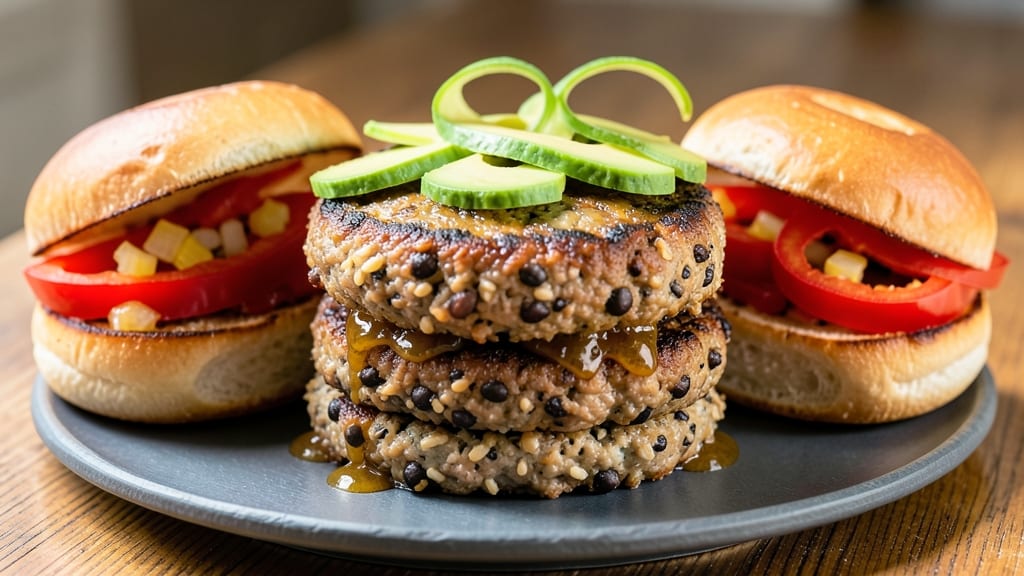
This black bean quinoa veggie burger recipe delivers crispy-crusted plant-based patties that rival any meat burger—vegan, protein-packed, and packed with texture.
The secret lies in blending black beans, cooked quinoa, and finely chopped vegetables into a sturdy mixture, then binding it with flaxseed for a patty that holds together perfectly.
What makes these stand out is the crispy exterior achieved through a simple breadcrumb coating, giving you that satisfying crunch without frying.
The beauty of this recipe is its versatility—it works equally well as a main course for weeknight dinners or a crowd-pleasing option for BBQs and potlucks.
The flavor profile balances earthy black beans, nutty quinoa, and fresh vegetables, while the optional toppings (avocado, pickles, or vegan mayo) let you customize each bite. Unlike many veggie burgers that turn mushy, these patties stay firm and flavorful when grilled or pan-fried.
What you’ll end up with is a burger that’s rich in plant-based protein, fiber, and complex flavors—no one will guess it’s vegan. The quinoa adds a satisfying chew, while the black beans provide depth and moisture.
This recipe isn’t just about replicating a meat burger; it’s about creating something bold, hearty, and undeniably delicious that even meat lovers will devour.
Perfect for meal prep or last-minute dinners, these patties freeze beautifully and reheat like a dream. Whether you’re serving them on whole-grain buns with all the fixings or stuffing them into lettuce wraps, they’re a game-changer for plant-based eating. Let’s get cooking—your taste buds (and your guests) will thank you.
Ingredients for black bean quinoa veggie burger
Sixteen ingredients transform into crispy-crusted veggie burgers that fool meat lovers every time.
| Ingredient | Amount | Notes |
|---|---|---|
| Canned Black Beans 🫘 | 1 ½ cups | Drained and rinsed thoroughly |
| Cooked Quinoa 🌾 | 1 ½ cups | Cooled completely before mixing |
| Ground Flaxseed 🌰 | 2 tbsp | Mixed with 6 tbsp water for flax egg |
| Red Bell Pepper 🌶️ | 1 whole | Finely diced, seeds removed |
| Yellow Onion 🧅 | 1 whole | Finely diced, about 1 cup |
| Garlic Cloves 🧄 | 3 cloves | Minced finely for depth |
| Panko Breadcrumbs 🍞 | 1 cup | For crispy crust, not fine crumbs |
| Nutritional Yeast 🧀 | 2 tbsp | For cheesy umami flavor |
| Smoked Paprika 🌶️ | 1 tsp | For smoky depth |
| Ground Cumin 🌿 | ½ tsp | Toasted for warmth |
| Salt 🧂 | 1 tsp | Diamond Crystal preferred |
| Black Pepper 🌶️ | ½ tsp | Freshly ground for heat |
| Olive Oil 🫒 | 1 tbsp | For binding mixture |
| Vegan Mayonnaise 🥫 | 2 tbsp | Optional for binding |
The black beans and quinoa form the heart of these patties—Trader Joe's has the best canned black beans (no funny aftertaste), and quinoa cooks faster if you rinse it first. Bob's Red Mill quinoa is my go-to for even cooking. For the flax egg, grind your own flaxseed if possible—it's fresher than pre-ground. The key to texture is letting the quinoa cool completely before mixing; otherwise, your patties will turn mushy. I always double-check the canned beans for BPA-free lining if I'm health-conscious.
No panko? Crushed cornflakes or gluten-free breadcrumbs work in a pinch, but panko gives that perfect crunch. Swap red bell pepper for zucchini or carrot if you prefer milder flavor—just grate them finely. Nutritional yeast is a game-changer for that cheesy taste; Bragg is the brand I always recommend. Short on smoked paprika? Regular paprika plus a pinch of liquid smoke mimics the flavor. The vegan mayo is optional but helps bind everything—Hellmann's Vegan or Just Mayo are my top picks. If you're gluten-free, use tamari instead of soy sauce in your patty mix.
These patties keep beautifully in the fridge for 5 days—store them between parchment paper to prevent sticking. Freeze them for up to 3 months by wrapping individually in plastic wrap, then toss in a freezer bag. For best results, thaw overnight in the fridge before cooking. I make a double batch every time because they disappear fast. The secret to reheating? Warm them in a skillet with a splash of water for 2-3 minutes per side—they crisp up like they just came out of the pan.
Why You'll Love This Recipe
- No Pulse Required: I swear by canned beans here—no soaking, no waiting. Just drain, rinse, and toss with quinoa that’s already cooked (or use leftover grains). The flaxseed binds everything together without extra fuss, so you’re not stuck with a crumbly mess.
- Umami Bomb: That combo of black beans, sautéed onion, and roasted red bell pepper? It’s like a flavor explosion. The smoky sweetness of the peppers and the earthy depth of the beans make these taste way more complex than your average veggie patty—no weird aftertaste, just pure satisfaction.
- Lunchbox Hero: Between us, these burgers are my go-to for packed lunches. They hold up perfectly in containers, and the quinoa keeps them from drying out. Add a smear of avocado or a sprinkle of hot sauce, and you’ve got a meal that’s actually exciting to eat—no sad, soggy sandwiches here.
- Pantry Magic: Honestly, this recipe is my budget-friendly secret weapon. Canned beans, quinoa, and a bag of frozen bell peppers (if you’re short on time) mean I’m never stuck staring at an empty fridge. Plus, the leftovers? They’re even better the next day—great for quick breakfasts or a last-minute dinner when you’re too tired to cook.
Step-by-step instructions for black bean quinoa veggie burgers
Here's how to craft hearty, crispy-crusted patties that hold together and pack serious flavor.
Create the Flax Egg and Mix Wet Ingredients
In a small bowl, whisk together the 2 tablespoons ground flaxseed with 6 tablespoons water and let it sit for 5 minutes until it thickens into a gel-like consistency—this is your flax egg binder. Meanwhile, in a large mixing bowl, combine the 1.5 cups drained black beans, 1.5 cups cooled quinoa, and the flax egg mixture. Use a fork or potato masher to break down the beans slightly while keeping some texture.
This step is crucial for binding the mixture. The flax egg replaces eggs entirely while adding a subtle nutty flavor. If your black beans are particularly watery, drain them thoroughly—excess moisture makes the patties fall apart later. I like to press the beans gently with the back of a spoon to release some of their juices, which helps everything cling together.
Sauté Aromatics and Build Flavor
Heat 1 tablespoon olive oil in a large skillet over medium heat. Add the finely diced red bell pepper, yellow onion, and minced garlic cloves, cooking for 5-6 minutes until the vegetables soften and the onion becomes translucent. Season immediately with 1 teaspoon smoked paprika, ½ teaspoon ground cumin, 1 teaspoon salt, and ½ teaspoon black pepper, stirring constantly to prevent burning.
Here's where the magic happens: the smoky depth from the paprika and cumin will carry through to your burgers. Let the spices toast in the pan for 30 seconds—you'll smell it intensify. Remove the skillet from heat and let the aromatics cool completely before adding them to your mixture. Warm spices release their oils when cool, which helps bind the patties better.
Combine All Ingredients for Perfect Texture
Add the cooked vegetable mixture to your black bean-quinoa bowl along with 2 tablespoons nutritional yeast and 1 cup panko breadcrumbs. Mix gently but thoroughly with your hands—this ensures even distribution of the crispy breadcrumbs. If using, add the 2 tablespoons vegan mayonnaise now for extra binding and richness. The mixture should hold together when pressed but still be slightly sticky.
Real talk: don't overmix or your burgers will turn dense. If the mixture feels too dry, add 1 tablespoon water at a time until it reaches a workable consistency. The panko will create that coveted crispy crust we're after, but it needs to be evenly dispersed. I like to press the mixture into the bowl to check—if it holds shape when lifted, you're good to go.
Shape and Chill for Maximum Crispiness
Divide the mixture into 6 equal portions (about ¼ cup each) and gently form into ½-inch thick patties, being careful not to compress too tightly. Place them on a parchment-lined plate and refrigerate for at least 30 minutes—this chilling step is non-negotiable for crispy results. While they rest, preheat your oven to 375°F or get your skillet ready for stovetop cooking.
Here's the thing—chilling firms up the patties so they won't crumble when you cook them. I press each patty gently with my fingers to ensure even thickness, as thicker spots won't cook through. If you're short on time, you can chill them for just 15 minutes, but 30 minutes gives you that perfect texture every time. Trust the process, even if it seems like too much waiting.
Cook to Golden Perfection
Heat 1 tablespoon olive oil in a large skillet over medium heat. Cook the patties for 4-5 minutes per side until they develop a deep golden brown crust and internal temperature reaches 160°F—this ensures they're heated through without drying out. For extra crispiness, press down gently with a spatula during the first minute of cooking to help the panko crust form.
Don't skip the internal temperature check—veggie burgers can look done on the outside but still be cool inside. If your skillet gets too crowded, cook in batches to maintain even heat. For oven-baked burgers, place them on a wire rack set over a baking sheet and bake for 18-20 minutes, flipping halfway through. The result should be a satisfying crunch on the outside with a tender, flavorful interior that holds its shape beautifully.
Pro Tips For Making Black Bean Quinoa Veggie Burger
- Drain and Rinse Beans: Your canned black beans will taste bland if you skip this—drain them, then rinse under cold water to wash off excess sodium and starch. I learned this the hard way after making a batch where the flavor felt muted, no matter how much cumin or garlic I added.
- Toast the Quinoa: Cooked quinoa is the base, but toasted quinoa adds depth. After draining, spread it on a dry skillet over medium heat for 2-3 minutes until it smells nutty. It’s not mandatory, but it makes the burgers taste like they’ve been simmering for hours instead of minutes.
- Sweat the Onions: Don’t just chop and dump—sauté the yellow onion in a dry pan for 5 minutes until it’s soft and translucent before adding it to the mix. This step caramelizes the sugars just enough to give the burgers a subtle sweetness that balances the earthiness of the beans.
- Chill the Mixture: After forming the patties, pop them in the fridge for 15 minutes before cooking. I used to skip this, and they’d crumble apart when flipping or pressing. Cold patties hold together better—yes, even if you’re impatient to eat them.
Troubleshooting your black bean quinoa veggie burger
Patties Falling Apart
This is the #1 issue with homemade veggie burgers, but it’s totally fixable. If your patties crumble when forming or cooking, your mixture likely needs more binder. First, check if your quinoa is fully cooled—warm quinoa releases excess moisture.
Add 1 extra tablespoon ground flaxseed (mixed with 3 tbsp water) and mix well. For extra insurance, fold in 2 tbsp more panko or 1 tbsp gluten-free flour if you're not avoiding gluten.
Press the mixture firmly when shaping—think "compact snowball" rather than delicate cake. Chill for the full 30 minutes before cooking to let the flax egg set properly. 💪
Dry or Crumbly Texture
Overmixing or using too many dry ingredients (like extra panko) creates dry patties. If your mixture feels like sand, add 1 tbsp vegan mayo or 1 tbsp water at a time until it holds together when pressed. The key is a slightly sticky consistency—like wet sand at the beach.
For extra moisture, mash 1 extra black bean (with its liquid) into the mix. If cooking, add ½ tbsp olive oil to the pan and cover with a lid for 1 minute to steam the patties slightly while they crisp. 💧
Uneven Cooking
Patties that cook unevenly (raw centers or burnt crusts) usually mean inconsistent thickness or overcrowding. Always shape patties to exactly ½-inch thickness—use a ruler or measuring spoon to check. Cook in batches with ½-inch space between patties to allow heat circulation.
For skillet cooking, reduce heat to medium-low if they brown too quickly. If using the oven, place patties on a wire rack over a baking sheet to ensure even air flow on all sides. A meat thermometer is your best friend—aim for 160°F internal temperature throughout. 🌡️
Flat or Soggy Crust
A lackluster crust happens when panko gets soggy or isn’t properly toasted. First, make sure you’re using fresh panko—old breadcrumbs lose their crispiness. Toast your panko in a dry skillet for 2 minutes before adding to the mixture.
For extra crunch, mix 1 tbsp cornstarch into the panko before coating. Press patties gently with a spatula during the first 30 seconds of cooking to help the crust form. If using the oven, bake on the top rack for the last 2 minutes to get maximum browning. 🍞
Raw or Undercooked Centers
Even with proper internal temperature, veggie patties can stay cool inside if they’re too thick or the mixture is too dense. First, verify your patties are exactly ½-inch thick—thicker spots won’t cook through. If using a skillet, cook at medium heat (not high) to ensure even cooking.
For stubborn centers, tent patties with foil for the last 2 minutes of cooking to trap heat. The oven method is more forgiving—bake at 375°F for 18-20 minutes with a flip halfway. Let patties rest for 2 minutes after cooking to let residual heat finish the job. 🔥
Storing & Freezing Issues
Freezer burn or soggy texture after reheating usually means improper storage. Always wrap patties individually in plastic wrap before placing in a freezer bag—this prevents air exposure. For fridge storage, place patties between parchment paper to avoid sticking. When reheating, never microwave from frozen—thaw overnight in the fridge first.
For best results, warm patties in a skillet with ½ tbsp olive oil over medium heat for 2-3 minutes per side. If using the oven, bake at 350°F for 10 minutes covered with foil, then 2 minutes uncovered to restore crispiness. ❄️
Nutrition facts
Frequently asked questions
Can I make these veggie burgers gluten-free?
Replace the panko breadcrumbs with gluten-free breadcrumbs or crushed cornflakes for the same crispy texture. For extra binding, add 1 tablespoon gluten-free flour or 1 extra tablespoon ground flaxseed. Just be sure to check all your ingredients—some nutritional yeast brands contain gluten.
How do I make these patties extra crispy?
Toast your panko in a dry skillet for 2 minutes before mixing it in, and press the patties gently with a spatula during the first 30 seconds of cooking. For oven baking, place them on a wire rack over a baking sheet to allow air to circulate on all sides. Bake on the top rack for the last 2 minutes to get maximum browning.
What's the best way to store leftovers?
Store cooked patties in an airtight container in the fridge for up to 5 days. For freezing, wrap each patty individually in plastic wrap, then place them in a freezer bag. Thaw overnight in the fridge before reheating—never microwave from frozen. Warm in a skillet with ½ tablespoon olive oil over medium heat for 2-3 minutes per side to restore crispiness.
Can I use these patties for tacos or sliders instead of burgers?
Yes! These patties work perfectly for tacos, sliders, or even stuffed into lettuce wraps. For tacos, warm the patties in a skillet and serve with your favorite taco toppings. For sliders, cut them in half and serve on mini buns. The key is to keep them warm until serving—this helps maintain their crispy texture.
Why do my patties fall apart when cooking?
This usually happens if the mixture isn't properly chilled or lacks enough binder. First, ensure your quinoa is fully cooled before mixing. Add 1 extra tablespoon ground flaxseed (mixed with 3 tbsp water) and chill the patties for the full 30 minutes. Press them firmly when shaping—think \"compact snowball\" rather than delicate cake.