
Soups & Stews
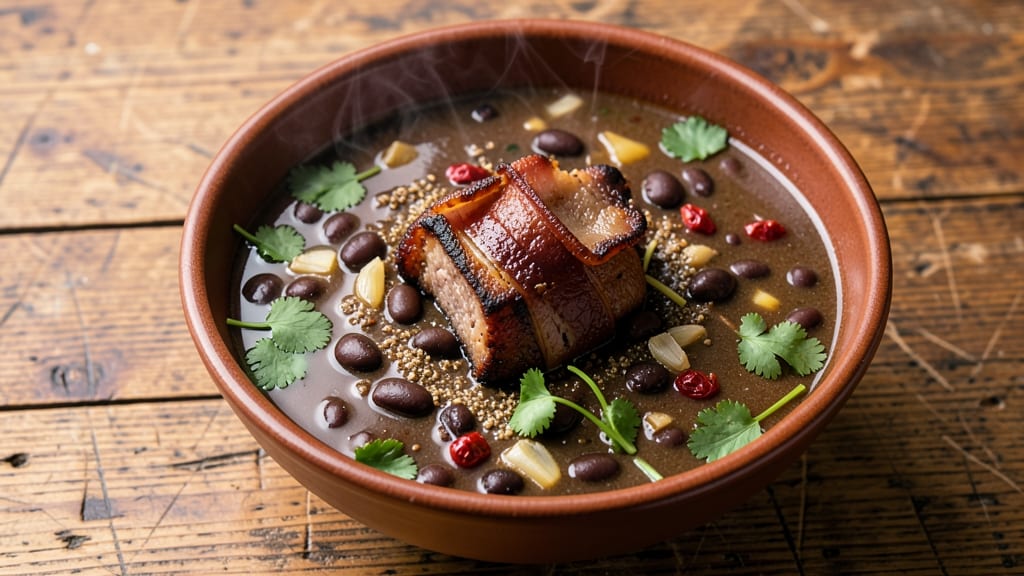
This black bean soup with ham hock transforms simple ingredients into a deeply flavorful, slow-simmered masterpiece where tender beans and collagen-rich ham hock create a broth so rich it feels like a hug in a bowl.
The secret lies in low-and-slow cooking—letting the ham hock break down over hours to infuse the soup with unmatched depth and body that store-bought versions can't match. What starts as a humble pot of beans and meat becomes a restaurant-worthy dish with just time and patience.
The magic happens in the layers of flavor: smoky chipotle peppers add warmth, while cumin and garlic build complexity, all melding together as the soup simmers.
Unlike quick versions that rely on bouillon, this method develops true umami from the ham hock's natural collagen, creating a velvety texture that coats every spoonful. The beans stay tender but hold their shape, absorbing the rich broth while maintaining their natural earthiness.
By the time you serve it—steaming in bowls with a sprinkle of fresh cilantro and a dollop of sour cream—you'll have a soup that's comforting yet sophisticated, perfect for chilly evenings or family gatherings.
The ham hock's gelatinous richness makes it heartier than most black bean soups, while the smoky spices give it a bold, satisfying kick. Pair it with warm cornbread or crusty bread to soak up every last drop.
This isn't just another black bean soup—it's a transformative dish that proves slow cooking can elevate simple ingredients into something extraordinary. The process is straightforward, but the results are anything but ordinary. Let's get cooking.
Ingredients for black bean soup with ham hock
Sixteen ingredients that build unmatched depth through slow-simmered collagen and smoky spices.
| Ingredient | Amount | Notes |
|---|---|---|
| Dried Black Beans 🌱 | 2 cups | Soaked overnight for best texture |
| Ham Hock 🍖 | 2 whole | Smoked preferred for depth of flavor |
| Yellow Onion 🧅 | 1 whole | Diced, yellow or white variety |
| Garlic Cloves 🧄 | 6 cloves | Peeled, for aromatic base |
| Chipotle Peppers in Adobo 🌶️ | 2 tbsp | Mild or hot, finely chopped |
| Ground Cumin 🌿 | 1 tbsp | Toasted for enhanced aroma |
| Dried Oregano 🍃 | 1 tsp | Mexican oregano preferred |
| Bay Leaves 🌿 | 2 whole | Fresh or dried, for depth |
| Tomato Paste 🍅 | ½ cup | High-quality, no sugar added |
| Chicken or Vegetable Broth 💧 | 4 cups | Low-sodium preferred |
| Extra-Virgin Olive Oil 🫒 | 2 tbsp | For sautéing aromatics |
| Fresh Cilantro 🌿 | ¼ cup | Chopped, for garnish |
| Sour Cream 🧀 | ¼ cup | Full-fat for richness |
| Salt 🧂 | 1 tsp | Diamond Crystal preferred |
| Black Pepper 🌶️ | ½ tsp | Freshly ground for heat |
The ham hock is non-negotiable—its collagen transforms this into a restaurant-quality soup. Look for smoked hocks at specialty butchers or well-stocked grocery stores like Whole Foods or Kroger. Avoid pre-cooked versions; raw hocks develop deeper flavor. For the beans, dried black beans yield better texture than canned—soak them overnight in plenty of water (discard soaking liquid). The chipotle peppers in adobo sauce are essential for that signature smoky warmth; Penzeys sells excellent canned varieties if your local market lacks them.
No ham hock? Substitute smoked turkey neck or pork shoulder for similar collagen-rich results. Fresh cilantro wilts quickly, so buy it the day you cook or use dried at one-third the amount. The tomato paste can be swapped for fire-roasted crushed tomatoes if you prefer, but paste builds better body. For extra richness, stir in 1 tablespoon of balsamic vinegar at the end. The cumin should be toasted in a dry pan for 30 seconds before adding—this step makes all the difference. If you're short on time, use pre-toasted cumin from Trader Joe's.
This soup tastes even better the next day as flavors meld. Store in an airtight container in the fridge for up to 5 days, or freeze portions for 3 months. The ham hock can be removed after cooking for easier storage. For serving, keep the sour cream chilled until the last moment—it adds a luxurious finish. Garnish with extra cilantro and a sprinkle of crushed red pepper flakes for heat. Leftovers reheat beautifully; add a splash of broth if the soup thickens.
Why You'll Love This Recipe
- No-Soaking Needed: I’ll be real—soaking dried beans is a hassle. This soup skips it entirely by using the overnight-soak trick (just cover them in water the night before), so I’m left with actual prep time, not a sink full of forgotten beans. The ham hock does the heavy lifting while you’re at work or binge-watching—just dump, simmer, and let it melt into flavor.
- Smoky Depth Magic: That chipotle in adobo? It’s where this soup gets its soul. A single teaspoon of the sauce’s paste turns the broth from good to ridiculously good—smoky, slightly sweet, with a slow-building heat that lingers. Honestly, I’ve tried store-bought broths, but nothing beats this homemade richness.
- Leftovers That Beg for More: This soup tastes better the next day. The beans soften just right, the ham hock falls apart like a dream, and the flavors meld into something heartier. I make a double batch on Sundays because by Wednesday, I’m sneaking it into lunches and reheating it for my partner without apology.
- Budget-Friendly Crowd-Pleaser: Ham hock might sound fancy, but it’s a steal—way cheaper than pre-cut meat, and it delivers layers of flavor. A single hock stretches this soup to feed four (or five if you’re me and my bottomless appetite). Plus, dried beans? Cheaper than canned, and they taste like you actually cooked them. Win-win.
Step-by-step instructions for black bean soup with ham hock
Transform simple ingredients into a restaurant-worthy soup with deep, smoky richness from slow-cooked ham hock.
Prepare the Ham Hock and Aromatics
Rinse the 2 whole ham hock under cold water and pat completely dry with paper towels. This step is crucial—any moisture will prevent proper browning later. Place the ham hock in a large Dutch oven and set it over medium heat.
Add the 2 tablespoons extra-virgin olive oil and let it heat for 2 minutes until shimmering. Add the diced 1 whole yellow onion and cook for 5-6 minutes until softened and beginning to caramelize at the edges. Stir in the 6 peeled garlic cloves and cook for 30 seconds until fragrant—don't let them burn, or they'll turn bitter.
Build the Flavor Base
Reduce heat to medium-low and add the 2 tablespoons finely chopped chipotle peppers in adobo, stirring to combine. Let them cook for 1 minute to release their smoky depth. Sprinkle in the 1 tablespoon ground cumin and 1 teaspoon dried oregano, stirring constantly for 30 seconds until the spices are fragrant and evenly distributed.
Add the 0.5 cup tomato paste and cook for 2 minutes, stirring frequently, until it darkens slightly and develops a rich, caramelized flavor. This step forms the flavor foundation—don't rush it. Pour in the 4 cups chicken or vegetable broth and bring to a gentle simmer.
Simmer the Ham Hock and Season
Add the 2 whole bay leaves to the simmering broth. The ham hock should now be mostly submerged—if not, add ½ cup water. Bring the mixture to a full boil, then reduce heat to low and cover partially. Simmer for 1 hour, skimming any foam that rises to the surface.
After 1 hour, check the ham hock—it should be tender enough to pull apart easily with a fork. If not, continue simmering for another 30 minutes. Add the 2 cups dried black beans (drained from soaking) and the 1 teaspoon salt. The beans should be mostly submerged—add ½ cup water if needed. Simmer uncovered for 1-1.5 hours until beans are tender.
Finish and Serve
Remove the ham hock and shred the meat using two forks, discarding any large bones. Return the shredded meat to the pot. Stir in the 0.5 teaspoon black pepper and simmer for 5 minutes to allow flavors to meld. Taste and adjust seasoning with additional salt if needed.
Ladle the soup into bowls and top each serving with 1 tablespoon sour cream and 1 tablespoon chopped fresh cilantro. The contrast of cool sour cream against the warm, smoky broth creates a perfect balance. Serve immediately with crusty bread to soak up every last drop of this rich, flavorful soup.
Pro Tips For Making Black Bean Soup With Ham Hock
- START HOT, THEN SIMMER LOW: The ham hock won’t render its collagen if you’re half-hearted about heat. Crank the stove to high for the first 10 minutes to blister the onion and garlic—this jumpstarts the flavor extraction. Once the liquid reaches a rolling boil, drop it to a bare simmer (tiny bubbles, occasional swirls) and let it work its magic for at least 2 hours. I used to rush this, and the soup tasted thin and watery—now I treat it like a slow-cooker’s patient cousin.
- SOAK BEANS OVERNIGHT (OR NOT): Dried black beans need a good soak, but I’ve learned the hard way that 8 hours isn’t always enough. If you’re short on time, parboil them for 2 minutes first, then soak for 4 hours—this cuts the cooking time by 30 minutes. Pro move: Drain and rinse them before adding to the pot. The starchy water left behind will turn your soup gummy, and nobody wants that.
- SCORE THE HAM HOCK: That thick layer of fat on a ham hock isn’t just for looks—it’s flavor gold. Use a sharp knife to slice shallow crosshatch marks (about ¼-inch deep) into the rind before adding it to the pot. This lets the fat and collagen melt into the broth instead of clinging stubbornly. I skipped this once and ended up with a soup that tasted like it was missing something—turns out, it was the rendered fat.
- USE THE WHOLE CHIPOTLE: Don’t just chop the chipotle peppers and toss them in. Mash the adobo sauce into the pot first—it’s got smoked vinegar, garlic, and a depth of flavor that’ll carry through the whole dish. Then add the peppers, seeds and all (unless you hate heat). The adobo sauce also thickens the soup slightly, so you won’t need to add extra starch. I used to treat it like an afterthought, and the soup never had that same smoky punch.
Essential equipment for great black bean soup with ham hock
Dutch Oven Essentials
A 5-7 quart Dutch oven is non-negotiable for this recipe—its heavy base distributes heat evenly, preventing scorching while allowing the ham hock to render collagen-rich juices over hours. I recommend the Lodge 5.5-Quart Cast Iron Dutch Oven for its durability and heat retention.
If you don’t own one, a Le Creuset Stoneware Dutch Oven works beautifully for stovetop-to-oven versatility. Avoid thin, lightweight pots—they can’t maintain the low-and-slow simmer needed for the ham hock to break down properly. 🔥
Precision Thermometer
Invest in a meat thermometer with a probe to monitor the ham hock’s internal temperature—aim for 165°F before shredding. The ThermoWorks Smoke or Instant Read Thermometer are my go-to choices; they’re fast and accurate. Without one, you risk overcooking the ham hock or undercooking the beans.
Pro tip: Insert the probe into the thickest part of the ham hock, avoiding bone contact. This ensures safety and perfect texture every time. ⏰
Slotted Spoon & Tongs
A long-handled slotted spoon (like the OXO Good Grips) is perfect for skimming foam from the simmering broth, while tongs help remove the ham hock without piercing it. Both tools keep your hands safe from the hot liquid.
For shredding the ham hock, a pair of forks works best—no need for fancy gadgets. If you’re short on time, a handheld immersion blender can help emulsify the broth slightly for extra silkiness, though it’s optional. 💪
Slow Cooker Alternative
If you prefer hands-off cooking, a 6-quart slow cooker (like the Crock-Pot 6-Quart) works wonders—just transfer the pre-browned ham hock, aromatics, and spices to the slow cooker, then add broth and beans. Cook on low for 7-8 hours or high for 4-5 hours.
The key difference? Slow cookers can’t caramelize the onions as deeply, but the collagen extraction is just as rich. For extra depth, finish the soup on the stovetop to reduce and intensify flavors. ✨
Mise en Place Tools
Gather these small but mighty tools: a sharp chef’s knife (for chopping onions and garlic), a microplane (to zest chipotle peppers finely), and a fine-mesh strainer (to drain soaked beans). A spice grinder ensures your cumin is toasted to perfection.
Don’t skimp on the knife—dull blades make prep tedious. I also keep a small bowl nearby to catch excess liquid when draining beans, preventing messes. Organization is half the battle in soup-making! 🌶️
Nutrition facts
Frequently asked questions
Why does the ham hock need to simmer so long?
The long simmer (1-2 hours) is key to breaking down the ham hock's collagen, which transforms into a rich, velvety broth. This slow process creates depth of flavor that can't be replicated with quick cooking methods. The result is a soup with natural body and umami that's far more satisfying than store-bought versions.
Can I use canned black beans instead of dried?
While you can substitute canned beans, dried beans develop a better texture and absorb more flavor during the long simmer. If using canned, drain and rinse them thoroughly, then add them during the final 30 minutes of cooking. For best results, stick with dried beans soaked overnight—they're worth the extra time.
What if my ham hock isn't fully tender after simmering?
If the ham hock isn't tender after 1.5 hours, it may need more time—continue simmering for another 30-45 minutes. You can also shred it slightly earlier and let it finish cooking in the broth. Never rush this step, as undercooked ham hock will be chewy. For extra insurance, check the internal temperature with a meat thermometer (165°F).
How can I make this soup vegetarian?
Replace the ham hock with 2 cups of smoked tofu or 1 large portobello mushroom (sliced), and use vegetable broth. For depth, add 1 teaspoon liquid smoke or ½ teaspoon smoked paprika. The beans will still provide protein, but the flavor profile will be more earthy. Consider adding 1 cup of lentils for extra heartiness.
Can I make this soup ahead of time?
This soup tastes even better the next day as flavors meld! Store in an airtight container in the fridge for up to 5 days. Reheat gently on the stovetop, adding a splash of broth if the soup thickens. For freezing, portion into containers and freeze for up to 3 months. Thaw overnight in the refrigerator before reheating. The ham hock can be removed before storing for easier handling.