
Soups & Stews
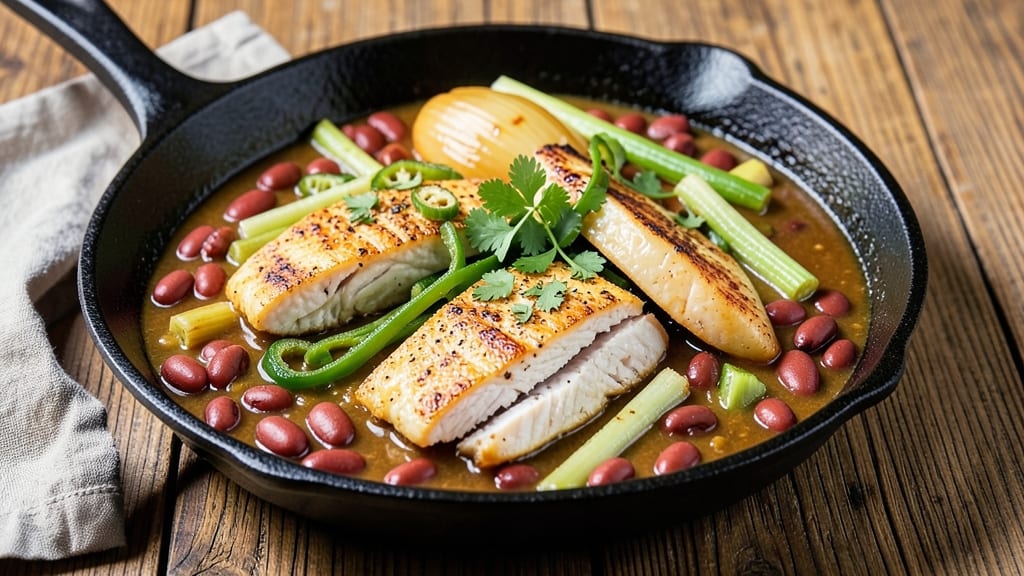
This blue runner red bean gumbo recipe brings the soul of Louisiana's bayous to your kitchen with its deep, smoky flavors and velvety okra-rich broth. 🌟 The secret lies in the slow-cooked roux—darkened to a mahogany hue—that forms the heart of every authentic Cajun stew, while the blue runner fish adds delicate sweetness that balances the earthy red beans and spiced broth.
What sets this gumbo apart is the traditional technique: building layers of flavor through the holy trinity (onions, bell peppers, celery), slow-simmered spices, and okra that thickens the broth naturally.
The red beans add heartiness, while the blue runner fillets cook just until tender, absorbing the rich gumbo's essence without overpowering it.
By the time you serve this gumbo over fluffy white rice, your kitchen will be filled with the aroma of smoked paprika, thyme, and bay leaves—an experience that transports you to a Cajun cook's hearth.
Each spoonful delivers a perfect harmony of smoky depth, creamy okra texture, and the delicate oceanic sweetness of blue runner.
The dish is complete with garnishes like chopped green onions and a sprinkle of filé powder, adding that signature Cajun kick. This is more than a recipe—it's a celebration of Louisiana's culinary heritage, brought to life in your own pot. Let's begin building this tradition.
Ingredients for blue runner red bean gumbo
The soul of Louisiana in your pot—smoky, rich, and full of tradition.
| Ingredient | Amount | Notes |
|---|---|---|
| Blue Runner Fillets 🐟 | 1 ½ lb | Skinless, cut into 1-inch pieces |
| Dry Red Kidney Beans 🌱 | 1 ½ cups | Soaked overnight or quick-soaked |
| Okra 🥒 | 1 lb | Fresh, trimmed and sliced |
| Yellow Onion 🧅 | 1 whole | Diced, for holy trinity |
| Green Bell Pepper 🌶️ | 1 whole | Diced, for holy trinity |
| Celery Stalks 🧄 | 3 whole | Diced, for holy trinity |
| Smoked Paprika 🌶️ | 2 tbsp | High-quality, for deep smokiness |
| Dried Thyme 🌿 | 1 tbsp | Or 1 tbsp fresh thyme leaves |
| Bay Leaves 🍃 | 2 whole | Fresh preferred, but dried works |
| Garlic Cloves 🧄 | 4 cloves | Minced, for aromatic punch |
| Vegetable Oil 🫒 | ½ cup | For roux, high smoke point |
| All-Purpose Flour 🌾 | ½ cup | For roux, white gold dust |
| Fish Stock 💧 | 4 cups | Homemade or quality store-bought |
| Filé Powder 🌶️ | 2 tbsp | For thickening and Cajun kick |
| Green Onions 🧅 | ¼ cup | Chopped, for garnish |
| Salt 🧂 | 1 ½ tsp | Kosher or sea salt |
| Black Pepper 🌶️ | ½ tsp | Freshly ground |
| Cayenne Pepper 🔥 | ½ tsp | Adjust to taste for heat |
The blue runner is the star here, so grab the freshest fillets you can find. Local seafood markets or the fish counter at Wegmans usually have the best quality—look for bright, translucent flesh with no fishy odor. If you're using frozen, thaw it overnight in the fridge. The red beans? Dry is best—soak them overnight for creamier texture, or use the quick-soak method if you're in a hurry. Okra needs to be fresh too—Trader Joe's often carries good quality, or check the produce section at Whole Foods. For the holy trinity, I like to use organic celery from the store's pre-washed section—it saves time and keeps things fresh.
No smoked paprika? Substitute with a mix of regular paprika and a pinch of liquid smoke, but it won't be the same. Fresh thyme is ideal, but dried works at half the amount if that's what you've got. Running low on fish stock? Clam juice or even vegetable stock in a pinch, though it'll lack that oceanic depth. The filé powder is non-negotiable for that signature gumbo texture—Tony Chachere's is the brand most Cajun chefs swear by. No filé? Cornstarch at half the amount will thicken, but it won't have that earthy kick. And if you're worried about the okra being slimy, blanch it for 2 minutes first—trust me on that.
This gumbo tastes even better the next day, so make a double batch if you can. Store leftovers in the fridge for 4-5 days, or freeze for up to 3 months—it reheats beautifully. I like to portion mine into containers with a little extra rice on top, so lunches are ready to grab. The roux is the heart of this dish, so don't rush it. Let it develop that deep mahogany color—it's worth the patience. And if you've got extra filé powder, save it in a cool, dark place—it keeps for years.
Why You'll Love This Recipe
- One-Pot Magic: I swear by this recipe when I’m too tired to scrub a million pots—just one big pot, a handful of beans, and those tender Blue Runner fillets swimming in a thick, smoky roux. The okra thickens it all naturally, so no cornstarch drama or extra steps.
- Smoky-Sweet Harmony: That first bite? The flaky Blue Runner melts against the slow-cooked kidney beans, while the bell pepper and onion add a sweet, almost caramelized depth. Honestly, the way the gumbo clings to the fish—like it’s hugging every flavor—makes it impossible to stop at one bowl.
- Lunchbox to Dinner Party: Between us, this gumbo is my lazy Sunday lunch and my “I’m hosting unexpected guests” go-to. Serve it over rice with crusty bread for a casual meal, or ladle it into bowls with hot sauce for a crowd—no one will guess it’s basically pantry staples.
- Budget-Friendly Leftovers: A pound of dried beans and a few fillets stretch this recipe into three hearty dinners, and it actually tastes better the next day. I’ll be real: my freezer’s full of gumbo because reheating it is zero effort, and it’s cheaper than takeout by a landslide.
Step-by-step instructions for blue runner red bean gumbo
Here's how to build this rich, okra-thickened gumbo with layers of smoky depth and tender fish.
🔥 Step 1: Build the Holy Trinity and Sauté the Okra
Heat the 0.5 cup vegetable oil in a large Dutch oven over medium heat. Add the diced yellow onion, green bell pepper, and celery stalks (your holy trinity) and cook for 5-6 minutes until softened but not browned. Stir occasionally so nothing sticks.
Add the sliced okra and cook for another 3-4 minutes until it begins to soften slightly. The okra will release its natural thickening properties as we cook. Here's the thing—don't let it brown, or you'll get bitter flavors. Keep the heat at medium and stir gently to distribute the okra evenly throughout the trinity.
🍳 Step 2: Create the Roux and Add Spices
Increase heat to medium-high and whisk in the 0.5 cup all-purpose flour all at once. Stir constantly for 5-7 minutes until the roux reaches a deep chocolate brown color—this is your flavor foundation. You'll know it's ready when it smells nutty and looks like melted chocolate.
Immediately add the 2 tbsp smoked paprika, 1 tbsp dried thyme, 2 whole bay leaves, 1.5 tsp salt, 0.5 tsp black pepper, and 0.5 tsp cayenne pepper. Stir for 30 seconds to toast the spices and release their aromas. This is where the gumbo gets its signature smoky depth—don't skip this step.
🥘 Step 3: Simmer the Beans and Stock
Add the drained 1.5 cups dry red kidney beans and 4 cups fish stock to the pot. Bring to a gentle boil, then reduce heat to low and simmer uncovered for 45-50 minutes, stirring occasionally. The beans should be tender but not mushy—they'll continue cooking in the finished gumbo.
Here's a pro tip: If the gumbo gets too thick during this time, add a splash of water. If it's too thin, uncover it to reduce. You want a thick, stew-like consistency that coats the back of a spoon but still moves easily. The okra will continue thickening as it cooks.
🍳 Step 4: Cook the Fish and Finish
Gently stir in the 1.5 lb blue runner fillets (cut into 1-inch pieces) and the 4 cloves minced garlic. Simmer for 8-10 minutes until the fish is just cooked through—it should flake easily but not fall apart. The fish will finish cooking in the residual heat, so don't overcook it.
Remove the gumbo from heat and stir in the 2 tbsp filé powder. This is what gives gumbo its signature thickening and that unmistakable Cajun flavor. Let it sit for 5 minutes to thicken slightly. If it's still too thin, add a bit more filé powder—just a teaspoon at a time until you reach the right consistency.
🍽️ Step 5: Rest and Serve
Let the gumbo rest for 10 minutes before serving. This allows all the flavors to meld together and the okra to fully develop its thickening properties. Taste and adjust seasoning if needed—you might need a bit more salt or cayenne to balance the flavors.
Ladle the gumbo into bowls and garnish with 0.25 cup chopped green onions. Serve immediately with hot rice—this gumbo tastes best straight from the pot when the fish is still warm and the broth is steaming. The okra will have created a velvety texture that perfectly complements the smoky, spicy depth of the gumbo.
Pro Tips For Making Blue Runner Red Bean Gumbo
- Sear the Blue Runner First: Don’t toss the fillets into the gumbo pot raw—pat them dry, season with salt, and sear them skin-side down in a hot pan for 2-3 minutes per side until they release easily. This locks in moisture and builds flavor before they even hit the broth. (Yes, it’s extra work, but your gumbo won’t turn into fish-flavored soup.)
- Soak Beans Overnight (Or Use a Trick): Dry kidney beans? Skip the 8-hour soak if you’re short on time—just cover them with cold water, add 1 tsp baking soda, and let them sit for 4 hours. The soda softens them faster, and you’ll avoid the bloated, uneven texture that comes from rushing them. (I learned this the hard way after serving a gumbo with one rock-hard bean.)
- Chop Okra Small: Big okra slices turn mushy and slimy—slice them into ½-inch rounds or dice them. Smaller pieces blend into the gumbo without turning it into a gluey mess. If you’re lazy, freeze the okra first, then chop; it stays firmer and easier to handle. (Your gumbo’s texture will thank you.)
- Simmer Low and Slow: The moment you add the fish, drop the heat to a bare simmer—no bubbling, no rushing. Blue runner cooks in 8-10 minutes max, and high heat will turn it rubbery. Use a thermometer if you’re unsure: aim for 160°F (71°C) internal temp. (I’ve ruined enough fish to know this isn’t optional.)
Flavor customization for this blue runner red bean gumbo
Spice Level Control
Adjust the heat to your preference by modifying the cayenne pepper—start with ½ tsp for mild, 1 tsp for medium, or 1.5 tsp for bold. For extra depth, add ½ tsp smoked paprika alongside the cayenne.
If you love a slow burn, toast ¼ tsp crushed red pepper flakes in the roux for 30 seconds before adding spices. 🌶️
Smoky Depth Boost
For a deeper smoky flavor, replace ½ tbsp of the smoked paprika with ½ tsp liquid smoke (like Annie’s brand) or add 1 tsp chipotle powder to the roux. If you’re using liquid smoke, reduce the smoked paprika to 1.5 tbsp to avoid overpowering the dish.
For a campfire-inspired twist, char ½ tsp garlic powder in a dry pan for 1 minute before mixing it into the gumbo.
Okra Variations
Skip the okra for a creamy, roux-thickened gumbo by using 2 tbsp cornstarch mixed with 2 tbsp cold water instead of filé powder. For a Southern-style twist, add ½ cup chopped fresh tomatoes to the holy trinity—this balances the richness.
If you prefer a vegetarian version, replace the blue runner with ½ lb smoked sausage or extra-firm tofu for protein.
Sweet & Tangy Balance
Brighten the gumbo with 1 tbsp lemon juice or 1 tsp apple cider vinegar at the end for a refreshing contrast. For sweetness, stir in 1 tsp brown sugar during the final 5 minutes of cooking.
A dash of Worcestershire sauce (like Lea & Perrins) adds umami depth—just ½ tsp is enough to elevate the dish without overpowering it.
Herb & Aroma Swaps
Replace thyme with 1 tbsp fresh oregano or ½ tsp dried rosemary for a Mediterranean-inspired twist. For a bold Cajun kick, add ½ tsp ground allspice or ¼ tsp ground cloves to the roux.
If you love fresh herbs, garnish with cilantro instead of green onions—just 2 tbsp chopped adds a bright finish.
Protein Swaps
Use ½ lb shrimp instead of blue runner for a lighter option—add them in the last 5 minutes of cooking. For a hearty version, replace the fish with ½ lb andouille sausage, sliced into rounds.
If you prefer chicken, use 1 lb bone-in, skin-on chicken thighs and simmer for 20 minutes until tender. 🍗
Nutrition facts
Frequently asked questions
Can I substitute blue runner with another type of fish?
Blue runner works beautifully, but you can use red snapper, mahi-mahi, or tilapia as substitutes. For best results, choose firm, white fish that flakes easily. Avoid delicate fish like sole or flounder—they can turn mushy in the long simmer. If using shrimp, add them in the last 5 minutes of cooking to prevent overcooking.
How do I achieve the perfect gumbo roux without burning it?
The key is patience and constant stirring! Start with medium-high heat and whisk the flour into the oil continuously for 5-7 minutes until it reaches a deep mahogany color. If it starts to smoke excessively, reduce the heat slightly but keep whisking. Never walk away—burnt roux is inedible. For extra insurance, use a heavy-bottomed pot like a Dutch oven to distribute heat evenly.
Can I make this gumbo in a slow cooker?
Yes, but with adjustments! First, make the roux on the stovetop as directed, then transfer everything (except the fish) to the slow cooker. Cook on low for 6-7 hours or high for 3-4 hours. Add the fish and garlic in the last 30 minutes to prevent overcooking. The texture will be slightly different—more brothy—but still delicious. Stir in filé powder at the very end since it thickens when cool.
Why did my gumbo turn out too thin?
This usually happens when the okra didn't thicken properly or the gumbo was over-diluted. First, try simmering uncovered for 10-15 extra minutes to reduce the liquid. If that doesn't help, mix 1 tbsp cornstarch with 2 tbsp cold water, stir it in, and simmer for 2 more minutes. For future batches, ensure your okra is fresh and cut into ½-inch slices—older okra releases less thickening power.
How long can I store leftovers, and how do I reheat them?
Store leftovers in an airtight container in the fridge for 4-5 days or freeze for up to 3 months. To reheat, warm gently on the stovetop over low heat and add a splash of water or stock if it thickens too much. For microwave reheating, cover with a damp paper towel and heat in 30-second intervals, stirring between each. Never reheat to boiling—this can make the gumbo grainy.