
Soups & Stews
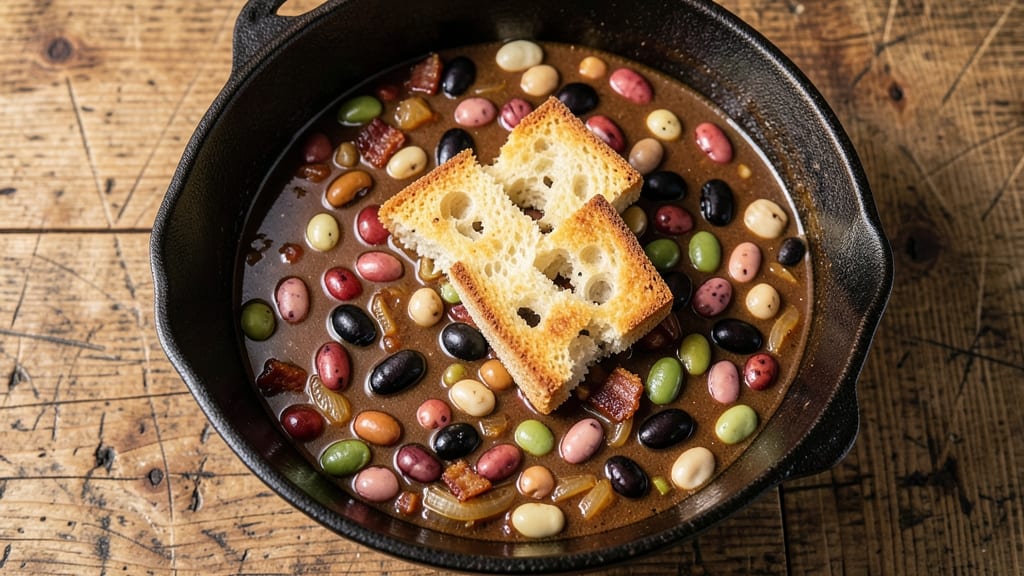
Bob's 13 bean soup recipe delivers the kind of soul-warming, pantry-friendly meal that transforms simple ingredients into something extraordinary.
This classic vegetarian stew combines 13 different bean varieties—navy, kidney, black, and more—with aromatic herbs and spices to create a hearty, protein-packed dish that's perfect for cold weather or family gatherings.
The secret lies in slow simmering, which allows flavors to meld and beans to soften just enough for tender, satisfying bites.
The beauty of this recipe is its versatility—it works as a standalone main dish for vegetarians or a hearty side for meat lovers.
With just pantry staples and a few fresh herbs, you'll create a soup that's rich in texture and flavor, from the creamy black beans to the slightly smoky bacon (optional) and the bright, tangy finish of vinegar and parsley.
The long simmering time—at least 2 hours—ensures every bean is perfectly tender and the broth is deeply flavorful.
What makes this soup truly special is how it brings people together. Whether you're serving it at a holiday table, packing leftovers for lunch, or simply enjoying a cozy night in, the aroma alone will fill your home with warmth.
The beans absorb the savory broth, creating a dish that's both comforting and satisfying—the kind of meal that tastes even better the next day.
Ready to make this recipe? Start by soaking your beans overnight for the best texture, then build layers of flavor with herbs, spices, and a touch of acidity. The result is a restaurant-quality soup that's simple enough for weeknights but impressive enough for guests. Let's get cooking!
Ingredients for bob's 13 bean soup
Thirteen dried bean varieties, aromatic herbs, and pantry staples combine for a vegetarian masterpiece.
| Ingredient | Amount | Notes |
|---|---|---|
| Navy Beans (Dried) 🌱 | 1 ½ cups | Soaked overnight for best texture |
| Kidney Beans (Dried) 🌱 | 1 cup | Soaked overnight for best texture |
| Black Beans (Dried) 🌱 | 1 cup | Soaked overnight for best texture |
| Great Northern Beans (Dried) 🌱 | 1 cup | Soaked overnight for best texture |
| Pinto Beans (Dried) 🌱 | 1 cup | Soaked overnight for best texture |
| Chickpeas (Dried) 🌱 | ½ cup | Soaked overnight for best texture |
| Lentils (Green or Brown) 🌱 | ½ cup | No soaking required |
| Split Peas (Yellow) 🌱 | ½ cup | No soaking required |
| Cranberry Beans (Dried) 🌱 | ½ cup | Soaked overnight for best texture |
| Adzuki Beans (Dried) 🌱 | ¼ cup | Soaked overnight for best texture |
| Cannellini Beans (Dried) 🌱 | ¼ cup | Soaked overnight for best texture |
| Fava Beans (Dried) 🌱 | ¼ cup | Soaked overnight for best texture |
| Mung Beans (Dried) 🌱 | ¼ cup | Soaked overnight for best texture |
| Vegetable Broth 💧 | 6 cups | Low-sodium preferred |
| Onion (Yellow) 🧅 | 1 whole | Diced into small pieces |
| Carrot 🥕 | 2 whole | Diced into small pieces |
| Celery Stalk 🌿 | 2 whole | Diced into small pieces |
| Garlic Cloves 🧄 | 4 cloves | Minced for aromatic depth |
| Tomato Paste 🍅 | ½ cup | For rich, concentrated flavor |
| Bay Leaves (Dried) 🌿 | 2 whole | For subtle herbal notes |
| Thyme (Dried) 🌿 | 1 tsp | Earthy depth to broth |
| Oregano (Dried) 🌿 | 1 tsp | Mediterranean warmth |
| Black Peppercorns 🌶️ | 1 tsp | Freshly cracked for brightness |
| Apple Cider Vinegar 🍎 | 1 tbsp | For subtle tang |
| Fresh Parsley 🌿 | ¼ cup | Chopped for bright finish |
| Salt 🧂 | 2 tsp | Diamond Crystal preferred |
The dried beans are the heart of this dish, and their quality matters. Bob's Red Mill or Whole Foods Market bulk sections offer the freshest, most flavorful options—look for beans that are firm, free of blemishes, and with a vibrant color. If using canned beans as a shortcut (though not traditional), opt for low-sodium varieties like Bush's or Great Value brands, but drain and rinse thoroughly to remove excess sodium. The key to perfect texture lies in proper soaking: cover beans with water by at least 2 inches, add a pinch of baking soda to soften skins, and soak for 8-12 hours. For the aromatic vegetables, organic produce from local farmers markets delivers superior flavor, but conventional grocery store selections work perfectly when fresh.
No dried beans on hand? Canned beans work in a pinch—just adjust cooking time accordingly. The vegetable broth can be substituted with homemade vegetable stock for deeper flavor, or even mushroom broth for an umami boost. Fresh herbs like thyme and oregano can be swapped for dried at a one-third ratio, but fresh parsley's bright finish is worth the effort. For those avoiding gluten, ensure your vegetable broth is certified gluten-free. The tomato paste can be replaced with sun-dried tomatoes (soaked and chopped) for a similar depth of flavor, while the apple cider vinegar can be omitted if you prefer a completely neutral acidity profile. Each bean variety contributes unique texture and flavor—don't be tempted to substitute with just a few types.
This soup develops richer flavor with time, so make it a day ahead if possible. Store in an airtight container in the refrigerator for up to 5 days, or freeze portions for up to 6 months by transferring to airtight containers with 1-inch headspace. When reheating, add a splash of water or broth to prevent thickening. The beans will continue to soften slightly over time, making this soup even more comforting when served the next day. For serving, garnish with extra parsley and a drizzle of high-quality olive oil to elevate the presentation while maintaining the dish's rustic charm.
Why You'll Love This Recipe
- Rich Without Trying: Here’s what sold me—the way those five dried beans (navy, kidney, black, great northern, pinto) blend into one soul-warming bowl. The kidney beans add a smoky depth, the pintos bring that creamy texture, and the great northerns? They’re the secret to that buttery, almost luxurious mouthfeel. Add a splash of vinegar at the end, and suddenly, you’ve got restaurant-quality complexity in a cast-iron pot.
- Weeknight to Potluck: This soup is my go-to for everything: a lazy Sunday lunch, a freezer meal for when I’m swamped, or the star of my holiday potluck (yes, even on a Tuesday night). Double the batch, freeze half, and you’ve got a 30-minute dinner for months. And honestly? It’s the one dish that makes me look like a hero when my in-laws show up unannounced.
- Pantry Goldmine: Between us, this recipe is my wallet’s best friend. A bag of dried beans costs pennies compared to canned, and they keep for years. One pot feeds six for under $5, and leftovers? They’re even better the next day—if they last that long. I’ll be real: I’ve reheated this soup three times in a row, and it’s still the most satisfying bowl in the house.
Step-by-step instructions for bob's 13 bean soup
Here's the method that transforms pantry staples into a rich, textured bean medley.
Prepare and Soak the Beans
Combine all the soaked beans—1.5 cups navy beans, 1 cup kidney beans, 1 cup black beans, 1 cup great northern beans, 1 cup pinto beans, 0.5 cup chickpeas, 0.5 cup cranberry beans, 0.25 cup adzuki beans, 0.25 cup cannellini beans, 0.25 cup fava beans, and 0.25 cup mung beans—in a large bowl. The lentils and split peas don't need soaking, so add them directly to the pot later. For best texture, I recommend soaking overnight in cold water with a pinch of salt—this reduces cooking time and prevents the beans from becoming mushy.
Drain and rinse the soaked beans thoroughly before using. The reason for this rinse is to remove any excess starch that could make the soup gummy. If you're short on time, you can use the quick-soak method: cover the beans with boiling water, let them sit for 1 hour, then drain and rinse. The beans should feel slightly softened but still hold their shape when pressed between your fingers.
Sauté the Aromatics
In a large, heavy-bottomed pot, heat 2 tablespoons olive oil over medium heat. Add the diced 1 whole onion, 2 whole carrots, and 2 whole celery stalks—this combination is known as a mirepoix—and cook for 8-10 minutes until the vegetables soften and the onion becomes translucent. You'll know it's ready when the edges start to caramelize slightly and the mixture releases easily from the bottom of the pot.
Add the 4 minced garlic cloves and cook for another 30 seconds until fragrant. Here's the thing—garlic burns quickly, so keep an eye on it. Remove the pot from heat if the garlic starts to darken too quickly, then return it to the stove once it cools slightly. This step builds the flavor foundation for the entire soup.
Build the Broth Base
Stir in the 0.5 cup tomato paste and cook for 1-2 minutes until it darkens slightly, deepening its flavor. This step intensifies the umami profile of the soup. Add the 6 cups vegetable broth, 2 whole bay leaves, 1 tsp dried thyme, 1 tsp dried oregano, 1 tsp cracked black peppercorns, and the drained soaked beans. Bring everything to a gentle boil, then reduce heat to low and let it simmer uncovered for 1 hour.
During this initial simmer, the beans will begin to break down and release starches into the broth, creating a naturally thickened base. Stir occasionally to prevent any beans from sticking to the bottom of the pot. The soup should smell rich and earthy—this is when the magic begins. If the broth level gets too low, add a splash of water to maintain consistency.
Add Remaining Ingredients and Simmer
After the initial 1 hour, add the 0.5 cup lentils, 0.5 cup split peas, 1 tbsp apple cider vinegar, and 2 tsp salt. The vinegar adds a subtle tang that balances the earthiness of the beans, while the salt enhances all the flavors. Return the soup to a simmer and cook uncovered for another 45-60 minutes, until all the beans and legumes are tender. You'll know they're ready when you can easily crush a bean between your fingers with minimal resistance.
Real talk: This is where patience pays off. The longer you let the soup simmer, the more the flavors meld together. If the soup becomes too thick, add a little more broth or water to reach your desired consistency. The final texture should be hearty but still spoonable, with a rich, velvety quality.
Finish and Serve
Remove the 2 whole bay leaves and discard them. Stir in the 0.25 cup chopped fresh parsley just before serving to brighten the flavors with a fresh, herbaceous note. Taste and adjust the seasoning if needed—sometimes the beans absorb more salt than others, so this final check ensures perfect balance.
Serve the soup warm, preferably in deep bowls to contain its hearty nature. Each spoonful should deliver a symphony of textures—creamy from the lentils and split peas, firm from the beans, and silky from the broth. This is the kind of soup that tastes even better the next day as the flavors continue to develop.
Pro Tips For Making Bob'S 13 Bean Soup
- SOAK BEANS TOGETHER: Don’t soak each bean type separately—toss them all in one big bowl with cold water and a splash of vinegar (even white works). The acid helps break down the skins faster, and you’ll save time scrubbing individual beans later. I used to do this the hard way, and now I just dump, soak overnight, and drain in one go.
- SIMMER LOW AND SLOW: Once the beans hit the pot, keep the heat at a bare simmer—you should see tiny bubbles but no rolling boil. High heat turns beans mushy, and this soup needs texture. I learned this after a batch turned into glue, and now I just watch the pot like a hawk.
- SKIP THE SALT UNTIL LATER: Add salt only after the beans are tender. Too much early on makes them tough, and you’ll end up with a watery mess. Wait until the last 30 minutes, then season like the soup’s already done—trust me, it’ll be better.
- UPGRADE WITH A RENDERED FAT: Swap plain water for a splash of bacon fat or olive oil when cooking the beans. It adds depth without overpowering, and the beans absorb the flavor like sponges. I was skeptical until I tried it—now I never go back.
Wine and beer pairings for this dish
Red Wine Classics
A medium-bodied red wine like Pinot Noir from Oregon or Chianti Classico from Italy complements the earthy bean complexity beautifully. The bright acidity cuts through the richness while the red fruit notes—cherry, raspberry—echo the tomato paste and vinegar in the soup.
I always reach for a 2019-2021 vintage from La Crema or Banfi for that perfect balance of structure and approachability. 🍷
Crisp White Options
For those preferring white, a dry Riesling from Germany or Vermentino from Sardinia shines with its citrus and mineral notes. The slight sweetness in Riesling (even when labeled "dry") harmonizes with the beans' natural sugars, while Vermentino's saline finish mirrors the soup's savory depth.
A 2020 Dr. Loosen Blue Slate Riesling or Cantina Mesa Vermentino delivers consistent quality.
Malbec for Hearty Appeal
If you love bold flavors, an Argentinian Malbec like Catena Zapata or Trapiche stands up to the soup's robust texture. The dark fruit and spice notes—blackberry, vanilla—complement the black beans and oregano, while its velvety tannins provide satisfying mouthfeel.
Chill slightly before serving to soften the tannins and enhance the wine's aromatic qualities.
Beer Pairings
A Belgian-style witbier like Hoegaarden or St. Bernardus Wit offers a refreshing contrast with its coriander and citrus notes. The effervescence cleanses the palate between spoonfuls, while the slight sweetness balances the soup's earthiness.
For a darker option, try a German Dunkelweizen—its caramel and clove undertones mirror the tomato paste and thyme beautifully.
Non-Alcoholic Choices
Skip the alcohol? A sparkling hibiscus tea (like Tepozteco) with its tart, floral notes works surprisingly well, especially with a splash of lime. For something richer, try a cold-brewed hibiscus and apple cider blend—sweet, tangy, and refreshing. Both options enhance the soup's natural flavors without overpowering them.
Nutrition facts
Frequently asked questions
Why does this recipe use 13 different bean varieties?
Each bean brings unique texture and flavor to the soup! Navy beans add creaminess, black beans contribute richness, and lentils create a silky mouthfeel. The variety creates a symphony of textures—some firm, some tender—that keeps every bite interesting. Plus, different beans provide diverse nutrients, making this a complete protein dish.
Can I substitute any of the beans if I don't have all 13?
You can omit 1-2 varieties without sacrificing flavor. For best results, replace with similar types: swap kidney beans for pinto, or black beans for cannellini. Just maintain the same total volume (about 4.5 cups dried beans total). The key is keeping a mix of textures—creamy (lentils), firm (navy), and tender (black beans).
How long can I store leftover 13 bean soup?
This soup actually tastes better the next day! Store in an airtight container in the fridge for 5-6 days or freeze for up to 6 months. When reheating, add a splash of water or broth to prevent thickening. The flavors continue developing, making it even more comforting as time passes.
Can I make this soup in a slow cooker?
Yes! Combine all ingredients (except parsley) in your slow cooker and cook on low for 6-8 hours or high for 3-4 hours. The long cook time works perfectly for developing deep flavor. Just check occasionally to ensure enough liquid remains. Add water as needed to maintain consistency.
What's the best way to thicken the soup if it's too thin?
Simmer uncovered for 15-20 extra minutes to reduce naturally, or stir in 1-2 tablespoons cornstarch mixed with water and cook for 5 minutes. For a creamier texture without thickening, mash some beans against the pot sides with a wooden spoon to release starches. The soup should have a hearty but spoonable consistency.