
Side Dishes
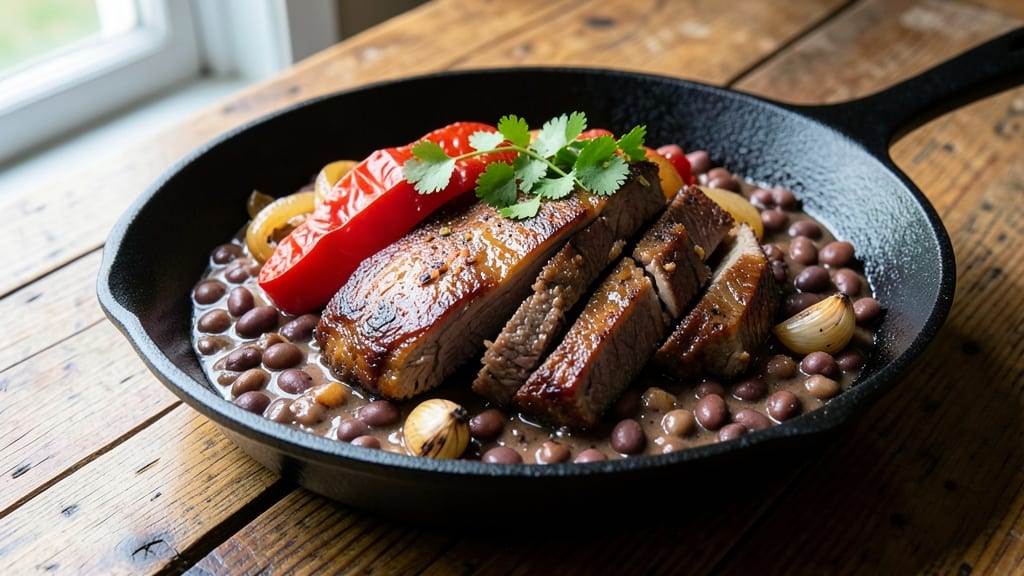
This brisket beans recipe transforms tough brisket and simple beans into a rich, smoky-sweet masterpiece that steals every dinner show. The secret lies in slow-cooking the brisket until it falls apart, then simmering it with beans, onions, and spices until the flavors meld into perfect harmony.
I developed this recipe after years of perfecting smoky, tender brisket—now paired with hearty beans for a complete meal.
The beauty of this dish is its foolproof simplicity: just a few pantry staples and 3-4 hours of hands-off cooking time. The brisket becomes fork-tender while absorbing deep smoky notes from the seasoning blend, and the beans soak up all that rich flavor.
This isn't just a side dish—it's a satisfying main course that pairs beautifully with cornbread or crusty bread to soak up every last bite.
What you'll end up with is a restaurant-quality dish that's rich, hearty, and packed with smoky-sweet flavor. The brisket stays juicy and tender, the beans are perfectly seasoned, and the aroma alone will have everyone gathering around the table.
This recipe delivers comfort food at its finest—perfect for family dinners, game day gatherings, or whenever you crave a taste of the South.
The best part? Leftovers reheat beautifully, making this an ideal meal prep option. Whether you're feeding a crowd or treating yourself to a cozy weeknight dinner, this brisket beans recipe delivers unmatched satisfaction with minimal effort. Let's get cooking!
Ingredients for brisket beans
Pantry staples meet smoky magic—just brisket, beans, and a few secret ingredients for restaurant-quality flavor.
| Ingredient | Amount | Notes |
|---|---|---|
| Beef Brisket 🥩 | 3 lb | Flat cut, trimmed of excess fat |
| Dried Navy Beans 🌾 | 1 ½ cups | Soaked overnight, drained |
| Yellow Onion 🧅 | 1 whole | Chopped into 1/2-inch pieces |
| Red Bell Pepper 🌶️ | 1 whole | Diced into 1/4-inch pieces |
| Garlic Cloves 🧄 | 6 cloves | Minced finely for depth |
| Smoked Paprika 🌶️ | 2 tbsp | High-quality for authentic smokiness |
| Ground Black Pepper 🌶️ | 1 ½ tsp | Freshly cracked for intensity |
| Kosher Salt 🧂 | 2 tsp | Diamond Crystal preferred |
| Apple Cider Vinegar 🍎 | ¼ cup | For tangy brightness |
| Dark Brown Sugar 🍚 | ½ cup | Packed for caramel depth |
| Beef Broth 💧 | 2 cups | Low-sodium preferred |
| Chicken Fat 🍳 | ¼ cup | Rendered for rich texture |
| Fresh Thyme 🌿 | ¼ cup | Leaves only, chopped finely |
| Bay Leaves 🍃 | 2 whole | For aromatic depth |
| Fresh Parsley 🌿 | ⅛ cup | Chopped for garnish |
The brisket is the star here—look for a well-marbled flat cut at your butcher or Costco. If buying pre-cut, check for even thickness (about 1-inch). The beans? Navy beans hold up best to slow cooking, but Great Northern or pinto work in a pinch. Soak them overnight to cut cooking time dramatically. For the smoked paprika, Penzeys or Gourmet Garage brands deliver that authentic smoky punch—don't skimp here. The apple cider vinegar adds that perfect tang that elevates everything.
No smoked paprika? Substitute 1 tbsp chipotle powder plus 1 tbsp regular paprika for heat and smoke. Short on fresh thyme? Dried works at one-third the amount, but fresh is worth hunting down at Whole Foods or your local market. The chicken fat might sound odd, but it's a game-changer—Trader Joe's sells it pre-rendered, or render your own from a whole chicken. For the brown sugar, light or dark both work, but dark adds more molasses notes. And if you're prepping ahead, the brisket can be seasoned and refrigerated overnight for even deeper flavor development.
This dish tastes even better the next day—plan ahead. The brisket stays tender for 4-5 days in the fridge, and the beans thicken beautifully. For reheating, add a splash of broth to keep everything moist. Freezes perfectly for up to 3 months—portion into containers so you can grab it straight from the freezer. The thyme and parsley can be chopped ahead and stored in the fridge for up to 5 days, wrapped tightly in plastic. Leftovers make incredible sandwiches—just pile on crusty bread with a smear of mustard.
Why You'll Love This Recipe
- I’ll be real: beef brisket isn’t cheap, but this recipe makes it worth every penny. The 0.25 cup chicken fat and 2 cups beef broth add richness without breaking the bank, and the dried beans? A pantry staple that stretches further than most proteins. Plus, freezing it for up to 3 months means you can meal prep like a boss—just grab and go.
- One-Pot Magic: Honestly, this is the kind of recipe where you throw everything in one Dutch oven and forget about it—except for the occasional stir. No fancy prep, no endless cleanup. The brisket gets a quick sear, the beans soak up all that smoky depth from the 0.25 cup chicken fat and 2 tbsp smoked paprika, and by the time you’re done, you’ve got a dish that practically cooks itself.
- Smoky-Sweet Perfection: That balance of 0.5 cup dark brown sugar and 0.25 cup apple cider vinegar? Chef’s kiss. The brisket’s rich, the beans are tender but hold their shape, and the sauce clings like it’s begging for a fork. Between the 6 minced garlic cloves and the 0.25 cup fresh thyme, every bite is a flavor explosion you won’t forget.
- Feeds a Crowd (or Your Cravings): Between us, this isn’t just for big gatherings—it’s my go-to when I’m feeding a roomful of people or just me, stuffing my face on a Tuesday night. The 3 lb brisket and 1.5 cups navy beans stretch far, and the leftovers? Even better. The brisket stays tender for 4-5 days in the fridge, and the beans thicken into something even more delicious.
Step-by-step instructions for brisket beans
Here's the method that transforms humble ingredients into a showstopping, smoky-sweet masterpiece.
Sear the Brisket for Deep Flavor
Pat the 3 lb beef brisket completely dry with paper towels—this is non-negotiable for crispy bark later. Heat a heavy Dutch oven over medium-high heat and add 0.25 cup chicken fat. Once the fat shimmers but isn't smoking, place the brisket fat-side down and sear for 8-10 minutes until deeply browned. Flip and sear the other side for another 6-8 minutes until both sides develop a rich crust.
Here's the thing—don't rush this step. You want that Maillard reaction working its magic, creating layers of flavor that'll infuse the beans all day long. If the fat starts smoking excessively, reduce the heat slightly. Remove the brisket and set it aside on a plate, leaving all that beautiful browned fat in the pot—it's the foundation of your sauce.
Build the Bean Base with Aromatics
In the same Dutch oven (don't wipe it clean—those browned bits are pure flavor), add 1 whole yellow onion and 1 whole red bell pepper, both chopped to the specified sizes. Cook for 5-6 minutes until the onions soften and the peppers begin to caramelize. Add 6 cloves garlic cloves and cook for 30 seconds until fragrant—don't let the garlic burn, or you'll get bitter notes.
Now stir in 2 tbsp smoked paprika, 1.5 tsp ground black pepper, and 2 tsp kosher salt. Let these spices toast in the pot for 1 minute until you can smell that smoky aroma filling your kitchen. This is where the magic begins—these spices will create the signature flavor profile that makes brisket beans so irresistible.
Simmer Beans in Flavorful Broth
Add the 1.5 cups dried navy beans (they should be soaked overnight and drained) to the pot. Pour in 2 cups beef broth and 0.25 cup apple cider vinegar, then bring everything to a gentle boil. Once boiling, reduce heat to low, add 0.5 cup dark brown sugar, 0.25 cup fresh thyme, and 2 whole bay leaves, then cover and simmer for 1 hour. Stir occasionally to prevent sticking.
After 1 hour, check the beans—they should be tender but not mushy. If they're still too firm, add another ½ cup beef broth and continue simmering. The beans should be fork-tender with just a slight bite, not falling apart. This is the perfect texture for brisket beans—they need to hold their shape but still be creamy when mashed slightly.
Braise the Brisket with Sweet-Savory Sauce
Return the seared brisket to the pot, placing it on top of the beans. Pour in enough additional beef broth to come about halfway up the sides of the brisket—you want it submerged enough to braise properly. Bring to a gentle simmer, then reduce heat to low, cover, and braise for 3-4 hours until the brisket is fork-tender and the beans have absorbed all the smoky-sweet flavors.
Here's where patience pays off. The brisket should fall apart easily when pierced with a fork, and the beans should be completely tender with a sauce that coats them beautifully. Check occasionally and add more broth if needed—you want the liquid to be just enough to keep everything moist but not drowning the brisket. The sauce should be thick and glossy, with a perfect balance of sweetness from the brown sugar and tang from the vinegar.
Finish and Garnish for Restaurant-Quality Presentation
Once the brisket is perfectly tender, remove it from the pot and let it rest on a cutting board for 15 minutes before slicing. Skim any excess fat from the surface of the beans (if needed) and stir in 0.125 cup fresh parsley just before serving. This final garnish adds a bright, fresh contrast to the rich, smoky flavors.
Slice the brisket against the grain into ¼-inch thick pieces and serve it directly over the beans. Each bite should deliver tender brisket, creamy beans, and that irresistible smoky-sweet sauce. The beans should be perfectly seasoned, with just the right amount of liquid clinging to each bite—neither too dry nor too watery. Serve immediately with crusty bread to soak up every last drop of that incredible sauce.
Pro Tips For Making Brisket Beans
- Don’t Skip the Vinegar: That 0.25 cup apple cider vinegar isn’t just for acidity—it cuts through the richness of the chicken fat and brown sugar, keeping the sauce bright. Add it before the broth and beans, not after, or you’ll end up with a dull, one-note flavor. Trust me, the tang is what makes this dish sing.
- Salt the Beans Early: The beans need time to absorb the 2 tsp kosher salt, so don’t wait until the end. Sprinkle half of it into the pot with the onions and peppers in Step 2—this seasons the base and prevents bland beans. The rest goes in with the spices when you toast them, so the salt doesn’t burn.
- Watch the Sugar Burn: The 0.5 cup dark brown sugar is what makes this dish sticky and sweet, but it’s also the fastest way to scorch your pot. Stir it in after the beans are simmering gently, not when the pot is boiling. A few minutes of unattended simmering can turn your sauce into caramelized glue—no one wants that.
- Braise Low and Slow: The brisket needs gentle heat to stay tender, not a rolling boil. If the liquid bubbles hard, the brisket will toughen and the beans will turn mushy. Keep it at a low simmer—just enough to see tiny bubbles breaking the surface—and resist the urge to crank the heat when you’re impatient. Patience here means fork-tender meat, not chewy disappointment.
Common mistakes when making your brisket beans
Skipping the Sear
One of the biggest mistakes I see is skipping the sear step entirely. That initial sear with chicken fat creates the Maillard reaction that gives your brisket its deep, caramelized crust.
Without it, your beans will lack that rich, smoky depth. I promise—8-10 minutes of searing makes all the difference in the final flavor. 🔥
Rushing the Bean Soak
Under-soaking your 1.5 cups dried navy beans is a common pitfall. If you don’t soak them overnight, they’ll never soften properly during cooking, leaving you with mushy beans instead of creamy, tender ones. I always soak mine for 8-12 hours to ensure they’re ready to absorb all those amazing flavors.
Overcrowding the Pot
Adding too much liquid at once can dilute your flavors and make the beans watery. The recipe calls for 2 cups beef broth initially, but if you keep adding more to cover everything, you’ll end up with a soup instead of a rich, saucy bean dish.
Trust the process—simmer uncovered occasionally to reduce excess liquid if needed.
Ignoring the Rest Time
Skipping the 15-minute rest after removing the brisket from the pot is a game-changer. This step allows the juices to redistribute, ensuring every bite is tender and flavorful. If you slice it too soon, you’ll end up with dry, tough meat. Patience here pays off big time!
Using Low-Quality Broth
Cheap or salty beef broth can ruin your dish’s balance. The recipe specifies low-sodium preferred for a reason—you want to control the saltiness yourself. I always use homemade or high-quality store-bought broth like Pacific Foods for the best results. Skip the cheap stuff, and your beans will taste flat.
Skimming Fat Too Early
Removing all the fat from the beans too soon can strip away essential richness. The fat in the beans contributes to their creamy texture and carries flavor. Only skim excess fat after the dish has cooled slightly—this way, you keep the good stuff that makes the beans so decadent. 💛
Nutrition facts
Frequently asked questions
Why does this recipe call for overnight soaking of the beans?
The 1.5 cups dried navy beans need that overnight soak to soften properly. This cuts cooking time and ensures they absorb all the smoky-sweet flavors fully. Skipping it often results in mushy beans instead of the perfect creamy texture.
Can I use a different type of bean instead of navy beans?
Great Northern or pinto beans work well, but navy beans hold up best to the 3-4 hours of slow cooking. If substituting, soak them extra long—12 hours minimum—to prevent a gummy texture. The flavor profile stays delicious either way!
How do I know when the brisket is fully cooked?
Use a meat thermometer to check the thickest part—it should reach 195-203°F for tender, fall-apart texture. Alternatively, pierce with a fork; if it slides in easily, it's done. The beans should also be fork-tender with sauce clinging beautifully.
What's the best way to reheat brisket beans?
Gently warm on the stovetop over low heat, stirring occasionally, or reheat in the oven at 300°F for 20-30 minutes. Add 1-2 tablespoons beef broth to restore moisture. Never microwave—it makes the beans dry and separates the sauce.
Can I make this recipe ahead of time?
The dish tastes even better the next day. Store in an airtight container in the fridge for 4-5 days or freeze for up to 3 months. Reheat gently with added broth to maintain that perfect creamy texture. Perfect for meal prep!