
Main Courses
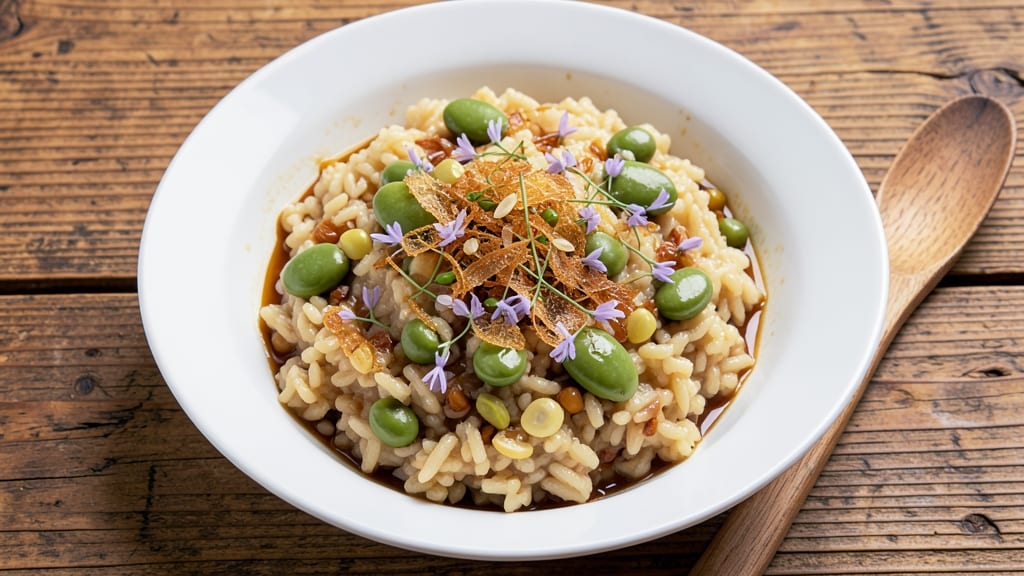
This broad bean risotto recipe transforms humble Arborio rice into a velvety, creamy masterpiece where earthy broad beans shine. The secret lies in slow-cooking the rice with vegetable broth while stirring constantly—this creates the signature al dente texture and luxurious creaminess.
I've perfected this vegetarian version to highlight the beans' natural sweetness while keeping the dish rich and satisfying.
What makes this risotto special is the balance of textures: tender broad beans add a delicate pop, while the Arborio rice absorbs the flavorful broth to create a creamy consistency.
Toasting the rice in olive oil first unlocks its natural starch, which is essential for achieving that restaurant-quality creaminess without dairy. The dish comes together in about 25 minutes, making it perfect for weeknight dinners or special occasions.
By the final stir, you'll have a dish that's vibrant green from the broad beans, creamy from the rice, and brightened with fresh herbs or lemon zest.
The aroma alone will have everyone gathering at the table—this risotto is hearty enough to stand as a main course but elegant enough for any gathering. Let's create this earthy, comforting masterpiece.
The beauty of this recipe is its versatility. Use fresh broad beans in season or canned for convenience, and adjust the herbs to suit your taste—parsley for classic brightness or mint for a refreshing twist.
The result is a vegetarian dish that feels luxurious without being complicated. Here's how to make it perfectly every time.
Ingredients for broad bean risotto
These 14 ingredients create velvety risotto where earthy broad beans shine against creamy Arborio rice.
| Ingredient | Amount | Notes |
|---|---|---|
| Arborio Rice 🍚 | 1 ½ cups | Unrinsed for maximum starch |
| Fresh Broad Beans 🌱 | 1 ½ cups | Trimmed, shelled, or canned (drained) |
| Vegetable Broth 💧 | 4 cups | Low-sodium, homemade preferred |
| Extra-Virgin Olive Oil 🫒 | ½ cup | High-quality, fruity variety |
| Shallots 🧅 | 2 whole | Minced, or 2 tbsp shallot powder |
| Garlic Cloves 🧄 | 4 cloves | Finely minced, fresh preferred |
| White Wine 🍷 | ½ cup | Dry, like Pinot Grigio |
| Vegetable Stock 🥫 | 1 cup | For deglazing, same brand as broth |
| Lemon Zest 🍋 | 1 tbsp | Freshly grated, bright flavor |
| Fresh Parsley 🌿 | ¼ cup | Chopped, stems removed |
| Fresh Mint Leaves 🍃 | ⅛ cup | Optional, for refreshing twist |
| Salt 🧂 | 1 ½ tsp | Diamond Crystal preferred |
| Black Pepper 🌶️ | ½ tsp | Freshly cracked, coarse grind |
| Parmesan Cheese 🧀 | ½ cup | Freshly grated, vegetarian rennet |
The Arborio rice is non-negotiable—its high starch content is what creates that signature creamy texture. Look for Arborio or Carnaroli at your local market; don't settle for basmati or jasmine. Fresh broad beans are ideal (spring markets have the best), but canned beans work in a pinch—just drain and rinse well. For the broth, homemade vegetable stock elevates everything, but even a quality low-sodium brand like Pacific Foods will do. The shallots and garlic? Freshly minced makes all the difference—pre-minced from a jar tastes flat. If you're using dried beans, soak them overnight and cook until tender; fresh or canned beans cut prep time dramatically.
No white wine? Dry vermouth or extra vegetable broth works just as well. Short on parsley? Fresh cilantro or basil adds a different but delicious twist. The Parmesan should be vegetarian rennet—check the label! For extra richness, stir in 1 tbsp nutritional yeast at the end. If your risotto feels too dry, add a splash more broth; if it's too thin, let it cook uncovered for another minute. The lemon zest should be freshly grated—bottled zest loses its punch. And trust me on the constant stirring—it's how you release those starches for that creamy magic.
Risotto is best served immediately, but leftovers reheat beautifully with a splash of broth. Store in an airtight container for 3-4 days in the fridge. For freezing, portion into single servings and freeze flat—3 months max. The beans will soften slightly after reheating, but the creamy texture remains. I always make a double batch because this disappears faster than you'd think. Garnish with extra herbs and a crack of black pepper right before serving—that's when it's at its peak. The Parmesan keeps for weeks in the fridge, so buy extra.
Why You'll Love This Recipe
- One-Pot Magic: I swear by this recipe when I’m too tired to wash dishes. The Arborio rice and broth do all the work—just stir, repeat, and let the shallots and beans caramelize in the same pan. No extra pots, no stress.
- Earthy Luxury: That first bite? Rich, nutty Arborio rice meets the fresh, slightly sweet crunch of broad beans—like spring in a bowl. The olive oil ties it all together with a silky finish that feels fancy without the fuss.
- Weeknight to Dinner Party: Honestly, this is my go-to for both Tuesday dinners and Sunday suppers. Swap the vegetable broth for white wine for a restaurant vibe, or keep it simple for a quick family meal. The beans add a pop of color and texture that makes it feel special.
- Budget-Friendly Staples: Arborio rice and broad beans are pantry-friendly, and a big batch of broth stretches for multiple servings. I make double portions—leftovers reheat beautifully, and the flavor only gets better the next day. Minimal cost, maximum satisfaction.
Step-by-step instructions for broad bean risotto
Transform simple ingredients into velvety risotto with vibrant broad beans and nutty Arborio.
Blanch and Prep the Broad Beans
Start by blanching the 1.5 cups fresh broad beans in boiling salted water for 3 minutes - this softens them while preserving their bright green color. Immediately transfer to an ice bath to halt cooking, then drain and set aside. I like to peel the skins off the blanched beans for a cleaner texture, though you can leave them if you prefer rustic texture.
While the beans cool, trim any tough ends from the fresh broad beans and shell them if using fresh. If using canned beans, simply drain and rinse thoroughly. The beans should be tender but still hold their shape - they'll finish cooking in the risotto. This prep ensures they infuse flavor without becoming mushy.
Sauté Aromatics in Olive Oil
Heat the 0.5 cup extra-virgin olive oil in a heavy-bottomed pot over medium-low heat. Add the 2 whole shallots and 4 cloves garlic cloves, cooking gently for 5-6 minutes until the shallots turn translucent and the garlic releases its aroma without browning. You're building flavor layers here - don't rush this step.
Here's the thing - if you see the garlic start to color, immediately remove the pot from heat and let it cool slightly. Browned garlic will dominate the dish. The oil should be shimmering but not smoking - this is your perfect cooking temperature for developing sweetness in the aromatics.
Toast the Arborio Rice
Add the 1.5 cups unrinsed Arborio rice to the pot and stir to coat the grains completely in the aromatic oil. Toast the rice for 2-3 minutes until it turns slightly translucent at the edges. This step is crucial - it builds flavor in the rice itself through the Maillard reaction.
I like to press the rice grains gently against the pot with a wooden spoon during toasting to ensure even contact with the hot oil. You'll know it's ready when the rice releases its nutty aroma and the edges become just slightly opaque. Don't walk away - this stage needs constant attention.
Deglaze and Cook with Broth
Pour in the 0.5 cup white wine and stir vigorously, scraping up any browned bits from the bottom of the pot. Let the wine reduce by half before adding 1 cup hot vegetable broth at a time. Stir frequently - the rice should absorb each addition before you add more.
This is where the magic happens: each addition of broth should be absorbed in about 3-4 minutes. The rice should be al dente but still slightly firm in the center when you taste it. I find using a wooden spoon to stir in figure-8 motions helps distribute the broth evenly and prevents sticking.
Finish with Beans and Fresh Herbs
When the rice is nearly tender (about 18-20 minutes total cooking time), stir in the blanched broad beans and 1 cup vegetable stock. Cook for another 2-3 minutes until the beans are heated through and the risotto reaches creamy perfection. The beans should be warm but still vibrant green.
Remove from heat and stir in the 1 tbsp lemon zest, 0.25 cup fresh parsley, 0.125 cup fresh mint leaves, 1.5 tsp salt, 0.5 tsp black pepper, and 0.5 cup freshly grated Parmesan cheese. Let it rest for 1 minute to thicken slightly before serving. The lemon zest brightens the earthy flavors while the herbs add freshness that cuts through the richness.
Pro Tips For Making Broad Bean Risotto
- Toast the Shallots Slow: I used to rush this step and wondered why my risotto tasted flat—shallots need 8-10 minutes in olive oil until they’re golden and jammy, not just soft. Lower the heat halfway if they start to brown too fast; you want caramelized flavor, not burnt bits.
- Blanch Broad Beans First: Peeling broad beans is a pain, but blanching them for 3 minutes in boiling water first makes the skins slip right off. Shock in ice water immediately, then peel—this also softens them slightly so they don’t turn to mush later. (Yes, it’s extra work, but the texture is worth it.)
- Stir Like You Mean It: Arborio rice needs constant stirring to release starch, but I’ve ruined risotto by going half-hearted. Use a wooden spoon and scrape the bottom aggressively every 30 seconds—especially in the first 5 minutes. Lazy stirring = gummy rice.
- Add Broth in Stages: Don’t dump all the broth in at once. Start with 1 cup, then add ½ cup increments as the rice absorbs it—this keeps the risotto creamy without turning it into soup. Taste the rice at the 16-minute mark; if it’s still firm, add more broth. If it’s mushy, you’ve overdone it.
Wine and beer pairings for these flavors
White Wine Elegance
A crisp, dry white wine like Pinot Grigio or Sauvignon Blanc complements the broad bean risotto beautifully. The acidity in these wines cuts through the creamy texture while enhancing the earthy notes of the beans.
I reach for a chilled bottle of Pinot Grigio from Alto Adige—its citrusy brightness mirrors the lemon zest in the dish. 🍷
Light Red Harmony
For a red wine lover, a light-bodied red such as Pinot Noir or Beaujolais works surprisingly well. The subtle fruitiness of these wines balances the broad beans' earthiness without overpowering the dish.
A chilled Pinot Noir from Oregon adds a touch of elegance without clashing with the risotto's vibrant green hue.
Sparkling Refreshment
If you prefer something bubbly, a dry sparkling wine like Prosecco or Cava adds a festive touch. The effervescence cleanses the palate between bites, making the creamy risotto even more enjoyable. I love pairing this risotto with a chilled glass of Prosecco—it feels celebratory without being too heavy.
Beer Pairings
A crisp lager like Peroni or Heineken provides a refreshing contrast to the rich risotto. The light, clean flavors of these beers won’t compete with the dish but will enhance its creamy texture.
For something more adventurous, try a Belgian witbier—its citrus and coriander notes complement the lemon zest and fresh herbs. 🍺
Non-Alcoholic Options
Don’t drink alcohol? No problem! A sparkling water with lemon or ginger beer works wonderfully. The effervescence and zesty notes mirror the dish’s brightness. For something heartier, a cucumber-mint infused water adds a refreshing twist that pairs perfectly with the earthy risotto.
Nutrition facts
Frequently asked questions
Can I use dried broad beans instead of fresh?
Yes, but you'll need to soak them overnight first! Dried broad beans take much longer to cook, so simmer them in salted water for 1-1.5 hours until tender before using in your risotto. They'll add a heartier texture but lose some of their delicate sweetness compared to fresh or canned beans.
What if my risotto turns out too dry?
Simply add 2-3 tablespoons hot vegetable broth at a time, stirring gently until absorbed. The key is patience—never rush by adding too much broth at once, which can make it watery. If it's still too dry after adding broth, let it cook uncovered for 1-2 minutes to thicken naturally.
How do I make this risotto gluten-free?
Replace Arborio rice with gluten-free risotto rice (like glutinous rice or specialty GF Arborio blends) and ensure your vegetable broth is certified gluten-free. Check all ingredients, especially Parmesan—some brands contain gluten. The technique remains exactly the same, just use GF substitutes throughout.
Can I prep this risotto ahead of time?
Cook the risotto up to the point before adding the final 1 cup vegetable stock and broad beans. Store in an airtight container in the fridge for 1 day or freeze for 3 months. To serve, reheat gently with a splash of broth and finish with fresh herbs and lemon zest to restore brightness.
What's the secret to creamy risotto without dairy?
The magic is in the Arborio rice! Its high starch content releases as you stir, creating creaminess naturally. Keep stirring constantly, use hot broth, and let it cook until the rice is al dente. The lemon zest and Parmesan add richness without needing dairy—plus, they brighten the earthy flavors beautifully.