
Side Dishes
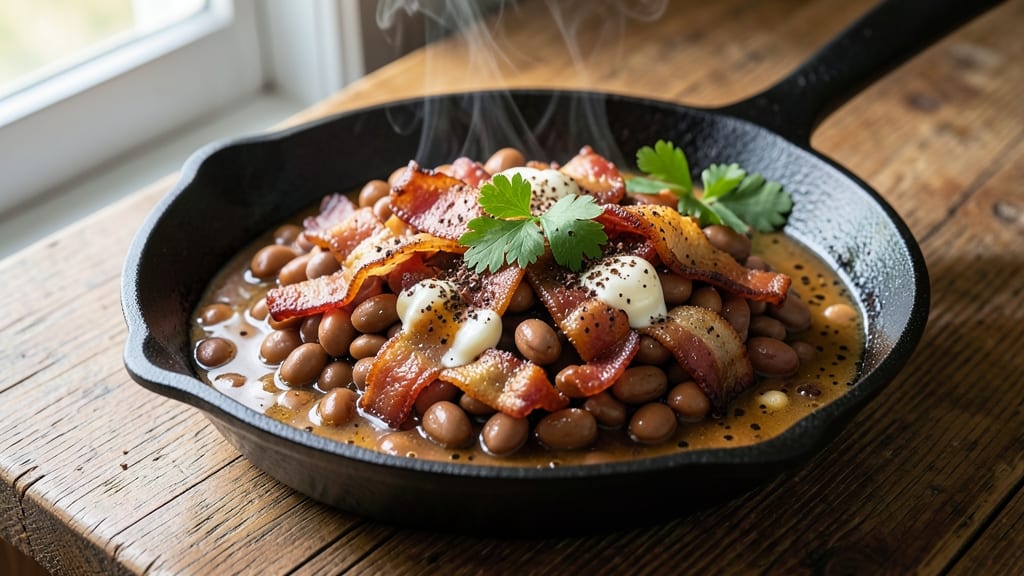
This New England baked beans recipe delivers the deep, smoky-sweet comfort that defines regional tradition—where molasses, brown sugar, and slow-baked beans create a dish that tastes like home. The key lies in layering flavors through careful spicing and liquid reduction, transforming simple ingredients into something extraordinary.
After years of perfecting the balance between tangy mustard and rich maple, I’ve developed a method that delivers restaurant-quality results in a single pot.
The process begins with rendering crispy bacon for flavor depth, then simmering navy beans until tender. A foolproof molasses-brown sugar glaze forms the heart of the dish, while cloves and bay leaves add aromatic complexity.
Slow baking at 300°F for 3 hours ensures the beans absorb all the smoky-sweet goodness, creating a sauce that’s thick enough to coat a spoon. This isn’t just a side—it’s the centerpiece of any New England meal.
By the time you’re done, you’ll have deep mahogany beans with a glossy, caramelized top and a sauce so rich it clings to every bite.
The aroma alone transforms your kitchen into a cozy gathering spot, while the texture—tender beans in a velvety glaze—makes it impossible to resist seconds. Serve alongside cornbread or as a hearty side for roasted meats, and you’ve recreated the classic comfort of a New England table.
Regional variations exist—Boston’s version leans smokier, while Maine’s often includes a touch of vinegar—but this recipe captures the essence of both. The beauty of this method is its versatility: make it ahead for potlucks, freeze portions for lazy weeknights, or double the batch for gatherings.
Here’s how to achieve that perfect balance of sweet, smoky, and savory every time.
Ingredients for new england baked beans
Pantry staples meet regional tradition—where smoky bacon, deep molasses, and slow-baked beans create New England comfort in one pot.
| Ingredient | Amount | Notes |
|---|---|---|
| Navy Beans 🍲 | 2 cups | Dried, soaked overnight |
| Thick-Cut Bacon 🥓 | 8 oz | Chopped into small pieces |
| Unsalted Butter 🧈 | ½ cup | Full-fat for richness |
| Pure Maple Syrup 🍁 | ½ cup | Grade B for authentic flavor |
| Dark Brown Sugar 🍬 | 1 cup | Packed, for caramel depth |
| Molasses 🍯 | ½ cup | Unsulphured, robust flavor |
| Yellow Mustard 🌶️ | ¼ cup | Prepared, tangy variety |
| Garlic Cloves 🧄 | 4 cloves | Minced, for aromatic base |
| Onion 🧅 | 1 whole | Yellow, diced medium |
| Bay Leaves 🌿 | 2 whole | Fresh, for subtle aroma |
| Ground Cloves 🌶️ | ½ tsp | Freshly ground preferred |
| Ground Allspice 🌶️ | ¼ tsp | For warm, spiced notes |
| Kosher Salt 🧂 | 1 ½ tsp | Diamond Crystal preferred |
| Black Peppercorns 🌶️ | ½ tsp | Coarsely cracked |
| Apple Cider Vinegar 🍎 | ¼ cup | For subtle tang |
The bacon is non-negotiable for that authentic smoky depth. Thick-cut from a butcher renders the best flavor, but pre-chopped Oscar Mayer works in a pinch. For the beans, navy beans are traditional, but pinto or kidney beans add visual contrast. Soak them overnight—this cuts cooking time dramatically and prevents gas. The molasses should be unsulphured, as sulphured varieties can taste bitter. Whole Foods or specialty stores carry the best grades of pure maple syrup, but Grade B is perfect for this recipe. If you can't find it, Grade A Dark works but lacks the same depth.
No maple syrup? Substitute with extra molasses and a touch of corn syrup—it won’t be identical, but it’ll get you close. Running low on brown sugar? White sugar plus a teaspoon of molasses mimics the moisture content. The mustard adds tang, so if you’re avoiding it, apple cider vinegar at half the amount delivers a similar bright note. For the spices, Penzeys or bulk bins at natural markets offer the freshest ground cloves and allspice. If you’ve got whole spices, grind them fresh—they’re far more potent. The apple cider vinegar can be swapped for white vinegar, but Bragg’s adds a subtle sweetness that’s worth seeking out.
This dish tastes even better the next day as flavors meld. Store leftovers in an airtight container for up to 5 days in the fridge, or freeze for 3 months. For potlucks, double the batch—it reheats beautifully. The caramelized top is best served fresh, but a quick broil restores that glossy finish. Portion into individual containers for easy grab-and-go lunches, or freeze in single servings for lazy weeknights. The beans soften further when reheated, so plan accordingly if you prefer them slightly firmer.
Why You'll Love This Recipe
- One-Pot, One-Step Wonder: Soaking the navy beans the night before means I’m not stuck stirring for hours—just toss everything in the Dutch oven, let it do its thing, and walk away. The bacon renders its fat while you’re asleep, and the spices dissolve into that rich liquid like magic. Honestly, the only effort is resisting the urge to peek every five minutes.
- Sweet, Smoky, Tangy Perfection: This isn’t your basic sweet-and-salty bean dish. The unsalted butter and pure maple syrup create a glossy glaze, while the unsulphured molasses and yellow mustard add that perfect balance—deep, caramelized sweetness with a bite. The ground cloves and allspice? They make it feel like you’re eating a cozy autumn day in a New England kitchen. Trust me, the first bite is chef’s kiss.
- Budget-Friendly Comfort: Navy beans are dirt cheap, and thick-cut bacon (even the good stuff) stretches far when you’re cooking for a crowd. The dark brown sugar and molasses add that luxurious depth without breaking the bank. I’ve made this on a $15 grocery haul, and it still tastes like a restaurant special. Plus, freezing half means I’ve got a meal ready for when I’m too tired to cook.
Step-by-step instructions for New England baked beans
This method delivers deep, smoky-sweet beans with tender bacon and a glossy maple glaze.
Render the Bacon and Sauté Aromatics
Cut the 8 oz thick-cut bacon into small pieces and place in a large Dutch oven over medium heat. Cook undisturbed for 5 minutes until the fat renders and the bacon begins to crisp. Stir occasionally to prevent burning, but resist the urge to move it constantly—this allows the fat to develop rich flavor.
Once the bacon is 75% cooked and the fat shimmers, add the 1 whole onion (diced medium) and 4 cloves garlic (minced). Sauté for 4-5 minutes until the onion softens and becomes translucent. Here's the thing—don't rush this step. The onions should caramelize slightly, deepening the bean's flavor foundation. Remove the pan from heat and set aside temporarily.
Combine Beans and Liquid Base
In the same Dutch oven, melt the 0.5 cup unsalted butter over medium-low heat. Add the 2 cups soaked navy beans (drained if pre-soaked), 0.5 cup pure maple syrup, 1 cup dark brown sugar, and 0.5 cup molasses. Stir well to distribute the sweet ingredients evenly through the beans.
Return the pan to medium heat and bring the mixture to a gentle simmer. Here's where it gets crucial: add 0.25 cup apple cider vinegar and 0.25 cup yellow mustard to balance the sweetness with tangy depth. Stir in the 1.5 tsp kosher salt, 0.5 tsp ground cloves, 0.25 tsp ground allspice, and 0.5 tsp black peppercorns. The spices should dissolve completely into the liquid.
Layer and Simmer for Deep Flavor Development
Return the bacon-onion mixture to the pot and stir thoroughly to combine. Add 2 whole bay leaves and enough water to cover the beans by 1 inch—approximately 4 cups total. The liquid should come just above the bean level but not so much that it dilutes the concentrated flavors.
Bring to a full simmer, then reduce heat to low. Cover the pot and let it cook for 2 hours, stirring occasionally. The beans should soften but still hold their shape slightly—you're aiming for tender but not mushy texture. This slow cooking builds the rich, caramelized glaze that defines New England baked beans.
Thicken and Glaze to Perfection
After 2 hours, remove the lid and increase heat to medium-low. Let the beans simmer uncovered for 30-45 minutes, stirring frequently. The liquid will reduce dramatically, creating a thick, glossy sauce that coats each bean. You'll know it's ready when the mixture reaches a syrupy consistency—the sauce should cling to the beans and coat the back of a spoon.
Taste and adjust seasoning if needed. The beans should be sweet, smoky, and tangy with a perfect balance of molasses depth and mustard brightness. Remove the bay leaves before serving, as they can be bitter if consumed.
Pro Tips For Making New England Baked Beans
- Let Bacon Crisp First: DESCRIPTION: That first 5 minutes of cooking the bacon undisturbed is non-negotiable—it builds the fat that carries all the smoky flavor. I used to stir too soon and ended up with bacon that was greasy but bland. Let it get 75% done before touching it, and you’ll taste the difference in every bite.
- Don’t Skimp on Onion Caramelization: DESCRIPTION: The onions need 4-5 minutes of softening until they’re just turning translucent with a hint of golden edges. I learned this the hard way—raw onions make the beans taste sharp and unfinished. Turn the heat down if they brown too fast, but don’t rush it. That caramelized depth is what makes these beans taste like a New England kitchen.
- Stir the Spices Early: DESCRIPTION: Once you add the 0.5 tsp ground cloves and 0.25 tsp ground allspice, stir them into the simmering liquid immediately—don’t let them sit at the bottom. I’ve had batches where the spices pooled, leaving pockets of bland beans. A quick whisk ensures every bite gets that warm, spiced richness.
- Simmer Uncovered Last 45 Minutes: DESCRIPTION: The final reduction is where the magic happens—those last 30-45 minutes uncovered at medium-low heat turn the sauce into a glossy glaze. I used to cover the pot too long, and the beans ended up soggy with a thin, watery syrup. Trust the process: the liquid will reduce, but only if you let it breathe.
Essential equipment for this dish
Dutch Oven Essentials
Your Dutch oven is the star of this recipe, and I recommend a Le Creuset 5.5-quart for its even heat distribution and durability. The heavy enamel coating ensures the beans cook evenly without sticking, while the lid traps steam for that perfect slow-cooked texture.
If you're on a budget, a Lodge cast iron Dutch oven works just as well—just season it well before use. 🔥
Precision Thermometer
A digital meat thermometer like the Thermoworks Smoke is non-negotiable for this recipe. You'll want to monitor the internal temperature of the beans to ensure they reach 190°F for tender perfection.
The thermometer also helps you maintain the 300°F baking temperature consistently, which is crucial for that glossy glaze. Trust me, it’s worth the investment.
Wooden Spoon & Spatula
For stirring the beans without scratching the Dutch oven, I swear by a wooden spoon—preferably one with a sturdy handle. A silicon spatula also works well for scraping the bottom and ensuring all those flavorful bits get incorporated. Avoid metal utensils to prevent damaging the Dutch oven’s coating. 💡
Soaking Bowl & Fine-Mesh Strainer
Soaking your 2 cups navy beans overnight is a game-changer, and a large glass bowl works perfectly. After soaking, drain them using a fine-mesh strainer to remove any debris.
This step reduces cooking time and prevents any unwanted textures in your final dish. I keep mine in the fridge for easy access.
Baking Sheet for Broiling
If you want to restore that glossy finish to your beans after reheating, a half-sheet baking pan is essential. After reheating, transfer the beans to the pan and broil for 2-3 minutes to caramelize the top.
This step is optional but adds that restaurant-quality shine. Just keep an eye on them—you don’t want them to burn! 🌟
Nutrition facts
Frequently asked questions
Why do I need to soak the navy beans overnight?
Soaking the 2 cups dried navy beans overnight cuts cooking time by 50% and prevents gas. It also ensures even tenderness—no one wants chewy beans in their smoky-sweet glaze! This step is non-negotiable for authentic texture.
Can I skip the bay leaves and still get great flavor?
Technically yes, but you’ll miss that subtle herbal depth that defines New England baked beans. The 2 whole bay leaves add aromatic complexity—like a secret ingredient. If you’re avoiding them, boost the ground cloves or allspice instead for warmth.
What if my beans are too watery after simmering?
Simmer uncovered on medium-low heat for another 15-20 minutes, stirring often. The liquid should reduce to a syrupy consistency that coats the beans. If needed, remove the lid and let it evaporate further—patience is key for that perfect glaze!
How do I reheat these beans without drying them out?
Gently warm them in the Dutch oven over low heat with 1/4 cup water added to the lid (like a steamer). Stir occasionally until heated through—this preserves that glossy texture. For extra shine, broil for 2-3 minutes after reheating.
Can I make this recipe with canned beans instead of dried?
You can, but the texture won’t be the same—canned beans lack the tender, melt-in-your-mouth quality. If you’re short on time, rinse 3 cans (15 oz each) navy beans thoroughly and adjust cooking time to 1.5 hours instead of 2 hours. The flavor depth will still shine, though!