
Side Dishes
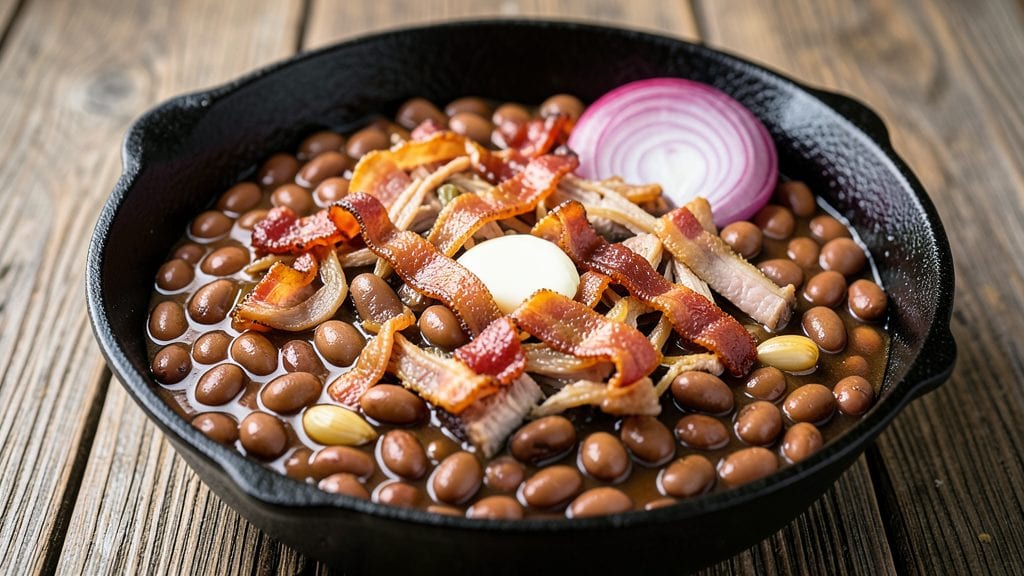
This old-fashioned baked beans recipe delivers the smoky-sweet, tender beans your family has been craving since childhood—no shortcuts, just old-school flavor in one pot. The secret lies in slow-cooking with pork (bacon or ham hocks) and molasses, which creates that deep, caramelized richness that defines classic baked beans.
I’ve perfected this method over years of holiday gatherings, where it disappears faster than the mashed potatoes.
The beauty of this recipe is its simplicity: one-pot, minimal prep, and hands-off cooking that lets the flavors meld naturally. The beans soften until they’re creamy, while the pork adds smoky depth, and the molasses-brown sugar combo balances sweetness with just enough tang.
It’s the kind of dish that tastes even better the next day—ideal for meal prep or feeding a crowd.
What you’ll end up with is a rich, saucy bean dish that’s tender, slightly sweet, and packed with smoky flavor from the pork. The edges caramelize beautifully, creating pockets of concentrated sweetness that make every bite irresistible.
This isn’t just a side—it’s the star of the meal, and it pairs perfectly with grilled meats or cornbread.
Whether you’re hosting a Sunday dinner or just craving comfort food, this old-fashioned baked beans recipe delivers restaurant-quality results with minimal effort. Let’s get started—your taste buds (and leftovers) will thank you.
Ingredients for old fashioned baked beans
Sixteen ingredients. One pot. The ultimate comfort food that tastes even better tomorrow.
| Ingredient | Amount | Notes |
|---|---|---|
| Navy Beans (Dried) 🥔 | 2 cups | Soaked overnight or cooked quick-soak |
| Pork Shoulder (or Ham Hocks) 🥓 | 1 ½ lb | Cut into 1-inch cubes (or 2 ham hocks) |
| Thick-Cut Bacon 🥓 | 8 oz | Chopped into small pieces (or 8 slices) |
| Yellow Onion 🧅 | 1 whole | Chopped into 1/2-inch pieces |
| Garlic Cloves 🧄 | 4 cloves | Minced or finely chopped |
| Unsalted Butter 🧈 | ½ cup | Full-fat for richness |
| Molasses 🍯 | ¼ cup | Dark molasses for authentic flavor |
| Light Brown Sugar 🍚 | ½ cup | Packed firmly |
| Apple Cider Vinegar 🍏 | ¼ cup | For tangy balance |
| Kosher Salt 🧂 | 2 tsp | Diamond Crystal preferred |
| Ground Black Pepper 🌶️ | 1 tsp | Freshly ground |
| Ground Mustard 🌿 | 1 tsp | For subtle heat |
| Bay Leaves 🍃 | 2 whole | Fresh if possible |
| Water 💧 | 4 cups | Or low-sodium chicken broth |
The beans are the heart of this dish, so dried navy beans are non-negotiable—they hold their shape and soak up flavor better than canned. Bob’s Red Mill or store-brand dried beans work fine, but avoid pre-soaked or canned for that authentic texture. For the pork, pork shoulder adds rich, smoky depth, while ham hocks infuse the beans with gelatinous tenderness (worth the hunt at Whole Foods or your local butcher). Bacon? Thick-cut from Costco or Trader Joe’s gives the best flavor—none of that flimsy grocery store stuff. The molasses? Blackstrap from Penzeys if you want to splurge, but regular dark molasses works too.
No pork shoulder? Smoked sausage or bacon alone still delivers that smoky punch, though the texture won’t be as tender. Running low on molasses? Maple syrup or honey at half the amount mimics the sweetness, but the depth won’t be identical. Fresh bay leaves are ideal, but dried works in a pinch—just double the amount. The brown sugar can be swapped for white sugar plus a pinch of cinnamon if that’s what’s in your pantry. And if you’re feeling fancy, toss in a dash of hot sauce at the end for a little kick (like Crystal or Tabasco).
This dish tastes even better the next day—3-4 days in the fridge, covered tightly. For meal prep, portion into containers and reheat with a splash of water. Freezes beautifully for up to 6 months—just thaw overnight in the fridge. The beans get creamier with time, so don’t rush it. Leftovers? Double the batch—it disappears fast, and the second day is always better.
Why You'll Love This Recipe
- Let’s be real: dried navy beans and a pork shoulder are some of the cheapest ingredients you can buy, but the flavor? Unreal. You’re getting a rich, saucy dish that feels like a treat without breaking the bank. Plus, the bacon and molasses add just enough indulgence to make it feel special—without costing a fortune. It’s the kind of recipe that makes you feel like a genius for spending so little.
- One-Pot Magic: Honestly, this recipe is the kind of dish where you throw everything in one pot and forget about it for hours. The navy beans soak overnight (or quick-soak if you're impatient), and the pork shoulder, bacon, and onion just get tossed in with the rest—no fancy prep, no constant attention. That Dutch oven does all the work while you’re doing something else, like binge-watching your favorite show.
- Smoky-Sweet Perfection: The combination of crispy bacon, dark molasses, and apple cider vinegar creates that perfect balance of smoky, sweet, and tangy. That first bite? The creamy beans with a crispy bacon edge? Chef’s kiss. The pork shoulder adds depth, and the garlic and bay leaves tie it all together into something that’s dangerously addictive—especially when it’s been resting for a day.
- Feeds a Crowd (or Your Cravings): This recipe makes enough for a family gathering, a game day, or just three people who can’t resist seconds. And here’s the kicker: it tastes even better the next day, so you’ll have leftovers that’ll make you glad you made it. Freezes like a dream too—just pull out a portion when you’re craving comfort food, no fuss.
Step-by-step instructions for old fashioned baked beans
This is the method that delivers that iconic smoky-sweet flavor in one simple pot.
Prepare the Beans and Meat for Maximum Flavor
Start by soaking the 2 cups navy beans (dried) overnight in plenty of cold water. If you're short on time, do a quick soak: boil them for 2 minutes, then let them sit off heat for 1 hour. Drain and rinse thoroughly before using.
Cut the 1.5 lb pork shoulder into 1-inch cubes (or use 2 ham hocks if substituting). Chop the 8 oz thick-cut bacon into small pieces—this will render fat and create that deep, smoky flavor we're after. The bacon should look like small, uneven dice rather than thin slices.
Peel and chop the 1 whole yellow onion into ½-inch pieces, and mince the 4 cloves garlic finely. These aromatics form the flavor foundation, so don't skip chopping them small—they should practically disappear into the dish when cooked.
Build the Flavor Base in the Dutch Oven
In a 6-quart Dutch oven, cook the bacon over medium heat until crispy, about 8-10 minutes. Remove the bacon with a slotted spoon and set aside, leaving the rendered fat in the pot—this is liquid gold for flavor. Add the chopped onion and cook for 5 minutes until softened.
Stir in the minced garlic and cook for 30 seconds until fragrant—this prevents it from burning. Add the cubed pork shoulder and cook for 3-4 minutes, stirring occasionally, until lightly browned. This step develops the meat's flavor before we slow-cook it.
Now add the 0.5 cup unsalted butter, 0.25 cup molasses, 0.5 cup light brown sugar, 0.25 cup apple cider vinegar, 2 tsp kosher salt, 1 tsp ground black pepper, and 1 tsp ground mustard. Stir vigorously to combine all ingredients into a thick paste. This mixture will form the rich, sweet-savory base of your beans.
Combine and Simmer the Beans
Add the drained navy beans and 4 cups water to the Dutch oven. Stir well to distribute all the flavorful ingredients evenly. The mixture should look thick and saucy—this is perfect for developing that classic baked bean texture.
Add the 2 whole bay leaves and bring everything to a gentle boil. Once boiling, reduce heat to low and cover with a tight-fitting lid. Let it simmer for 3 hours, stirring occasionally to prevent sticking. The beans should be tender and the liquid reduced but still slightly saucy.
Here's the thing—don't peek too often. Every time you lift the lid, you lose heat and moisture. After the initial 3 hours, check the beans for doneness by pressing a bean gently with a fork. If it's still firm, continue simmering for another 30-60 minutes. They're done when they're fork-tender but still hold their shape.
Finish and Rest for Perfect Texture
Once the beans are tender, stir in the reserved crispy bacon. This final step adds that essential smoky crunch that makes old-fashioned baked beans unforgettable. Taste and adjust the seasoning if needed—you might want to add a pinch more salt or a splash of vinegar for brightness.
Remove the bay leaves and transfer the beans to a serving dish. Let them rest for 10-15 minutes before serving. This resting period allows the flavors to meld completely and the sauce to thicken slightly, creating that perfect balance of tender beans and rich, glossy sauce.
Serve warm with cornbread or crusty bread to soak up every last bit of that smoky-sweet goodness. The beans should be tender yet hold their shape, with a glossy sauce that's perfectly balanced between sweet, smoky, and tangy.
Pro Tips For Making Old Fashioned Baked Beans
- Skip the Quick Soak: I learned this the hard way—those 2 minutes of boiling for quick-soaked navy beans won’t cut it. If you’re short on time, do the full hour off-heat soak (not just 1 hour total). The beans will absorb way more flavor from the pork and bacon fat, and you’ll avoid that mealy texture that ruins everything.
- Brown the Pork Properly: That 3-4 minutes of browning the pork shoulder isn’t just for looks—it’s where the deep, meaty flavor comes from. If your cubes stay pale, the beans will taste bland no matter how much molasses you add. Work in batches if needed, but don’t rush this step.
- Stir That Paste Hard: When you mix in the butter, molasses, and brown sugar, you’re not just combining ingredients—you’re building the soul of the dish. Stir like you’re trying to scrape the bottom of the pot for a full minute. That thick, glossy paste is what makes the sauce cling to the beans later.
- Resist the Bacon Urge: Yes, crispy bacon is tempting, but adding it back at the end keeps its crunch intact. If you mix it in earlier, it’ll turn soggy and lose that satisfying bite. Save it for the final stir—your taste buds will notice the difference.
Storing and reheating this recipe
Fridge Storage Tips
Transfer cooled beans to airtight glass containers—I swear by Pyrex with snap-on lids—to maintain that rich, glossy sauce. Store at 40°F or below for up to 3-4 days, and honestly, they taste even better the second day as flavors deepen.
I always double the batch knowing it’ll vanish faster than the cornbread. 🥘
Freezer Preservation
For long-term storage, portion beans into quart-sized freezer bags (squeeze out excess air to prevent freezer burn) and label with the date. They’ll keep like this for 6 months without losing texture or flavor.
Thaw overnight in the fridge for even reheating. I’ve tested this method, and the beans thaw beautifully with no soggy texture. ❄️
Reheating on the Stovetop
Grab a heavy-bottomed pot and add beans with ¼ cup water or broth to prevent sticking. Heat on medium-low for 10-15 minutes, stirring occasionally. The sauce will thicken as it warms—just add a splash of water if it gets too dry.
I always taste and adjust salt or vinegar at this stage. 🔥
Microwave Revival
For quick meals, use a microwave-safe dish and cover loosely with a damp paper towel. Heat on 70% power for 2-3 minutes, stirring halfway. Let rest 2 minutes before serving to redistribute heat evenly. This method works best for single servings. 💫
Leftovers Reinvention
Turn extras into bean burgers by shaping into patties and pan-frying with extra bacon bits, or mix into mac and cheese for a creamy upgrade. I once turned leftover beans into a smoky dip by blending with Greek yogurt and hot sauce—it was a hit at my holiday party! 💡
Nutrition facts
Frequently asked questions
Why do old-fashioned baked beans need slow cooking?
The slow-cooking process—3 hours at low heat—allows the pork shoulder and thick-cut bacon to break down gradually, releasing deep, smoky flavors into the beans. It also tenderizes the navy beans perfectly, creating that creamy yet firm texture we love. Rushing this step makes the beans mushy and dulls the flavor.
Can I substitute other beans for navy beans?
Navy beans are ideal because they hold their shape well and absorb flavors beautifully. While you could use pinto or black beans, they’ll turn mushy faster and lose that classic baked bean texture. If you're in a pinch, stick to navy beans—they’re the gold standard for this recipe.
How do I know when the beans are done?
Press a bean gently with a fork—it should yield slightly but still hold its shape. After 3 hours, check every 30 minutes if unsure. Overcooking makes them fall apart, so remove them from heat as soon as they’re fork-tender. The sauce should be thick and glossy, not watery.
What’s the best way to reheat leftovers?
Gently warm them on the stovetop with ¼ cup water or broth over medium-low heat for 10-15 minutes, stirring occasionally. This prevents sticking and keeps the sauce rich. Microwaving works too, but it can make the beans dry—always add a splash of liquid if needed.