
Side Dishes
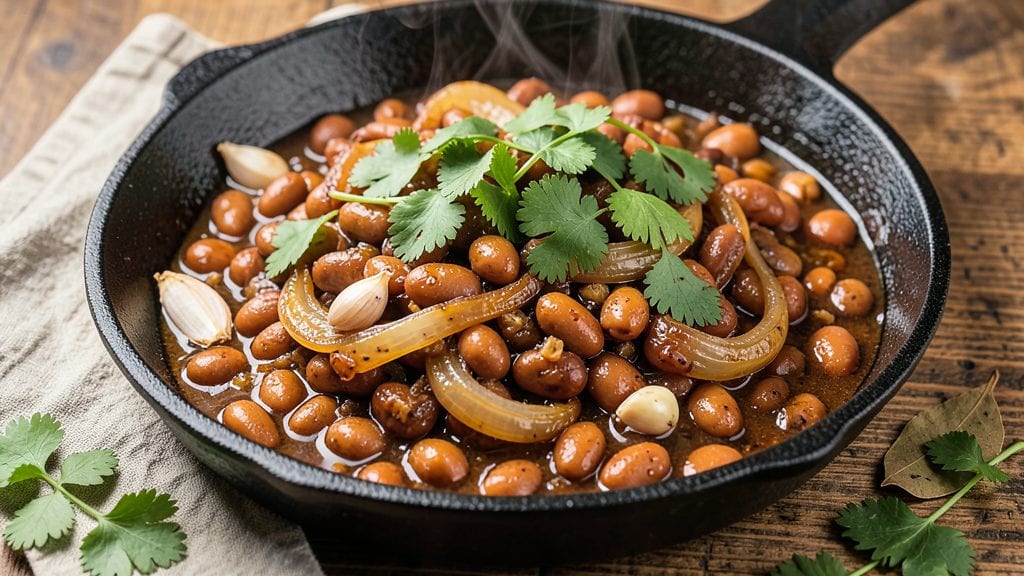
This traditional Mexican pinto beans recipe delivers the deep, smoky flavors that make them a cornerstone of Mexican cuisine—rich, hearty, and packed with authentic spices.
The secret lies in slow-simmering the beans with garlic, onion, and a blend of cumin, oregano, and bay leaf, creating a dish that’s both comforting and complex. I’ve perfected this one-pot method over years of testing, ensuring every batch turns out tender, flavorful, and ready to elevate any meal.
The beauty of these beans is their versatility—they work as a standalone dish with warm tortillas and rice or as a smoky-spiced topping for tacos, burritos, or nachos.
The long simmer (about 45–60 minutes) breaks down the beans until they’re creamy and infused with flavor, while the spices develop into a harmonious, earthy depth. This recipe is also vegan-friendly, making it a staple for plant-based diets without sacrificing authenticity.
What you’ll end up with is a pot of beans that smells like a Mexican kitchen and tastes even better—soft yet holding their shape, with a broth so flavorful it deserves a spoon.
The key is patience: letting the spices bloom and the beans absorb their essence. Once you try this version, store-bought cans won’t compare. Let’s get cooking!
Perfect for meal prep, holiday feasts, or a cozy weeknight dinner, these beans are a foolproof way to bring traditional Mexican flavors to your table.
Serve them warm, garnished with fresh cilantro and a squeeze of lime, and watch them disappear faster than you can say "¡Qué rico!" Here’s how to make them exactly right.
Ingredients for traditional mexican pinto beans
Pantry staples meet Mexican magic—just a handful of ingredients for beans that taste like home.
| Ingredient | Amount | Notes |
|---|---|---|
| Dried Pinto Beans 🌱 | 2 cups | Unsoaked for one-pot method |
| Yellow Onion 🧅 | 1 whole | Diced, medium size preferred |
| Garlic Cloves 🧄 | 6 cloves | Peeled, rough chopped |
| Ground Cumin 🌿 | 2 tsp | Toasted for deeper flavor |
| Dried Mexican Oregano 🍃 | 1 tbsp | Not regular oregano |
| Bay Leaves 🌿 | 2 whole | Dried, standard size |
| Smoked Paprika 🌶️ | 1 tbsp | For authentic smoky flavor |
| Salt 🧂 | 1 ½ tsp | Kosher or sea salt |
| Black Pepper 🌶️ | ½ tsp | Freshly ground preferred |
| Vegetable Broth 💧 | 4 cups | Low-sodium preferred |
| Lime Juice 🍋 | 2 tbsp | Freshly squeezed |
| Fresh Cilantro 🌿 | ¼ cup | Chopped, for garnish |
| Avocado Oil 🫒 | 2 tbsp | High smoke point for sautéing |
The beans are the star, so grab dried pinto beans—none of that canned stuff here. Trader Joe's or Mexican markets carry the best quality, but any bulk bin works. No need to soak them first—this one-pot method handles everything. The Mexican oregano is non-negotiable (the regular kind won’t cut it), and I always grab it at La Tienda or H-Mart if I’m near one. For the smoked paprika, Penzeys has the best, but any good-quality brand will do. Toast the cumin seeds in a dry pan for 30 seconds before grinding—they’ll smell like a Mexican kitchen instantly.
No Mexican oregano? Dried thyme at half the amount works in a pinch, but it’s not the same. Short on bay leaves? One dried thyme sprig can stand in, but remove it before serving. The vegetable broth can be swapped for water plus 1 tsp soy sauce if you’re in a bind. Fresh lime juice is ideal, but bottled works if you’re not near a market—just add a pinch of salt to balance. The cilantro garnish is optional (trust me, some people hate it), but it adds that fresh finish. For extra smokiness, add ½ tsp liquid smoke directly to the pot—just don’t tell anyone I told you that.
These beans taste even better the next day—make extra and portion into containers for the week. Store in the fridge for up to 5 days or freeze for 3 months. The broth thickens as it cools, so add a splash of water when reheating. Garnish with lime and cilantro right before serving—it’s the only way to eat them. Leftovers reheat beautifully; just stir in a splash of water if they’ve thickened too much. Perfect for meal prep, holiday sides, or taco night.
Why You'll Love This Recipe
- One-Pot Magic: I’ve got a kitchen hack that saves me from scrubbing three pots—this recipe uses just one heavy pot for everything. The dried pinto beans soak up all that smoky paprika and cumin while simmering, and the broth keeps them tender without extra dishes. Honestly, the only cleanup is tossing the bay leaves and wiping the pot. That’s the kind of win I live for.
- Smoky, Tangy Perfection: The toasted cumin and smoked paprika give these beans that deep, earthy warmth, while the lime juice at the end cuts through like a fresh breeze. That crispy edge from the caramelized onion? Chef’s kiss. It’s the kind of flavor that makes you pause mid-bite and think, “Damn, why isn’t this in every meal?”
- Meal-Prep Hero: These beans are my secret weapon for lazy Sundays or busy weeknights. Double the batch, and you’ve got breakfast tacos, burrito bowls, or even a quick quesadilla filling ready in minutes. My daughter picks out the cilantro to garnish—she’s been asking for these for weeks, and I’m not complaining.
- Budget-Friendly Powerhouse: Dried pinto beans are cheaper than their canned cousins, and this recipe stretches four cups of broth to perfection. A whole pot of flavor for less than $5? Yes, please. Even better, they freeze like a dream—just reheat and serve straight from the fridge or freezer. Zero waste, just pure satisfaction.
Step-by-step instructions for traditional Mexican pinto beans
Here's how to make this one-pot classic with rich, smoky depth and perfect texture.
Sauté Aromatics in Avocado Oil
Heat the 2 tablespoons avocado oil in a large, heavy pot over medium heat. Add the 1 whole yellow onion, diced, and cook for 5-6 minutes until softened and translucent. Here's the thing—you want the onion to caramelize slightly at the edges, but not burn. If it starts browning too quickly, reduce the heat just a touch.
Add the 6 cloves garlic cloves, rough chopped, and cook for 1 minute until fragrant. Watch closely—the garlic burns fast. As soon as you smell that warm, nutty aroma, it's ready. This step builds the flavor foundation for your beans.
Toast Spices and Add Beans
Increase heat to medium-high and add the 2 teaspoons ground cumin, 1 tablespoon dried Mexican oregano, 1 tablespoon smoked paprika, 1.5 teaspoons salt, and 0.5 teaspoon black pepper. Toast the spices for 30 seconds, stirring constantly, until you can smell their deep, earthy aromas. This step unlocks their full flavor potential.
Reduce heat to medium and add the 2 cups dried pinto beans, stirring to coat them evenly in the spice mixture. The beans should look golden from the spices. Here's where it gets important: don't skip this coating step. The spices need direct contact with the beans to develop that authentic Mexican flavor.
Simmer with Broth and Bay Leaves
Pour in the 4 cups vegetable broth and bring to a gentle boil. Once boiling, reduce heat to low and add the 2 whole bay leaves. Here's the critical part: maintain a barely simmering state. You want tiny bubbles breaking the surface, not a rolling boil. Cover the pot and cook for 45 minutes, stirring occasionally to prevent sticking.
After 45 minutes, check the beans. They should be mostly tender but still slightly firm. If they're not quite soft enough, continue cooking for another 15-20 minutes. The beans will finish cooking during the final simmering phase, so don't worry if they're not fully tender yet.
Finish with Lime and Cilantro
Remove the pot from heat and stir in the 2 tablespoons lime juice. This brightens the flavors and cuts through the richness of the beans. Add the 0.25 cup fresh cilantro, chopped, and give everything a good stir. The cilantro adds freshness that balances the smoky spices perfectly.
Let the beans sit off heat for 5 minutes before serving. This resting time allows the flavors to meld together completely. The beans should be tender with a creamy texture, and the liquid should have a rich, slightly thick consistency. If it's too thick, you can thin with a splash of water or broth.
Pro Tips For Making Traditional Mexican Pinto Beans
- Caramelize Onions Slowly: I used to rush this step and end up with bitter, browned onion bits instead of sweet, golden caramelization. Cook the diced onion over medium heat for those full 5-6 minutes, stirring occasionally—just until the edges soften and turn translucent. If it starts browning too fast, dial the heat down. That sweetness is the base of the flavor.
- Toast Spices Like Coffee: Those 30 seconds of toasting the cumin, oregano, and smoked paprika might feel unnecessary, but trust me—it’s where the magic happens. Stir constantly over medium-high heat until the spices smell like a Mexican street market. Skimp here, and your beans will taste flat, no matter how long you simmer.
- Stir Beans Early, Often: After adding the beans to the spice mix, give them a good stir to coat them evenly. Then, once the broth is added, don’t let them sit untouched. Stir every 10 minutes or so during the initial 45-minute simmer—this prevents sticking and ensures every bean gets the same tender treatment.
- Simmer Gently, Not Boil: A rolling boil will toughen the beans and evaporate the broth too fast, leaving you with dry, mushy results. Keep the heat low enough that you barely see bubbles breaking the surface—just a whisper of activity. Patience here means creamy, flavorful beans that hold their shape.
Regional styles of this recipe
Oaxacan-Inspired Chili
In Oaxaca, Mexico, pinto beans often get a kick from chipotle peppers and a touch of ancho chile powder, creating a deeper, slightly smoky flavor.
I swap 1 tbsp ancho chile powder for half the smoked paprika in the original recipe, then toast 2 chipotle peppers in adobo (from a jar) with the cumin for extra heat. The result is a complex, slightly spicy profile that pairs perfectly with mole negro or grilled meats.
This version is a staple at Oaxacan markets, where vendors serve it with corn tortillas and queso fresco. 🌶️
Central Mexican Classic
In central Mexico, these beans are often served as a side for tacos al pastor or enchiladas suizas, where the smoky depth complements the dish’s other flavors. I keep the original spice blend but add ½ tsp ground coriander to enhance the earthiness.
The beans are simmered with 1 extra bay leaf for a more aromatic broth. This version is lighter than the Oaxacan style but just as flavorful, making it ideal for everyday meals. The texture stays creamy, but the broth has a brighter, cleaner taste.
Northern Mexican Style
In northern Mexico, where charro beans are popular, I add ½ cup diced tomatoes and 1 tbsp tomato paste to the broth for a slightly tangy twist.
The beans simmer with 1 tsp ground cumin seeds (not pre-ground) for a nuttier flavor, and I finish with 1 tbsp chopped epazote, a herb native to Mexico that adds a unique, slightly bitter note.
This version is heartier and works well with charro beef stew or as a filling for flautas. The tomatoes add a subtle sweetness that balances the spices beautifully.
Yucatán-Style Spiced Beans
In Yucatán, these beans often incorporate achiote (annatto) for a vibrant orange hue and a mild, slightly citrusy flavor. I mix ½ tsp achiote powder with the smoked paprika and toast it with the cumin.
The beans are simmered with 1 tbsp lime zest (in addition to the juice) for extra brightness. This version pairs perfectly with cochinita pibil (slow-roasted pork) or sopa de lima. The achiote gives the beans a beautiful color and a subtle, earthy depth that’s distinctly Yucatán. 💛
Texas-Mexican Fusion
For a Texas twist, I add 1 tbsp chili powder (like Taco Bell’s or Goya’s) and ½ tsp ground mustard to the spice blend for a tangy kick.
The beans simmer with 1 cup beef broth instead of vegetable broth to deepen the flavor, and I finish with 1 tbsp chopped jalapeño for heat. This version is a crowd-pleaser at Texas-Mexican BBQs, where it’s often served with brisket or quesadillas.
The mustard adds a subtle tang that cuts through the richness, making it feel fresh and approachable. 🔥
Nutrition facts
Frequently asked questions
Why do I need to toast the spices before adding the beans?
Toasting spices like cumin and smoked paprika for 30 seconds unlocks their full flavor potential! This quick step deepens their aroma and prevents them from tasting flat or bitter in the final dish. The beans absorb these toasted spices better, creating that authentic Mexican taste you crave. Don’t skip it—it’s what makes these beans taste like a true home-cooked meal.
What if my beans aren’t tender enough after 45 minutes
?
No problem! Simply cover the pot and let them simmer for another 15-20 minutes, stirring occasionally. The beans will finish cooking during this time, and the broth will continue to infuse their flavor. Just keep an eye on the liquid—add a splash of water if it gets too thick. Patience is key here!
Can I use regular oregano instead of Mexican oregano?
While you can use regular oregano in a pinch, it won’t give you that authentic Mexican flavor. Mexican oregano has a more earthy, slightly citrusy taste that’s essential for this recipe. If you’re unable to find it, dried thyme (at half the amount) is a decent substitute, though it won’t be exactly the same.
How do I adjust the spice level if I prefer less heat?
For a milder version, reduce the smoked paprika to ½ tablespoon and omit the chipotle peppers if using a regional variation. You can also skip adding extra chili powder in Texas-style versions. Taste as you go and adjust with salt or broth to balance the flavors.
What’s the best way to reheat these beans?
Gently warm them on the stove over low heat, stirring occasionally, or use a microwave with a splash of water or broth to prevent drying. If the beans have thickened, add a little liquid to restore their creamy texture. Reheated beans taste even better the next day—perfect for meal prep!