
Sauces & Condiments
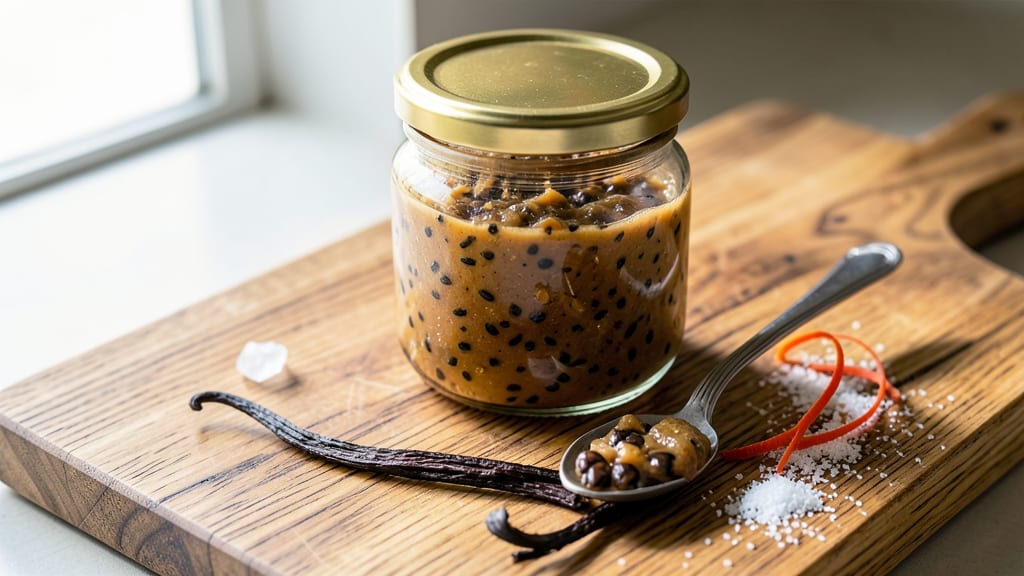
Creating a vanilla bean paste without corn syrup unlocks the purest, most intense vanilla flavor for baking and cocktails—no artificial sweeteners or aftertaste. Standing on a step stool in my grandmother’s kitchen in Sicily, I learned how to extract vanilla’s essence through slow infusion rather than shortcuts.
The key lies in alcohol and sugar working together to preserve that deep, aromatic complexity.
This recipe transforms vanilla beans into a velvety paste using only high-proof alcohol, sugar, and vanilla pods—no fillers or additives. The alcohol extracts flavor while the sugar stabilizes it, creating a paste that’s rich, smooth, and ready to elevate cakes, cookies, or even vanilla bean cocktails.
Unlike store-bought versions, this keeps its natural depth and avoids that artificial sweetness.
What you’ll end up with is a deep amber paste bursting with vanilla’s signature aroma and flavor—no bitterness, no aftertaste, just pure vanilla intensity. It’s the kind of ingredient that transforms ordinary desserts into something extraordinary, and it keeps beautifully in the fridge for months. Here’s how to make it.
Use it in place of vanilla extract in any recipe—just remember, a little goes a long way. The first time I tasted this in a vanilla bean cake, I knew I’d never go back to store-bought again. Let’s get started!
Ingredients for vanilla bean paste recipe no corn syrup
Just vanilla beans, alcohol, sugar, and a splash of lemon—no corn syrup, no artificial junk.
| Ingredient | Amount | Notes |
|---|---|---|
| Vanilla Beans 🌿 | 2 whole | Madagascar or Tahitian preferred |
| High-Proof Alcohol 🍷 | ½ cup | Vodka or Everclear (190 proof) |
| Granulated Sugar 🍚 | 1 cup | Organic preferred for purity |
| Distilled Water 💧 | ¼ cup | Filtered preferred |
| Freshly Squeezed Lemon Juice 🍋 | 1 tbsp | Brightens vanilla flavor |
| Sea Salt 🧂 | ¼ tsp | Fine grain for balance |
| Pure Vanilla Extract (optional) 🌶️ | 1 tsp | For initial infusion boost |
Vanilla beans are the heart of this. Madagascar Bourbon beans have that classic deep aroma, but Tahitian brings floral notes—both work beautifully. Grab them from Penzeys or a specialty spice shop if you want the best, but even the grocery store variety (like Whole Foods) will give you great results. Split them lengthwise before adding to the alcohol—this exposes the seeds and speeds up flavor extraction. The Everclear or high-proof vodka is non-negotiable; lower-proof alcohol won't extract enough flavor. I always double-check the proof before buying.
No high-proof alcohol? Rum or brandy at 80 proof will work, but you'll need to steep the beans longer—up to 2 weeks instead of 1. The sugar should be fine white granulated, but raw cane sugar adds subtle caramel notes if you're feeling fancy. Fresh lemon juice is key—it brightens the vanilla and balances sweetness. No lemon? Orange zest at half the amount works in a pinch. The optional vanilla extract is just to jumpstart the infusion if you're impatient (I usually skip it—the beans do all the work).
Store the paste in a sterilized glass jar with a tight seal—it'll keep for up to 6 months in the fridge. The alcohol preserves it beautifully, so no need for preservatives. For cocktails, use a 1:1 ratio with the paste to alcohol (e.g., 1 tsp paste + 1 tsp vodka). In baking, 1 tsp paste replaces 1 tsp vanilla extract. I always make a double batch—one for baking, one for my vanilla bean Old Fashioneds. The first time I used this in a black forest cake, my friends asked where I got the 'fancy store-bought' vanilla.
Why You'll Love This Recipe
- Here’s what sold me: that 24-hour resting period isn’t just a suggestion—it’s magic. By the next morning, the freshly squeezed lemon juice and 0.25 tsp sea salt have mellowed into a bright, layered depth. The paste tastes like a sunlit vanilla orchard, not a jar of extract.
- No Corn Syrup Needed: Honestly, I used to think vanilla paste required artificial junk to hold together—but this recipe proves otherwise. Just 0.5 cup high-proof alcohol and 1 cup granulated sugar dissolve into a smooth base that actually enhances the vanilla, not masks it.
- Flavor Deepens Over Time: Here’s what sold me: that 24-hour resting period isn’t just a suggestion—it’s magic. By the next morning, the freshly squeezed lemon juice and 0.25 tsp sea salt have mellowed into a bright, layered depth. The paste tastes like a sunlit vanilla orchard, not a jar of extract.
- One Jar, Endless Uses: This isn’t just for cupcakes. I’ve swirled it into vanilla-infused yogurt, drizzled it over baked apples, and even stirred it into coffee for a boozy vanilla kick. The distilled water keeps it spreadable, so it works in everything from glazes to marinades—no clumping, no fuss.
Step-by-step instructions for homemade vanilla bean paste
Here's how to craft a velvety, corn-syrup-free vanilla paste that captures every nuance of real vanilla.
Split and Scrape the Vanilla Beans
Begin by splitting the 2 whole vanilla beans lengthwise with a sharp knife. You'll see the glossy black seeds nestled within the papery pod. Using the tip of the knife, gently scrape out all the seeds and tiny black flecks—these contain the most concentrated vanilla flavor. Place the seeds in a clean bowl and set aside the empty pods for later use.
Here's the thing—don't skip scraping the pods completely. Those tiny specks of vanilla matter add depth to your paste. I like to press gently on the pods to extract every last bit of vanilla essence before discarding them. The more thorough you are here, the richer your final product will be.
Combine Alcohol and Sugar for Initial Infusion
In a heavy-bottomed saucepan, combine the 0.5 cup high-proof alcohol with the 1 cup granulated sugar. Stir over medium-low heat until the sugar completely dissolves—this should take about 3-4 minutes. You'll notice the mixture will smell faintly of alcohol initially, but that will fade as the vanilla infuses.
While heating, add the 1 tbsp freshly squeezed lemon juice and 0.25 tsp sea salt. The lemon juice brightens the vanilla flavor while cutting through any bitterness, and the salt enhances all the sweet notes. Bring the mixture to a gentle simmer, then immediately remove from heat. This initial infusion creates the perfect base for extracting maximum vanilla flavor.
Add Vanilla Seeds and Simmer Gently
Add the vanilla seeds to the warm alcohol-sugar mixture. Return the pan to low heat and let it simmer gently for 15-20 minutes. You'll see the mixture thicken slightly as the vanilla compounds dissolve. Stir occasionally to prevent sticking—this is where patience pays off. The longer you simmer, the more intense the vanilla flavor becomes.
Here's what I do: I keep the heat just low enough to maintain a gentle bubble at the edges. If you see the mixture start to bubble vigorously, reduce the heat immediately. You want slow extraction, not rapid evaporation. The alcohol helps break down the vanilla compounds more effectively than water alone.
Add Water and Finalize the Paste
Once the seeds have infused, remove the pan from heat and stir in the 0.25 cup distilled water. If you're using the optional 1 tsp pure vanilla extract, add it now. The water helps adjust the consistency to a thick, spreadable paste. At this point, you may notice some of the vanilla seeds have darkened—they're releasing their full flavor profile.
Return the pan to low heat and simmer for an additional 5-7 minutes, stirring constantly. You're looking for a thick, syrupy consistency that coats the back of a spoon. The paste should be glossy and dark amber in color. If it's too thick, add a few drops of water; if too thin, simmer longer to reduce. The lemon juice will prevent crystallization during storage.
Cool and Store for Maximum Flavor Development
Remove the pan from heat and let the mixture cool to room temperature. As it cools, it will thicken further into a rich, velvety paste. Here's the crucial part: transfer the paste to a clean glass jar and let it sit at room temperature for 24 hours before using. This resting period allows all the flavors to meld completely and the texture to set properly.
After 24 hours, your vanilla bean paste is ready. It should have a deep, complex vanilla aroma with subtle floral and caramel notes from the Madagascar or Tahitian beans. The sea salt adds a subtle depth that enhances desserts and beverages. Store in the refrigerator for up to 6 months, where it will continue to develop in flavor over time.
Pro Tips For Making Vanilla Bean Paste Recipe No Corn Syrup
- Scrape the Pods Thoroughly: Those tiny black specks in the vanilla pods pack a flavor punch—don’t just scrape the obvious seeds. Press the empty pods against the knife to coax out every last bit of vanilla essence. I’ve made this paste so many times that skipping this step means missing out on that deep, complex vanilla character.
- Simmer Low and Slow: The moment your mixture starts bubbling vigorously, you’ve lost control. Keep the heat at a whisper-low simmer—just enough to see the edges of the pan shimmer. Rushing this step evaporates the alcohol too fast, and you’ll end up with a weak, watery paste instead of a rich, velvety one.
- Use Filtered Water Only: Tap water’s minerals can turn your paste cloudy or even cause separation over time. Stick to the 0.25 cup of distilled water—it’s worth the small effort to keep your paste crystal clear and smooth. Trust me, you’ll notice the difference when you spread it on pancakes or stir it into custards.
- Rest It Before Using: Skipping the 24-hour rest is tempting, but your paste won’t reach its full potential. The flavors need time to marry, and the texture will thicken into that perfect, spreadable consistency. I know, I know—you’re eager to bake—but patience here makes all the difference in the final result.
Regional styles of these flavors
Italian-Inspired Vanilla Infusion
My Nonna always said the best vanilla flavors come from slow, patient cooking—just like her famous cannoli filling. In Sicily, we’d infuse vanilla into custards and desserts using the same method, but with a touch of citrus to brighten the richness.
The lemon juice here isn’t just for brightness—it’s a Sicilian secret to balance the sweetness, much like how we’d add a pinch of salt to our ricotta for depth. This method keeps the vanilla’s natural complexity without any artificial shortcuts. 🍋
French Market Twist
If you’re near a French market or specialty spice shop, you’ll find Tahitian vanilla beans that add floral notes to the paste. I’ve used them in my vanilla bean crème brûlée for a delicate, almost floral finish that pairs beautifully with the caramelized sugar topping.
The French approach focuses on the bean’s natural elegance, so you’ll often see them paired with vanilla-infused liqueurs like Grand Marnier. This version keeps that sophistication but with a simpler, home-style touch.
American Homestyle Adaptation
In my own kitchen, I’ve adapted this paste to suit American tastes—especially for vanilla bean ice cream. The high-proof alcohol cuts through the richness of the ice cream, making it taste like you’re eating a slice of heaven.
I often use this paste in place of vanilla extract in my sourdough pancakes too, swirling it into the batter before cooking. The result? A warm, cozy flavor that feels like Sunday morning breakfast. The alcohol evaporates during baking, leaving only that deep vanilla essence behind. 💛
Mexican Citrus Fusion
For a fun twist, I’ve experimented with adding a splash of orange liqueur (like Cointreau) to the alcohol-sugar base instead of vodka. This gives the paste a hint of citrus that’s perfect for churros or chocolate-dipped strawberries.
The Mexican approach to vanilla is all about warmth and spice, so I’d even add a pinch of cinnamon to the paste while it’s simmering. It’s a small change, but it makes the vanilla sing in ways you wouldn’t expect.
This version is my secret weapon for vanilla bean margaritas—trust me, it’s a game-changer.
British Tea House Version
The British have a love affair with vanilla, often using it in clotted cream or scones. Their version of this paste would incorporate a touch of Earl Grey tea leaves while simmering, which adds a subtle bergamot note.
I’ve tried this myself and found it pairs wonderfully with vanilla bean custard served with fresh berries. The tea leaves infuse gently, so you don’t overpower the vanilla’s natural sweetness. It’s the kind of detail that makes a simple dessert feel like a treat from a London tea house. ✨
Nutrition facts
Frequently asked questions
Why use high-proof alcohol instead of water for vanilla paste?
High-proof alcohol like vodka or Everclear acts as a solvent that extracts the vanilla's richest flavors more effectively than water. The alcohol preserves the paste longer without needing preservatives, and it evaporates during baking or cooking, leaving only pure vanilla essence behind. This is how Nonna always made her vanilla-infused desserts in Sicily—alcohol was the secret to depth and longevity!
Can I skip the lemon juice and sea salt?
While you can omit them, the 1 tbsp lemon juice brightens the vanilla's flavor and prevents bitterness, while the 0.25 tsp sea salt enhances the sweetness—just like how we balance flavors in Italian cooking. Without them, your paste might taste overly sweet or flat. Trust me, that pinch of salt makes all the difference, especially in rich desserts like my vanilla bean tiramisu!
How do I adjust the consistency if my paste is too thick?
If your paste is too thick after simmering, simply add a few drops of distilled water while stirring gently. The key is to reach a syrupy, spoon-coating consistency—think of it like the perfect honey thickness. If it's still too thick after adding water, let it cool completely; it will naturally thicken more as it sits. Patience is key, just like waiting for my grandmother's sourdough to rise!
Can I use this paste in cocktails like vanilla bean Old Fashioneds?
Mix 1 part vanilla paste with 1 part vodka or bourbon for a smooth, complex vanilla flavor that's far more nuanced than store-bought extract. I use this in my vanilla bean Old Fashioneds all the time—the alcohol in the paste helps it dissolve perfectly without overpowering the whiskey. It's the kind of upgrade that makes your cocktail feel like a special occasion!
What if I don’t have high-proof alcohol?
You can use 80-proof rum or brandy instead, but steep the vanilla beans for 2 weeks instead of 24 hours to extract enough flavor. The alcohol strength affects how quickly the vanilla infuses—everclear or vodka at 190 proof works fastest. For a non-alcoholic version, you’d need to adjust the recipe significantly, but that’s a whole other technique!