
Soups & Stews
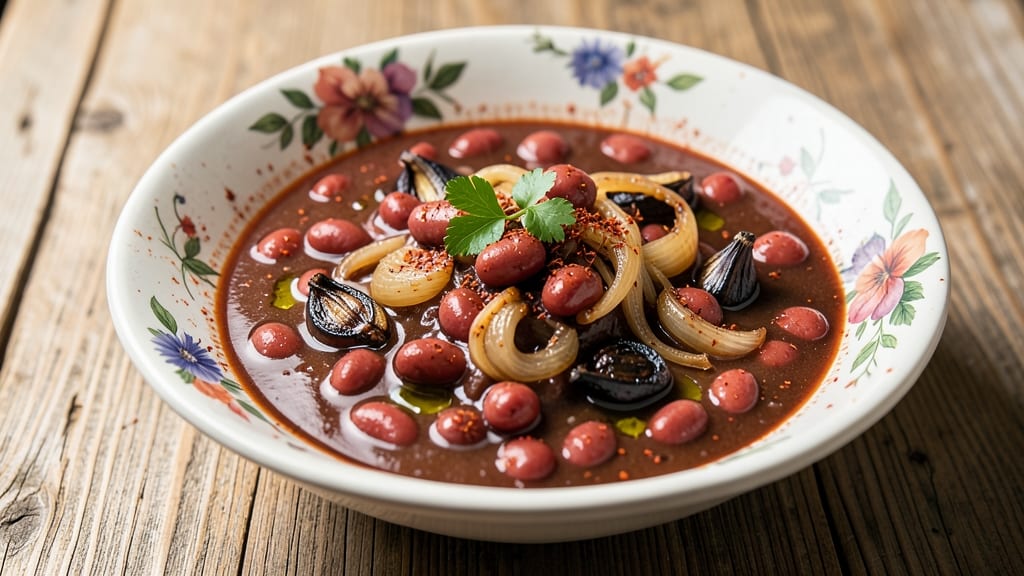
This Basque red bean soup (judas) delivers the hearty, smoky depth of the Basque Country in every spoonful. 🌟 The secret lies in slow-roasting garlic and paprika until caramelized, then simmering dried red beans until tender and infused with flavor.
This traditional vegan dish transforms simple ingredients into something rich, aromatic, and deeply satisfying—perfect for chilly evenings or festive gatherings.
The magic begins with a deep, smoky base built from garlic, paprika, and olive oil, which forms the soul of the soup. Unlike many bean dishes, this recipe relies on long, slow simmering to develop complex flavors without needing meat.
The result is a velvety, slightly thickened soup with just the right balance of earthy beans, sweet garlic, and smoky paprika—no shortcuts, just tradition.
What makes this recipe special is its versatility. While traditionally vegan, you can easily adapt it by adding chorizo or smoked paprika for extra depth. The texture is creamy yet rustic, with beans that melt in your mouth and a broth so flavorful it stands on its own.
Serve it with crusty bread or over rice for a meal that feels both comforting and refined.
This is the kind of soup that improves with time, as flavors meld and deepen. Whether you're cooking for a family or preparing for a special occasion, the Basque red bean soup delivers warmth, tradition, and a taste of Spain’s northern coast.
Ready to make it? Let’s begin with the foundational flavors.
Ingredients for basque red bean soup
Traditional Basque flavors meet simple pantry staples in this hearty, vegan soup.
| Ingredient | Amount | Notes |
|---|---|---|
| Dried Red Kidney Beans 🌱 | 2 cups | Soaked overnight or quick-soaked |
| Extra-Virgin Olive Oil 🫒 | ½ cup | High quality, fruity |
| Garlic Cloves 🧄 | 12 whole | Roasted until caramelized |
| Sweet Paprika 🌶️ | 3 tbsp | Smoked preferred for depth |
| Onion 🧅 | 1 whole | Yellow, diced |
| Tomato Paste 🍅 | 2 tbsp | High-quality, no sugar added |
| Vegetable Broth 💧 | 6 cups | Homemade or low-sodium |
| Bay Leaves 🌿 | 2 whole | Fresh preferred |
| Fresh Thyme 🌿 | ½ tsp | Or 0.17 tsp dried |
| Sea Salt 🧂 | 1 ½ tsp | Diamond Crystal preferred |
| Black Peppercorns 🌶️ | ½ tsp | Freshly cracked |
| Apple Cider Vinegar 🍎 | 1 tbsp | For brightness |
| Crusty Bread 🍞 | 6 slices | For serving |
The garlic and paprika are non-negotiable for that authentic Basque smokiness. Roast the garlic whole in olive oil until deep golden—no shortcuts here. For paprika, Penzeys or La Boîte brands deliver the best quality, but any smoked paprika will work. The beans need proper soaking: overnight in cold water or a 2-hour quick soak with baking soda. Fresh thyme is ideal, but dried works at one-third the amount. The onion should be diced small and translucent when cooked.
No smoked paprika? Regular sweet paprika plus a pinch of liquid smoke gets you close. Short on time? Canned beans work in a pinch, but soaking yields the best texture. The apple cider vinegar adds brightness—substitute lemon juice if you prefer. For extra depth, add a pinch of cayenne or a dash of hot sauce. The vegetable broth can be homemade or a quality low-sodium store brand like Pacific Foods. If using dried thyme, crush the leaves between your fingers to release the oils.
This soup tastes even better the next day as flavors meld. Store in an airtight container in the fridge for 5-6 days or freeze for 3 months. The crusty bread pairs perfectly—torn into chunks and added at the end for serving. For a restaurant-quality touch, garnish with extra roasted garlic cloves and a drizzle of olive oil. Leftovers reheat beautifully; just add a splash of water or broth to loosen the texture.
Why You'll Love This Recipe
- One-Pot Magic: I swear by this recipe—just a pot, a few ingredients, and 30 minutes. No chopping mess, no extra bowls, and the beans soften right into that velvety texture while you stir.
- Paprika Kiss: That sweet paprika? It’s the secret weapon. A single teaspoon blooms into this smoky-sweet warmth that wraps around every spoonful, balancing the deep earthiness of the beans and garlic.
- Weeknight to Party: Same recipe, different vibes. Slurp it straight from the pot after a long day or ladle it into bowls with crusty bread for guests—no one will guess it’s this unfussy.
- Budget Hero: Dried beans stretch my grocery budget, and this soup feeds four for under $8. Honestly, I’ve made it twice in a week and still have leftovers—because it’s that good, that filling.
Step-by-step instructions for Basque red bean soup
Here's the method for building deep, smoky flavor layer by layer.
🔥 Step 1: Roast the Garlic and Onion for Complex Flavor
Preheat your oven to 400°F. Peel the 12 whole garlic cloves and place them whole on a parchment-lined baking sheet. Toss the 1 whole onion, cut into large chunks, with 0.25 cup of the 0.5 cup extra-virgin olive oil and spread it alongside the garlic.
Roast for 25-30 minutes until the garlic is golden brown and caramelized, and the onion edges are crispy. This roasting develops deep, nutty flavors that form the soup's foundation. Let them cool slightly before using—hot garlic burns easily when added to the pot.
👨🍳 Step 2: Sauté the Paprika and Tomato Paste
Heat the remaining 0.25 cup extra-virgin olive oil in a large Dutch oven over medium heat. Add the 3 tbsp sweet paprika and stir constantly for 1-2 minutes until it darkens slightly and becomes fragrant—this prevents bitterness and activates its smoky depth.
Add the 2 tbsp tomato paste and cook for another 1 minute, stirring continuously. This creates a rich, concentrated base that will deepen the soup's color and flavor. Remove from heat and set aside temporarily—you'll return to this aromatic paste shortly.
🍳 Step 3: Build the Soup Base with Roasted Aromatics
Return the Dutch oven to medium heat and add the roasted garlic and onion. Cook for 3-4 minutes until the garlic is soft and the onion releases its sweetness. Add the 6 cups vegetable broth, 2 whole bay leaves, 0.5 tsp fresh thyme, 1.5 tsp sea salt, and 0.5 tsp black peppercorns.
Bring to a gentle boil, then reduce heat to medium-low and stir in the paprika-tomato paste mixture. The soup should simmer gently—this ensures even flavor distribution without developing a skin. Let it cook uncovered for 15 minutes to meld the aromatics.
⏰ Step 4: Cook the Beans Until Tender
Add the 2 cups dried red kidney beans (drained if quick-soaked) to the simmering broth. Stir gently to combine, then return to a gentle boil. Reduce heat to low and maintain a steady simmer for 45-50 minutes—the beans are done when they're fork-tender with just a slight bite.
Check for doneness by tasting a bean—it should be soft but not mushy. If the soup reduces too much, add ½ cup water to maintain proper consistency. Stir in the 1 tbsp apple cider vinegar during the last 5 minutes of cooking to brighten the flavors.
🍽️ Step 5: Finish and Serve with Crusty Bread
Remove the 2 bay leaves and discard them. Taste the soup and adjust seasoning if needed—this is your final opportunity to balance the flavors. The soup should be rich with smoky paprika notes, caramelized garlic sweetness, and a touch of acidity from the vinegar.
Ladle the soup into bowls and serve immediately with the 6 slices crusty bread on the side. The bread helps cut through the soup's richness, while its crust adds satisfying texture. For an authentic touch, sprinkle each serving with a pinch of freshly cracked black pepper and a drizzle of high-quality olive oil.
Pro Tips For Making Basque Red Bean Soup
- SOAK BEANS OVERNIGHT: I learned this the hard way—skipping the soak and just boiling dried beans straight up leads to tough, mealy results. Cover them in water (at least 3 inches above the beans) and let them sit 8–12 hours. The longer they soak, the faster they’ll break down into that creamy Basque texture you want.
- SWEAT ONIONS LOW AND SLOW: Cranking the heat on onions for color will burn them before they caramelize properly. Keep it at a gentle simmer, stirring occasionally, until they’re translucent and just starting to turn golden—about 10–15 minutes. This builds the soup’s deep, sweet base without bitterness.
- TOAST PAPRIKA WITH GARLIC: Dump that paprika straight in? You’re missing flavor. Bloom it in olive oil with the garlic over medium-low heat for 30 seconds until it smells toasty and fragrant. This step deepens the smoky-sweet notes that make Basque red bean soup taste like it’s been simmering all day.
- SKIP THE BOILING OVER: I used to let the soup rage at a full boil, thinking it’d cook faster. Wrong. Once the beans are soft, drop the heat to a gentle simmer—just tiny bubbles breaking the surface. Too much heat turns the beans mushy and the broth cloudy. Patience here guarantees a clean, velvety texture.
Regional styles of this dish
Traditional Basque Style
The original Basque version, known as judas, is a simple yet deeply flavorful dish that relies on slow-cooked beans and smoky paprika. In the Basque Country, this soup is traditionally served during Lent, especially on Good Friday, when it's called judas (from Judas, referencing the biblical story).
The key to authenticity is using smoked paprika and roasting the garlic whole—never mincing it raw. 🌶️
In rural Basque homes, this soup was often made in a cast iron pot over an open fire, allowing the flavors to develop over hours. The beans are never mashed or overcooked, keeping their texture intact.
A splash of apple cider vinegar at the end is essential for that signature tang that cuts through the richness.
Navarran Adaptation
Just across the border in Navarra, this soup often includes chorizo or morcilla (blood sausage) for a meaty twist. Locals might add a pinch of cayenne or a dash of brandy to deepen the flavors.
The Navarra version is slightly thicker, almost a stew-like consistency, thanks to longer simmering times. For a vegan-friendly version, skip the meat and add an extra ½ cup of diced tomatoes for brightness.
In this region, the soup is often served with garlic bread (pan con ajo) on the side, where the bread soaks up the smoky broth. The Navarra style also incorporates red bell peppers (roasted and blended into the broth) for a sweeter, slightly spicy note.
Modern Basque Urban Twist
In cities like Bilbao and San Sebastián, chefs have reimagined this classic with contemporary techniques. Some versions use pressure cookers to reduce cooking time to 30 minutes while maintaining texture. Others blend a portion of the beans for a creamy texture, almost like a bisque. 💫
Urban adaptations often include truffle oil or white wine to elevate the dish, while still honoring the traditional base. For a modern touch, top with toasted pumpkin seeds or crispy fried shallots for texture contrast. The key is balancing tradition with innovation—never sacrificing the soul of the dish.
French Border Influence
Near the French Basque Country (Pays Basque Français), this soup borrows techniques from French cuisine, like adding shallots and white wine to the base. The French version often includes mushrooms (like cremini or wild girolles) for an earthy depth.
A splash of dry white wine (like a Pétillante Basque) is deglazed at the end for complexity.
In this style, the soup might be finished with a drizzle of crème fraîche or a sprinkle of fresh parsley, adding a touch of French refinement. The French adaptation also emphasizes slow reduction of the broth to intensify flavors, almost like a French potage.
Nutrition facts
Frequently asked questions
Why does this recipe use roasted garlic instead of raw?
Roasting transforms garlic into deep, nutty sweetness that forms the soup's foundation. Raw garlic can be harsh and overpowering, while roasted garlic adds complexity without bitterness. The caramelization process creates hundreds of flavor compounds that simply don't develop when minced raw.
Can I substitute canned beans for dried?
Yes, but with adjustments! Use 2 (15 oz) cans of red kidney beans, drained and rinsed, and reduce simmering time to 20-25 minutes instead of 45-50 minutes. The texture will be slightly softer, but the flavor remains excellent. For best results, add them during the last 5 minutes of cooking.
What makes this different from other bean soups?
The magic lies in the smoked paprika and roasted garlic base, which create a uniquely Basque depth. Unlike many bean soups that rely on bacon or ham, this version builds flavor through slow cooking and aromatic vegetables. The apple cider vinegar finish also gives it a bright, tangy contrast that sets it apart.
How can I make this soup spicier?
Add ½ teaspoon cayenne pepper with the paprika or stir in 1 tablespoon hot sauce during the last 5 minutes of cooking. For a smoky kick, increase smoked paprika to 4 tablespoons. Always taste first—Basque cuisine balances heat with depth, so start conservatively and adjust to preference.
Will this soup thicken as it cools?
Yes, bean soups naturally thicken when cooled due to starch release. If it becomes too thick, stir in ½ cup warm water or broth while reheating. For a creamier texture, blend ½ cup of the soup and return it to the pot. The Basque version is meant to be hearty but not gluey—aim for a rustic, slightly thick consistency.