
Main Courses
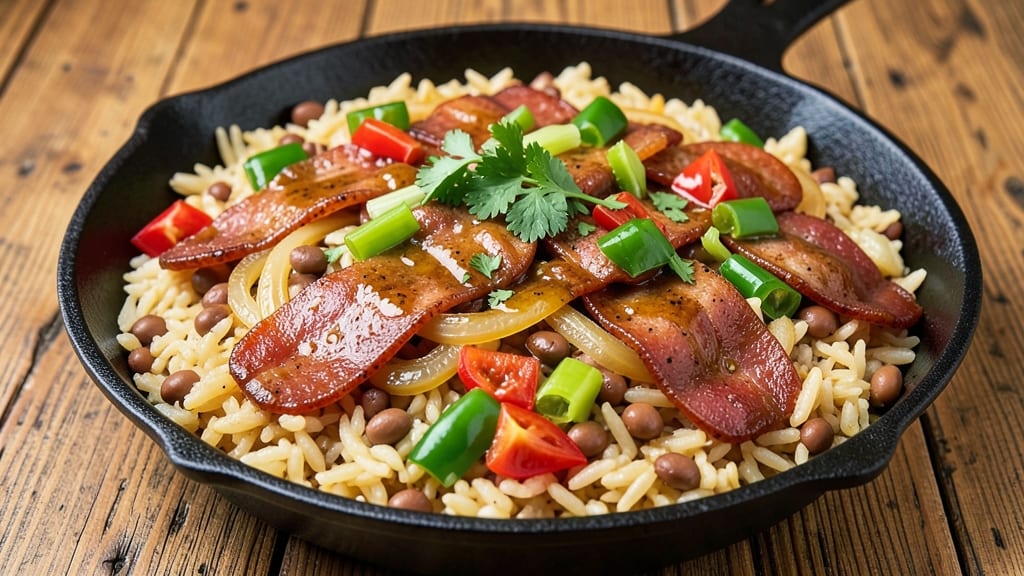
This bean jambalaya recipe transforms a weeknight dinner into a flavor-packed celebration of Cajun tradition. The secret lies in the holy trinity—onions, bell peppers, and celery—slow-cooked until sweet and caramelized, then layered with smoky andouille sausage, tender beans, and long-grain rice.
The spices—paprika, thyme, and bay leaf—build depth over time, creating a one-pot dish that’s hearty enough for a crowd but simple enough for a weeknight. What sets this recipe apart is the balance: the beans add protein and texture, while the sausage delivers rich, savory notes that tie everything together.
Unlike quick stir-fries, jambalaya develops flavor through low-and-slow cooking, letting the rice absorb the smoky, spiced broth until each grain is tender and infused. The result? A dish that’s restaurant-quality at home, with layers of flavor that linger long after the last bite. The best part?
It’s a one-pot wonder—minimal cleanup, maximum flavor. Serve it with crusty bread to soak up every last drop of that aromatic broth, or pair it with a simple green salad to balance the richness. This isn’t just a recipe; it’s a taste of Louisiana, simplified for your kitchen.
Ready to master the technique? Let’s break it down step by step—from sautéing the trinity to achieving that perfect rice-to-liquid ratio. The key is patience, but the reward is a dish that’ll have everyone asking for seconds.
Ingredients for bean jambalaya
The holy trinity of Cajun cuisine meets smoky sausage and hearty beans for this restaurant-worthy jambalaya.
| Ingredient | Amount | Notes |
|---|---|---|
| Long-Grain White Rice 🍚 | 2 cups | Uncooked, medium grain preferred |
| Yellow Onion 🧅 | 1 ½ whole | Diced, medium size preferred |
| Green Bell Pepper 🌶️ | 1 whole | Diced, any color preferred |
| Celery Stalks 🧄 | 3 whole | Diced, fresh and crisp |
| Andouille Sausage 🌭 | 1 lb | Smoked, sliced into rounds |
| Brown Lentils 🌱 | 1 ½ cups | Dried, rinsed thoroughly |
| Smoked Paprika 🌶️ | 2 tbsp | Sweet or hot variety |
| Dried Thyme 🌿 | 1 tsp | Or 1 tbsp fresh thyme |
| Bay Leaves 🍃 | 2 whole | Fresh or dried |
| Garlic Cloves 🧄 | 4 cloves | Minced, fresh preferred |
| Chicken Broth 💧 | 3 cups | Low-sodium preferred |
| Tomato Paste 🍅 | 2 tbsp | Smooth, no sugar added |
| Cajun Seasoning 🌶️ | 1 ½ tbsp | Homemade or store-bought |
| Olive Oil 🫒 | ½ cup | Extra-virgin for richness |
| Salt 🧂 | 1 ½ tsp | Diamond Crystal preferred |
The holy trinity—onions, bell peppers, and celery—is non-negotiable for authentic flavor. Fresh, crisp celery from the produce section at Whole Foods or your local market makes all the difference. For the andouille sausage, opt for high-quality smoked varieties—Johnsonville or Zatarain's are reliable brands that deliver authentic Cajun smokiness. The lentils should be rinsed thoroughly to remove any debris, and brown lentils hold their shape best during the long cooking process. If you're using dried thyme, make sure it's vibrant green and not gray or musty-smelling.
No smoked paprika? Regular paprika plus a pinch of liquid smoke works in a pinch, though the flavor won't be identical. Substituting dried thyme? Use one-third the amount of fresh thyme for equivalent flavor. For the Cajun seasoning, Tony Chachere's is a standard in many kitchens, but any well-balanced blend will do. The tomato paste can be swapped for 1 cup crushed tomatoes if you prefer a chunkier texture. If you're short on time, pre-diced vegetables from the frozen section (like Trader Joe's) save prep work without sacrificing flavor.
This jambalaya tastes even better the next day as flavors meld. Store leftovers in an airtight container in the fridge for up to 5 days, or freeze portions for 3 months. For reheating, add a splash of broth or water to prevent drying out. The rice-to-liquid ratio is critical—2 cups rice to 3 cups broth ensures perfect texture. If you're serving a crowd, double the recipe; the flavors only deepen with more time on the stove.
Why You'll Love This Recipe
- One-Pot Magic: I swear by this recipe—just brown the sausage, toss in the onions, peppers, and celery (that holy trinity of flavors), then dump everything into one pot with rice, beans, and broth. No measuring cups, no extra pans, no stress. The rice absorbs everything perfectly, and honestly? I’ve made it while scrolling through my phone.
- Smoky, Savory Bang: That Andouille sausage is the star—smoky, slightly spicy, and packed with flavor. When it cooks down with the bell peppers and onions, it releases this deep, caramelized richness that makes the whole dish taste like a hug. Plus, the beans soak it all up, turning every bite into a little burst of comfort.
- Leftovers That Don’t Suck: Between us, most "leftover" meals are sad. Not this one. The flavors actually improve the next day—more tender, more melded, and still hearty. I portion it out for lunches, freeze half for lazy nights, and even pack it in my son’s lunchbox (yes, even on a Tuesday night). No one complains.
- Budget-Friendly Crowd-Pleaser: This feeds six for under $15, and everyone’s happy. The rice stretches, the beans bulk it up, and the sausage makes it feel special without breaking the bank. I’ve served it at game days, potlucks, and even a last-minute dinner after work—no one ever asks for seconds, but they always go back for more.
Step-by-step instructions for bean jambalaya
Mastering this Cajun-inspired dish requires patience and layering flavors—here's how to build depth.
Sauté the Holy Trinity for Flavor Foundation
Heat the 0.5 cup olive oil in a large, heavy-bottomed pot over medium heat. Add the 1.5 whole diced yellow onion, 1 whole diced green bell pepper, and 3 whole diced celery stalks. Cook for 8-10 minutes, stirring occasionally, until the vegetables soften and release moisture but don't brown. This classic "holy trinity" forms the aromatic base of jambalaya.
Here's the thing—don't rush this step. The vegetables should be tender enough to collapse under gentle pressure but still retain their structure. If they start to brown too quickly, reduce the heat slightly. You're building flavor, not caramelizing. The goal is to develop a rich, sweet base that will carry through the entire dish.
Brown the Andouille and Develop the Spice Crust
Push the vegetable mixture to one side of the pot and increase heat to medium-high. Add the 1 lb sliced andouille sausage in a single layer, leaving space between each piece. Cook undisturbed for 3-4 minutes until the sausage develops a deep brown crust. This is critical—don't move it around or you'll steam instead of sear.
Once the sausage is well-browned on one side, stir and repeat on the other side. The rendered fat from the sausage will create a flavorful crust that forms the backbone of your jambalaya. While the sausage browns, sprinkle the 2 tbsp smoked paprika and 1.5 tbsp Cajun seasoning evenly over the mixture. Stir for 30 seconds to toast the spices and release their aromatic oils.
Build the Base with Lentils and Rice
Add the 1.5 cups rinsed brown lentils and 2 cups long-grain white rice to the pot, stirring to coat everything evenly in the spiced oil. Pour in the 3 cups chicken broth, scraping up any browned bits from the bottom of the pot with a wooden spoon. Stir in the 2 tbsp tomato paste, 1 tsp dried thyme, 2 whole bay leaves, and 1.5 tsp salt. Bring to a gentle boil.
This is where the magic happens. The lentils and rice will absorb the rich flavors from the sausage and vegetables. Once boiling, reduce heat to low and cover the pot with a tight-fitting lid. The key here is maintaining a gentle simmer—not a rolling boil—which prevents the rice from becoming mushy. Let it cook for 25 minutes without disturbing it, allowing the flavors to meld and the rice to begin absorbing the liquid.
Incorporate Garlic and Complete the Cook
After 25 minutes, stir in the 4 cloves minced garlic and mix thoroughly. Return the heat to medium-low and cook uncovered for another 15-20 minutes, stirring occasionally. You're looking for the rice to be tender but still slightly firm in the center—it should have absorbed most of the liquid but not be completely dry.
If the mixture appears too dry before the rice is fully cooked, add 2-3 tablespoons of water at a time. The jambalaya should be moist but not soupy. The lentils should be tender but still hold their shape. Taste and adjust seasoning—you may need an additional pinch of salt or more Cajun seasoning to balance the flavors. Remove the bay leaves before serving as they can be bitter.
Rest and Serve for Perfect Texture
Once the rice is fully cooked and the flavors have melded, transfer the jambalaya to a serving dish. Let it rest for 5-10 minutes before serving. This resting period allows the rice to finish steaming and the flavors to settle, ensuring each bite is perfectly balanced.
Serve immediately with crusty bread or over steamed greens. The jambalaya should have a rich, smoky depth from the andouille and spices, with tender lentils adding texture and protein. Each spoonful should deliver a harmonious blend of Cajun heat, savory sausage, and the comforting presence of brown rice and lentils.
Pro Tips For Making Bean Jambalaya
- CRISPY THE SAUSAGE FIRST: Slice that andouille thin and sear it in a dry pan over medium-high heat until the edges turn dark brown—about 2-3 minutes per side. I learned this the hard way: skipping this step means you’ll end up with rubbery sausage that won’t hold up in the stew. The extra effort pays off with flavor and texture that cut through the richness of the jambalaya.
- SWEAT THE VEGETABLES LOW: Dump your diced onion, bell pepper, and celery into the pot with just a splash of water or broth—no oil yet—and let them cook uncovered on low heat until they’re soft and glossy, about 10 minutes. I used to rush this, and the veggies would turn to mush. This slow start builds flavor without burning, and the veggies stay intact.
- RICE TO LIQUID RATIO MATTERS: Use a 1:1.5 ratio of rice to liquid (broth or water) for long-grain white rice—so 1 cup rice to 1.5 cups liquid. After the initial simmer, reduce heat to low and let it cook uncovered for 15 minutes, then cover and steam for another 5. Crowding the pot with too little liquid leads to mushy rice, while too much leaves it undercooked.
- TOAST THE RICE: After the veggies and sausage are cooked, turn the heat to medium-high, add the rice, and stir for 2-3 minutes until the grains look slightly translucent at the edges. This step locks in flavor and prevents the rice from turning gummy. I was skeptical until I tried it—now it’s non-negotiable.
Make-ahead tips for bean jambalaya
Prep Ahead Strategy
Start your flavor foundation the night before by dicing the holy trinity—onions, bell peppers, and celery—and storing them in an airtight container in the fridge. This saves 15-20 minutes of prep time the next day.
I like to use a glass Pyrex container because it keeps the veggies fresh and ready for quick cooking. 🌶️
Lentil Pre-Soaking
Rinse and soak the 1.5 cups brown lentils overnight in a bowl of water with ½ tsp salt. This reduces cooking time by 20-30 minutes and ensures they stay tender without turning mushy.
Drain them well before adding to the jambalaya. Trust me, this small step makes a huge difference in texture.
Sausage Pre-Browning
Brown the 1 lb andouille sausage ahead of time and store it in the fridge until ready to use. This step can be done up to 2 days in advance—just reheat in a skillet over medium heat for 2-3 minutes before adding to the jambalaya.
The sausage will retain its rich, smoky flavor without drying out. 🌭
Broth and Spice Mix
Combine the 3 cups chicken broth, 2 tbsp tomato paste, 1.5 tbsp Cajun seasoning, 1 tsp dried thyme, and 1.5 tsp salt in a jar or airtight container. Keep it refrigerated for up to 3 days.
When you're ready to cook, simply pour the mixture into the pot with the other ingredients. This pre-mix ensures your jambalaya stays perfectly seasoned every time.
One-Pot Make-Ahead
Cook the jambalaya completely in a heavy-bottomed Dutch oven, then let it cool to room temperature. Store it in an airtight container in the fridge for up to 5 days.
When reheating, add 2-3 tablespoons of water or broth to prevent drying. The flavors actually deepen overnight, making leftovers taste even better the next day. ⏰
Freezer-Friendly Prep
For long-term storage, portion the cooked jambalaya into quart-sized freezer bags, leaving 1 inch of headspace for expansion. Seal tightly and freeze for up to 3 months.
When ready to eat, thaw overnight in the fridge, then reheat on the stovetop over low heat with a splash of broth. This method preserves all the rich, smoky flavors perfectly. 💫
Nutrition facts
Frequently asked questions
Can I substitute brown lentils for another type of bean?
For a heartier texture, use 1.5 cups dried black beans or pinto beans, but increase cooking time by 10-15 minutes since they take longer to soften. If using canned beans, rinse thoroughly and drain well to avoid excess moisture in your jambalaya. The key is maintaining the 1:1 ratio—just adjust cooking time accordingly.
Why does my jambalaya turn out mushy?
Mushy jambalaya usually happens from either overcooking or too much liquid. First, ensure you're using a heavy-bottomed pot to distribute heat evenly. Second, maintain a gentle simmer (not a boil) after adding the rice and broth. Finally, check your rice-to-liquid ratio—2 cups rice to 3 cups broth is perfect. If it's still too wet, uncover and cook longer on low heat.
Can I make this jambalaya in an Instant Pot?
Yes! Sauté the holy trinity and sausage as directed, then add all remaining ingredients except 1 cup broth. Seal the lid and cook on high pressure for 10 minutes, then quick-release. Stir in the remaining 1 cup broth and let sit covered for 5 minutes before serving. The Instant Pot version cooks faster but may need a splash of extra broth if too dry.
What's the best way to reheat jambalaya?
For the best texture, reheat jambalaya on the stovetop over low heat with a splash of broth or water. Stir frequently to prevent sticking. If using the microwave, cover with a damp paper towel and heat in 30-second intervals, stirring between each. Never reheat from frozen—thaw completely in the fridge first. The goal is to warm through without drying out the rice.
How spicy should jambalaya be?
Traditional jambalaya has a mild to medium heat from the Cajun seasoning and smoked paprika. For extra kick, add ½ tsp cayenne pepper or 1 chopped hot pepper with the garlic. If you prefer less heat, reduce the Cajun seasoning to 1 tbsp** and omit the cayenne. Taste and adjust—you can always add more spice but can't remove it!