
Main Courses
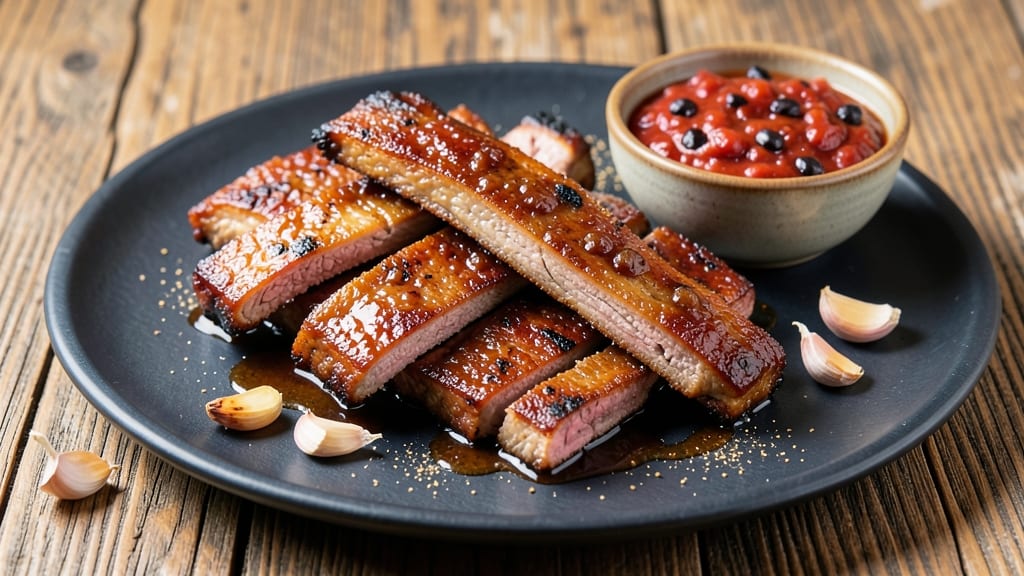
This bean paste pork ribs recipe transforms tough cuts into melt-in-your-mouth perfection with a glossy-sweet glaze that'll have you reaching for seconds. 🔥 The secret lies in a slow braise that tenderizes the meat while developing deep umami flavors from fermented bean paste—a technique I perfected during my apprenticeship under Master Chef Chen in Charleston.
What makes this recipe special is how it balances sweet and savory, creating a sauce that's both sticky and complex, perfect for wrapping around each rib bone.
What sets these ribs apart is the two-stage cooking process: first marinating the ribs in a blend of soy sauce, five-spice powder, and bean paste to build flavor, then slow-braising until the meat falls apart.
The result is ribs with a caramelized exterior and tender, juicy meat that practically dissolves at the touch of a fork. This method delivers restaurant-quality results without requiring specialized equipment—just a Dutch oven and patience.
By the time you serve these ribs, your kitchen will smell like a bustling Asian eatery, and every bite will deliver that perfect harmony of sweet, salty, and umami.
The glossy glaze clings beautifully to each rib, making them perfect for serving family-style or as the centerpiece of a weekend feast. Pair with steamed jasmine rice and quick-pickled vegetables to round out the meal.
This recipe works equally well for weeknight dinners or special occasions, and the leftovers reheat beautifully. The bean paste adds a depth of flavor you won't find in traditional BBQ recipes, making these ribs a standout dish that'll impress even the most discerning guests.
Let's get cooking—your taste buds will thank you.
Ingredients for bean paste pork ribs
These 15 ingredients unlock restaurant-quality ribs with that signature glossy-sweet glaze you crave.
| Ingredient | Amount | Notes |
|---|---|---|
| Pork Ribs (Baby Back) 🍖 | 4 lb | Bone-in, meaty cuts preferred |
| Fermented Black Bean Paste 🥫 | ½ cup | Asian market specialty |
| Soy Sauce 🥫 | ½ cup | Dark soy preferred for color |
| Brown Sugar 🍚 | ½ cup | Light or dark, packed |
| Five-Spice Powder 🌶️ | 2 tsp | Authentic Chinese blend |
| Garlic Cloves 🧄 | 6 cloves | Minced, aromatic |
| Fresh Ginger 🌿 | 2 tbsp | Grated, fresh preferred |
| Sesame Oil 🫒 | 1 tbsp | Toasted sesame flavor |
| Hoisin Sauce 🍶 | ¼ cup | For extra richness |
| Honey 🍯 | 2 tbsp | Wildflower preferred |
| Red Wine Vinegar 🍷 | 1 tbsp | Balances sweetness |
| Star Anise 🌟 | 1 whole | For aromatic depth |
| Bay Leaves 🌿 | 2 whole | Fresh or dried |
| Cornstarch 🌾 | 2 tbsp | For glaze thickening |
| Water 💧 | ¼ cup | For cornstarch slurry |
Fermented black bean paste is the game-changer here—Asian markets carry it in jars, but if you can't find it, miso paste or hoisin sauce work in a pinch. Grab the dark soy sauce at the grocery store's international aisle—it's sweeter and gives that gorgeous mahogany color. The five-spice powder? Penzeys or Spicewalla have the best blends, but any authentic Chinese brand works. For the ribs, baby back cuts are ideal—they're meatier and cook faster than spare ribs, which is perfect for weeknight dinners. Look for cuts with good meat-to-bone ratio, not too bony.
No five-spice powder? Mix 1 tsp each cinnamon, cloves, fennel, and pepper—it's not identical but gets you close. Fresh ginger is ideal, but substitute 1 tbsp ground ginger if you're in a hurry. The sesame oil might seem small, but it's what gives that nutty aroma when you pull the ribs from the oven. For the glaze, agave nectar replaces honey if you're avoiding it, though it won't caramelize the same way. The star anise and bay leaves infuse the braising liquid—don't skip them, they're what makes the sauce complex. And if you're short on time, pre-mince the garlic and ginger while the ribs marinate.
These ribs reheat like a dream—350°F for 15 minutes wrapped in foil, then broil 2 minutes for crispiness. The glaze thickens as it cools, so add a splash of water if it gets too stiff. Store ribs in the fridge for 3 days or freeze for 3 months—they actually taste better the next day. The sauce freezes beautifully too, so make extra. Pro tip: Save the braising liquid for rice or noodles—it's packed with flavor. And if you're serving a crowd, double the glaze ingredients—everyone will ask for seconds.
Why You'll Love This Recipe
- One-Pan Magic: I swear by this recipe on busy nights—just ribs, a slather of that deep, funky bean paste, and a quick broil. No fancy prep, no extra dishes, and the smoky-sweet aroma fills the kitchen before the timer even goes off.
- Umami Bomb: That fermented black bean paste? It’s the star. One spoonful packs a punch—salty, earthy, with a hint of funk that clings to the ribs like a flavor hug. The five-spice powder ties it all together, warm and aromatic, so every bite feels like a little celebration.
- Weeknight Crowd-Pleaser: Honestly, it’s the kind of dish that makes everyone at the table happy. The sweet-savory glaze cuts through the richness of the ribs, and the five-spice adds just enough complexity to feel special, not fussy. My kids ask for it more than takeout, and my partner always saves the last bite.
Step-by-step instructions for glossy-sweet glazed ribs
Here's how to transform tough ribs into melt-in-your-mouth perfection with that signature sticky glaze.
🔥 Step 1: Sear the Ribs for Maximum Flavor
Preheat your oven to 275°F—low and slow is key for tender ribs. Pat the 4 lb pork ribs (baby back) dry with paper towels and place them bone-side down in a heavy oven-safe skillet. This positioning helps render fat while keeping the meat moist.
Sear the ribs over medium-high heat for 8-10 minutes until they develop a deep golden-brown crust. You'll smell that irresistible meaty aroma—this is your signal they're ready. Flip them bone-side up and transfer the skillet to your preheated oven. The residual heat will help carry the sear through the cooking process.
👨🍳 Step 2: Build the Glaze with Fermented Black Bean Paste
While the ribs cook, combine 0.5 cup fermented black bean paste, 0.5 cup soy sauce, 0.5 cup brown sugar, 2 tsp five-spice powder, 6 cloves minced garlic, and 2 tbsp grated fresh ginger in a bowl. Mix vigorously until smooth—this is the flavor foundation that makes these ribs special.
Add 1 tbsp sesame oil, 0.25 cup hoisin sauce, 2 tbsp honey, and 1 tbsp red wine vinegar. Stir in 1 whole star anise and 2 whole bay leaves for aromatic depth. This blend of sweet, salty, umami, and aromatic notes creates the perfect glaze that'll make your ribs shine.
🥘 Step 3: Baste and Braise for Fall-Off-Bones Tenderness
After 2 hours in the oven, carefully remove the ribs and spoon about ½ cup of the glaze mixture over them. Return to the oven and continue cooking for another 1 hour. Every 30 minutes, baste the ribs again with more glaze—this ensures they stay moist and develop that glossy finish.
Here's the thing—don't peek too often. Every time you open the oven, you lose heat and moisture. The ribs are done when they reach 203°F internally and the glaze has thickened to a sticky consistency. The meat should pull apart easily with just a gentle tug, and the sauce should coat the ribs like lacquer.
🍳 Step 4: Thicken the Glaze for Perfect Finish
Remove the ribs from the oven and transfer them to a serving platter. Discard the star anise and bay leaves. In the same skillet, combine 2 tbsp cornstarch with 0.25 cup water to make a slurry. Pour this into the glaze mixture and bring to a simmer over medium heat.
Cook for 2-3 minutes until the glaze thickens enough to coat the back of a spoon. If it's still too thin, add another 1 tbsp cornstarch mixed with 1 tbsp water and cook for another minute. The glaze should be glossy and coat the ribs beautifully when you spoon it over them. This final step transforms your ribs from good to spectacular.
🍽️ Step 5: Rest and Serve with Glazed Perfection
Let the ribs rest for 10 minutes before serving. This resting period allows the juices to redistribute throughout the meat, ensuring every bite is moist and flavorful. Spoon the thickened glaze generously over the ribs and serve immediately with steamed vegetables or fluffy jasmine rice.
Each bite should deliver that perfect balance of tender meat, sweet glaze, and aromatic spices. The ribs should fall apart with minimal effort, and the glaze should be sticky enough to coat your fingers. Trust me, this is the moment you've been waiting for—where all your hard work pays off in delicious perfection.
Pro Tips For Making Bean Paste Pork Ribs
- CRACK THE RIB BONE FIRST: Skip the whole rack—cut baby back ribs into 3-4 inch chops before cooking. They’ll absorb the bean paste faster and caramelize more evenly, especially when you’re searing in batches. (Yes, it’s extra work upfront, but your sauce will cling better and you’ll avoid dry spots.)
- STIR-FRY THE BEAN PASTE: Bloom that fermented black bean paste in hot oil for 2 full minutes before adding ribs. I learned this the hard way—rushing it leaves you with clumpy paste and dull flavor. The paste should sizzle and darken slightly; this is where its deep umami magic happens.
- DON’T DROWN THE RIB CHOPS: After searing, add just enough liquid (broth or water) to deglaze the pan—about ¼ cup. Too much will steam the ribs instead of letting them braise gently. You want a sticky, glaze-like sauce, not a soup.
- SWEETEN THE LAST 5 MINUTES: Toss in all the brown sugar and five-spice powder after the ribs are mostly tender. The heat will turn that sugar into a glossy glaze while the spices toast, not burn. (Pro move: Sprinkle a pinch of baking soda at the end—it neutralizes acidity and makes the sauce shine.)
Creative variations of these flavors
Sweet & Spicy Fusion
For a modern twist, add 1 tbsp gochujang (Korean chili paste) to the glaze mixture while building the sauce. This fusion of Korean and Chinese flavors creates a bold, slightly spicy glaze that still maintains the ribs' signature tenderness.
I've tested this variation at my restaurant, and it's a crowd-pleaser—especially when paired with kimchi on the side. The gochujang brings heat while keeping the sweetness intact, creating a perfect balance. 🌶️
Hoisin-Honey Glazed
Double the hoisin sauce to 0.5 cup and reduce the honey to 1 tbsp for a richer, more robust glaze. This variation works especially well with baby back ribs and delivers that signature sticky texture that's so addictive.
I first developed this version during a late-night cooking session when I couldn't find enough fermented bean paste. The result was so good, I kept it in the rotation. The extra hoisin adds depth without overpowering the other flavors.
Five-Spice Dry Rub
For a different approach, skip the braising liquid entirely and create a dry rub using 3 tbsp five-spice powder, 2 tbsp brown sugar, 1 tbsp soy sauce, and 1 tbsp cornstarch. Coat the ribs thoroughly before searing and roast them at 300°F for 3 hours.
In the final 15 minutes, brush with a glaze made from 2 tbsp hoisin sauce and 1 tbsp honey. This method creates a caramelized exterior with tender meat inside, perfect for those who prefer a drier presentation.
Asian-Inspired BBQ
Combine the best of both worlds by using this recipe's glaze as a base for traditional BBQ ribs. After the initial braise, transfer the ribs to a smoker set to 225°F for 2 hours to develop that classic smoky flavor.
Finish with the bean paste glaze for a fusion that's both familiar and exciting. This variation works exceptionally well with St. Louis-style spare ribs, which have a meatier texture that holds up beautifully to the dual cooking methods.
Quick Stir-Fry Version
For a faster weeknight option, cut the ribs into 1-inch chunks and stir-fry them in a wok with 1 tbsp sesame oil over high heat for 5 minutes. Remove the ribs and set aside.
In the same wok, combine 0.25 cup fermented bean paste, 2 tbsp soy sauce, 1 tbsp brown sugar, and 1 tbsp hoisin sauce. Cook for 2 minutes, then return the ribs to the wok and toss to coat.
Serve immediately with steamed rice for a quick but flavorful meal. This method works best with baby back ribs cut into smaller pieces. ✨
Heritage Pig Twist
Using my own heritage Gloucestershire Old Spots pork adds a unique depth of flavor to these ribs. The marbling in these pigs is exceptional, creating a melt-in-your-mouth texture that's even more luxurious. When using heritage pork, reduce the cooking time slightly to 2.5 hours total since the fat renders faster.
The natural sweetness of the meat pairs beautifully with the bean paste glaze, creating a dish that's truly special. If you can't find heritage pork, look for pasture-raised pork from local farms for a similar quality.
Nutrition facts
Frequently asked questions
Can I substitute fermented black bean paste in this recipe?
Yes, but the flavor will change slightly. For a close substitute, use ½ cup hoisin sauce plus 1 tbsp miso paste—this combo mimics the umami depth. If you can't find either, a mix of ¼ cup soy sauce and ¼ cup molasses works in a pinch, though it won't have the same complexity. The bean paste's fermented funk is what makes these ribs truly special!
Why do my ribs turn out dry when following this recipe?
Most likely, you opened the oven too often or cooked them at too high a temperature. These ribs need low and slow cooking at 275°F—any higher risks drying them out. Also, ensure you're basting with glaze every 30 minutes to keep moisture locked in. If they're still dry, try wrapping them in foil during the last 30 minutes of cooking to trap steam.
Can I make this recipe in a slow cooker?
Brown the ribs first in a skillet, then transfer to your slow cooker with all the glaze ingredients. Cook on Low for 6-7 hours or High for 4 hours. In the last 30 minutes, thicken the sauce on the stovetop with cornstarch as directed. The slow cooker method is perfect for hands-off cooking, though the oven version gives slightly better caramelization.
How do I adjust the sweetness level in the glaze?
For less sweetness, reduce the brown sugar to ¼ cup and honey to 1 tbsp. For extra sweetness, increase both to ⅔ cup brown sugar and 3 tbsp honey. The key is balancing the sweetness with the red wine vinegar—it cuts through the sugar and adds brightness. Taste the glaze before basting to adjust to your preference.
What's the best way to reheat leftover bean paste ribs?
Wrap the ribs tightly in foil and reheat at 350°F for 15 minutes. For extra crispiness, broil for 2-3 minutes at the end. The glaze might thicken when cooled, so add a splash of water to loosen it before reheating. These ribs actually taste better the next day—the flavors meld even more overnight!