
Soups & Stews
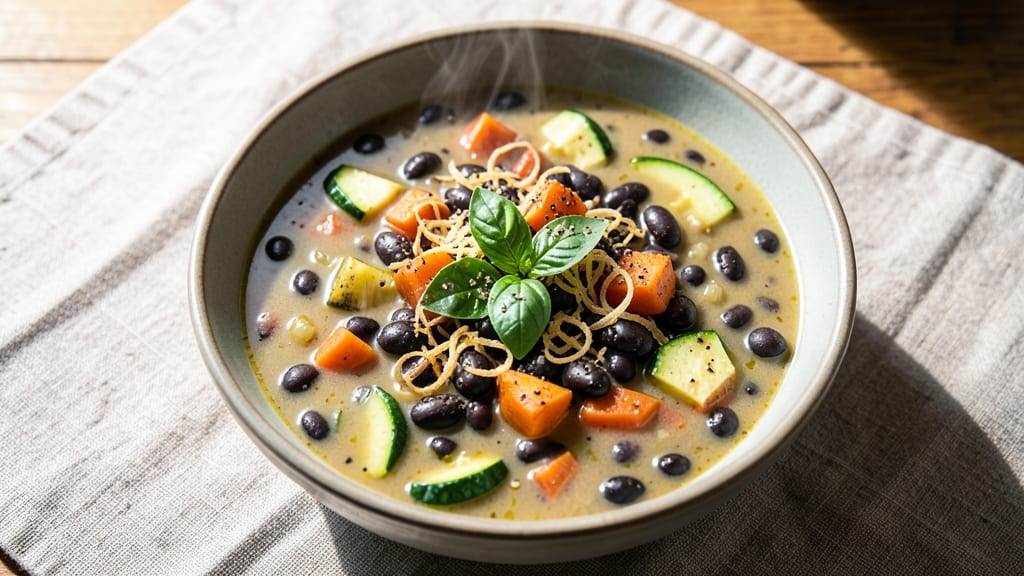
This vegan black bean minestrone soup recipe brings the hearty flavors of Italy to your pot with minimal effort—just one pan, one hour, and a symphony of vegetables.
The secret lies in roasting the veggies first, which deepens their flavor and creates that signature caramelized depth you’d expect from a traditional Italian minestrone. I’ve adapted the classic recipe with black beans for extra protein and a modern twist using smoked paprika for subtle warmth.
The beauty of this soup is its flexibility—it’s perfect for batch cooking, meal prep, or serving a crowd. You’ll start by sautéing onions, garlic, and celery in olive oil, then roasting the vegetables until tender and slightly browned.
This step transforms ordinary veggies into something rich and complex. The broth simmers with canned tomatoes, vegetable stock, and herbs, while the black beans and pasta absorb all the flavors, making every spoonful satisfying and full of texture.
What you’ll end up with is a hearty, one-pot meal that’s packed with nutrients, fiber, and plant-based protein. The soup is thick enough to be filling but light enough to enjoy in any season.
Garnish with fresh parsley, a drizzle of olive oil, and crusty bread for serving—because sometimes the simplest touches make all the difference. This recipe is designed to be foolproof, so even if you’re new to cooking minestrone, you’ll achieve restaurant-quality results.
Whether you’re prepping for the week or cooking for a gathering, this minestrone delivers on flavor, nutrition, and convenience. The roasted vegetables add a depth that sets it apart from canned soup, while the black beans and pasta make it a complete meal.
Ready in just one hour, it’s the kind of dish that feels like a hug in a bowl—warm, comforting, and full of love. Let’s get cooking!
Ingredients for black bean minestrone soup
Pantry staples meet fresh veggies for this comforting vegan minestrone that's perfect for meal prep.
| Ingredient | Amount | Notes |
|---|---|---|
| Extra-Virgin Olive Oil 🫒 | ½ cup | For sautéing vegetables |
| Yellow Onion 🧅 | 1 whole | Diced, medium size |
| Garlic Cloves 🧄 | 4 cloves | Minced, fresh preferred |
| Celery Stalks 🥬 | 3 whole | Diced, stringy parts trimmed |
| Carrots 🥕 | 2 medium | Diced, organic preferred |
| Zucchini 🍆 | 2 medium | Diced, skin removed |
| Black Beans 🌱 | 2 cups | Cooked, drained and rinsed |
| Ditalini Pasta 🍝 | 1 ½ cups | Uncooked, orzo works too |
| Canned Diced Tomatoes 🍅 | 2 cups | San Marzano preferred |
| Vegetable Broth 💧 | 4 cups | Low-sodium preferred |
| Smoked Paprika 🌶️ | 1 tbsp | For depth of flavor |
| Dried Oregano 🍃 | 1 tsp | Or 1 tbsp fresh chopped |
| Bay Leaves 🌿 | 2 whole | For aromatic depth |
| Fresh Parsley 🌿 | ¼ cup | Chopped, for garnish |
| Lemon Juice 🍋 | 1 tbsp | Freshly squeezed |
| Salt 🧂 | 1 ½ tsp | Adjust to taste |
| Black Pepper 🌶️ | ½ tsp | Freshly ground |
The black beans are the protein powerhouse here—Trader Joe's has the best canned variety, but any organic brand works. For the veggies, farmers markets give you the freshest carrots and zucchini (look for vibrant color, no soft spots). The smoked paprika is non-negotiable—it's what gives this soup that smoky Italian vibe. If you can't find it, regular paprika plus a pinch of cayenne works in a pinch. The ditalini pasta should be al dente when cooked separately—it'll finish in the soup later. Pro tip: Toast the pasta in the pot for 2 minutes before adding broth for extra flavor.
No smoked paprika? Half a teaspoon of liquid smoke gets you close, but it's intense so start small. Fresh oregano is ideal but dried at one-third the amount works fine. Short on black beans? Kidney beans or lentils swap one-for-one. The vegetable broth matters—Pacific Foods or Imagine brands are low-sodium and vegan. For extra richness, stir in 1 tablespoon nutritional yeast at the end. The zucchini and carrots can be swapped for butternut squash if you're feeling fancy—just roast it first for 20 minutes at 400°F.
This soup tastes even better the next day—double the batch and freeze half. Store in airtight containers for 4-5 days in the fridge or 3 months frozen. To reheat, add a splash of water or broth. The pasta gets mushy if reheated with liquid, so always add it back at the end. Garnish with fresh parsley and a drizzle of olive oil right before serving. Crusty bread on the side is mandatory—it soaks up all the good stuff.
Why You'll Love This Recipe
- One-Pot Magic: I swear by this recipe—just toss onions, garlic, celery, and carrots into olive oil, let them soften, then dump in everything else. No measuring cups, no fuss, no stress. The soup practically assembles itself while you stir.
- Garlic-Kissed Depth: That first sizzle of garlic in olive oil? Pure flavor gold. It caramelizes just enough to coat every spoonful, while the black beans add a rich, earthy backbone. Honestly, I’ll take this over any takeout bowl any day.
- Prep-Ahead Powerhouse: Make a double batch on Sunday and freeze half. When Monday hits, thaw overnight and reheat—no extra effort. It’s my go-to for lazy mornings or when friends drop by unexpectedly. (Yes, even on a Tuesday night.)
- Budget-Friendly Feast: Celery, carrots, onions—these are the cheap staples that stretch into a hearty meal. A can of beans and some broth turn it into a filling dinner for four for under $10. My wallet and my family thank me every time.
Step-by-step instructions for black bean minestrone soup
This hearty soup comes together in one pot with minimal cleanup—just follow these simple steps.
Sauté the Vegetable Base
Heat the 0.5 cup extra-virgin olive oil in a large Dutch oven or deep pot over medium heat. Add the 1 whole diced yellow onion, 3 diced celery stalks, and 2 diced carrots. Cook for 5-6 minutes, stirring occasionally, until the vegetables begin to soften and the onion becomes translucent.
Add the 2 medium diced zucchini and continue cooking for another 3-4 minutes until everything is tender but still holds its shape. You're building flavor here—don't rush this step. The vegetables should release their natural juices and smell wonderfully aromatic.
Add Aromatics and Spices
Push the vegetables to one side of the pot and add the 4 minced garlic cloves directly to the empty space. Cook for 30 seconds until fragrant—this prevents burning. Stir everything together, then add the 1 tbsp smoked paprika, 1 tsp dried oregano, and 2 whole bay leaves. Cook for 1 minute to toast the spices slightly and deepen their flavor.
Here's the thing—smoked paprika adds that subtle depth that makes this soup taste restaurant-quality. Don't skip this step, even if you're in a hurry. The spices need that quick toast to really sing in the finished dish.
Build the Soup Foundation
Pour in the 2 cups canned diced tomatoes and stir to combine with the vegetables. Cook for 2-3 minutes until the tomatoes begin to break down slightly. Add the 4 cups vegetable broth and bring the mixture to a gentle boil.
Once boiling, reduce heat to medium-low and stir in the 2 cups cooked black beans and 1.5 tsp salt. The soup should simmer gently—you want bubbles breaking the surface but not a vigorous boil. This simmering time is where all the flavors meld together beautifully.
Cook the Pasta Directly in the Soup
Add the 1.5 cups ditalini pasta to the simmering soup. Stir gently to distribute the pasta evenly. The pasta will absorb the broth and cook through in 8-10 minutes. You want the pasta to be al dente—tender but still with a slight bite.
I know it seems counterintuitive to cook pasta in soup, but this is how you get that perfect texture where each bite has both pasta and broth. Check the pasta after 8 minutes—it should be just shy of fully cooked. If it's not quite there after 10 minutes, add ½ cup hot broth to finish cooking.
Finish and Serve
Remove the 2 whole bay leaves and stir in the 1 tbsp lemon juice and 0.5 tsp black pepper. Taste and adjust seasoning—you might need a little more salt depending on your broth. The lemon juice brightens all the earthy flavors and cuts through the richness beautifully.
Ladle the soup into bowls and garnish each serving with 0.25 cup chopped fresh parsley. The parsley adds freshness and makes the soup look as good as it tastes. Serve immediately while hot, with crusty bread on the side to soak up every last drop of that flavorful broth.
Pro Tips For Making Black Bean Minestrone Soup
- Sweat the Veggies Slow: I learned this the hard way—rushing the onion, garlic, celery, and carrots in olive oil just to speed things up leaves them raw-tasting. Take your time with a medium-low heat, stirring often, until the onions turn translucent and the celery softens. That’s when the real flavor starts building.
- Mince Garlic Like You Mean It: I was skeptical until I tried it: finely mincing the garlic (not just chopping) makes it dissolve into the soup instead of lingering as chunks. Use a knife or garlic press—just don’t skip this step if you want that deep, aromatic punch.
- Don’t Skip the Black Bean Rinse: Canned black beans are convenient, but they’re packed in saltwater. A quick rinse under cold water removes excess sodium and prevents the soup from tasting flat or overly briny. Trust me, your future self will notice the difference.
- Simmer, Don’t Boil: After adding broth and beans, resist the urge to crank the heat. A gentle simmer (small bubbles, occasional skimming of foam) keeps the soup from splitting or turning gluey. This isn’t the prettiest method, but it’s the tastiest—especially when you’re serving it with crusty bread.
Perfect pairings for this dish
Crusty Bread Pairing
Nothing elevates this minestrone like a warm slice of crusty Italian bread—I love Ciabatta or sourdough for their open crumb structure that soaks up the broth beautifully. Toast it in the oven at 375°F for 5 minutes until golden and crisp.
For extra flair, brush with garlic-infused olive oil before serving. The contrast of the bread's crunch against the soup's heartiness is pure magic. 🥖
Sharp Cheese Options
While this recipe stays vegan, a sprinkle of nutritional yeast (about 1 tbsp) adds a cheesy, umami depth that pairs perfectly. For non-vegan versions, try Pecorino Romano or Parmigiano-Reggiano—their sharp, salty notes cut through the soup's richness.
I like grating it fresh over individual bowls at the table. A small ½ cup goes a long way!
Bright Greens Side
A simple arugula salad with lemon vinaigrette cleanses the palate between bites. Toss 4 cups baby arugula with 2 tbsp olive oil, 1 tbsp lemon juice, and a pinch of sea salt.
The peppery greens balance the soup's earthy flavors beautifully. For extra protein, add toasted pine nuts or avocado slices. 🥗
Wine Pairings
An Italian Chianti (like Sangiovese) complements the soup's smoky, tomato-forward flavors with its bright acidity and cherry notes. For white wine lovers, a dry Vermentino from Sardinia offers crisp citrus that refreshes the palate.
Avoid heavy reds—they'll overpower the dish. I also enjoy a sparkling water with lemon for a lighter option.
Toppings Bar
Set out a toppings bar with crumbled feta (for non-vegan versions), extra black beans, diced avocado, chopped cilantro, and a red pepper flakes for heat.
Let guests customize their bowls—this makes it interactive and fun for gatherings. A drizzle of hot honey adds sweetness that balances the smoky paprika. 🍯
Nutrition facts
Frequently asked questions
Can I make this minestrone without roasting the vegetables first?
Yes, but you'll miss that deep, caramelized flavor that makes this soup special. Sauté the veggies directly in the pot for 8-10 minutes until tender, then proceed with the recipe. The roasting step (400°F for 20 minutes) concentrates the flavors and creates that signature minestrone richness.
How do I adjust the recipe for fewer/more servings?
This recipe scales perfectly! For 4 servings, halve all ingredients. For 8 servings, double everything (including pasta and beans). The key is maintaining the vegetable-to-broth ratio—aim for 1 cup broth per 1 cup veggies. The cooking time will increase slightly with larger batches.
Why does my minestrone taste bland after reheating?
Reheating can dull flavors because the broth loses steam and some oils separate. To fix it, stir in 1 tbsp lemon juice and ½ tsp smoked paprika while reheating. For extra richness, add 1 tbsp olive oil or a splash of vegetable broth. Always reheat gently on low heat to preserve texture.
Can I use fresh black beans instead of canned?
Cook 1 cup dried black beans in 3 cups water for 1-2 hours (or use a pressure cooker for 30 minutes) until tender. Drain and rinse before adding to the soup. Fresh beans add a creamier texture, but they require more prep time. For convenience, canned beans work perfectly—just drain and rinse well.
What's the best way to store leftovers?
Store in airtight containers in the fridge for 4-5 days or freeze for 3 months. For reheating, add 2-3 tbsp water or broth per serving to prevent drying. The pasta will soften slightly—just stir in a splash of broth to restore consistency. Avoid reheating directly in the microwave for even texture.