
Side Dishes
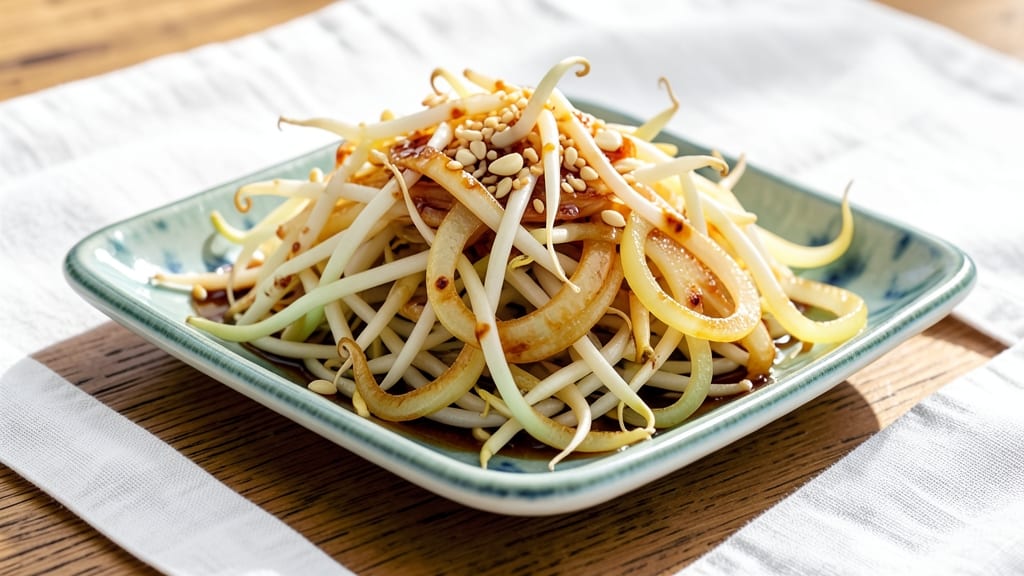
This bean sprout banchan Korean recipe transforms simple ingredients into a crispy, savory side dish that elevates any meal. The secret lies in blanching the bean sprouts just right—al dente yet tender—before tossing them in a fragrant blend of soy sauce, sesame oil, and minced garlic.
What makes this recipe special is the optional crispy fried onion topping, which adds a delightful crunch that contrasts beautifully with the soft sprouts.
The process is straightforward: wash and blanch the sprouts, then season them with a simple yet flavorful marinade. This banchan is not only quick to prepare but also vegetarian, making it a versatile addition to any Korean meal.
The combination of earthy bean sprouts, aromatic garlic, and nutty sesame creates a harmonious balance of flavors that will leave your taste buds satisfied.
By the end, you'll have a crispy, restaurant-quality side dish that pairs perfectly with rice, grilled meats, or even as a standalone snack. The crispy fried onions add an extra layer of texture, ensuring every bite is packed with flavor.
This recipe is perfect for anyone looking to add an authentic Korean touch to their table.
Whether you're serving it at a family gathering or simply enjoying a homemade Korean meal, this banchan delivers the perfect blend of simplicity and sophistication. Let's get started!
Ingredients for bean sprout banchan korean
Simple ingredients for a crispy, savory Korean side dish that brings restaurant-quality flavor to your table.
| Ingredient | Amount | Notes |
|---|---|---|
| Fresh Bean Sprouts 🌱 | 4 cups | Trimmed and rinsed thoroughly |
| Yellow Onions 🧅 | 1 whole | Thinly sliced for frying |
| Soy Sauce 🍶 | 3 tbsp | Korean preferred, low sodium |
| Sesame Oil 🫒 | 1 ½ tbsp | Toasted for nutty flavor |
| Garlic Cloves 🧄 | 4 cloves | Minced finely for aroma |
| Vegetable Oil 🫒 | ½ cup | High smoke point for frying |
| Sesame Seeds 🌾 | 1 tbsp | Toasted lightly for garnish |
| Salt 🧂 | ½ tsp | Kosher or sea salt |
| White Sugar 🍚 | 1 tsp | Balances flavors slightly |
| Vegetable Broth 💧 | ½ cup | Low sodium preferred |
| Rice Vinegar 🍶 | 1 tbsp | White rice vinegar preferred |
| Gochugaru 🌶️ | ½ tsp | Korean red pepper flakes |
The bean sprouts are the star—look for bright, crisp sprouts at the grocery store, ideally from the refrigerated section. Trader Joe's or Korean markets often have the freshest options, but the regular produce aisle works too. Trim the ends carefully—they can get bitter. For the onions, yellow or white onions work best for frying, as they hold their shape better than sweet onions. If you can't find gochugaru, substitute cayenne pepper at half the amount, but the flavor won't be quite the same. The sesame seeds should be toasted in a dry pan until fragrant—30 seconds max to avoid burning.
No sesame oil? Toasted sesame seeds blended with neutral oil works in a pinch, though it won't have the same depth. Short on soy sauce? Coconut aminos or tamari are good swaps, but reduce the amount slightly since they're saltier. The vegetable broth can be substituted with water, but adding a pinch of miso paste (½ tsp) will deepen the umami. For the fried onions, don't overcrowd the pan—work in batches if needed. The goal is crispy, not greasy. If you're feeling adventurous, try adding a pinch of MSG to the marinade for extra restaurant-style punch, but it's optional.
The blanched sprouts keep well for 3 days in the fridge if stored in an airtight container with a paper towel to absorb moisture. The fried onions? Best eaten fresh, but you can reheat them in a 200°F oven for 5-10 minutes to revive the crunch. For meal prep, blanch the sprouts ahead and store them separately from the marinade. Toss everything together just before serving to keep the texture perfect. This dish reheats beautifully—30 seconds in the microwave with a splash of water if it seems dry. Portion into small containers for easy grab-and-go sides.
Why You'll Love This Recipe
- No-Chop Needed: I swear by this—just rinse those bean sprouts, halve the onions if I’m feeling generous (or leave ‘em whole), and toss everything in a hot pan. Five minutes later, you’ve got a side that looks like you slaved over it.
- Umami Bomb: That first hit of garlic sizzling in sesame oil? Instant flavor upgrade. The soy sauce ties it all together with this deep, savory punch that makes it disappear faster than my willpower during holiday leftovers.
- Meal Prep MVP: Between us, this is my lazy Sunday secret. Double the batch, store it in the fridge, and pull it out for rice bowls, banchan spreads, or even as a quick veggie boost for fried rice. It keeps like a champ—no sad, wilty sides here.
- Pocketbook Hero: Fresh bean sprouts are cheap, onions are cheap, and a bottle of soy sauce lasts forever. I’ve made this for under $3 per serving, and honestly? It’s the kind of dish that makes me feel like I’m feeding a king without breaking the bank.
Step-by-step instructions for bean sprout banchan with crispy fried onions
Master this Korean staple with perfectly crispy onions and tender bean sprouts.
Prepare the Bean Sprouts and Aromatics
Trim the ends from the 4 cups fresh bean sprouts and rinse them thoroughly under cold water. Drain well in a colander and pat dry completely with paper towels. This step is crucial—any moisture will prevent the sprouts from crisping up properly during cooking.
While the sprouts drain, thinly slice the 1 whole yellow onion into even strips about ¼-inch wide. The thinner and more uniform the slices, the more evenly they'll crisp. Set the onion slices aside on a clean plate. Next, mince the 4 cloves garlic finely—you want a paste-like consistency to maximize flavor. Toast the 1 tablespoon sesame seeds in a dry skillet over low heat for 1-2 minutes until fragrant and lightly browned, then set aside to cool.
Fry the Onions Until Golden and Crisp
Heat ½ cup vegetable oil in a large skillet over medium-high heat until shimmering. Add the onion slices in a single layer, being careful not to overcrowd the pan. Cook for 3-4 minutes, stirring occasionally, until the onions turn deep golden brown and crispy. Real talk: this is where the magic happens—if the onions look pale, they're not ready. They should have a satisfying crunch when you press them with tongs.
Remove the onions from the skillet and drain them on a paper towel-lined plate to remove excess oil. Keep the onions warm—they'll continue to crisp slightly as they cool. In the same skillet (no need to wipe it clean), add the minced garlic and cook for 30 seconds until fragrant. This quick sauté will infuse the oil with garlic flavor, which we'll use later for the bean sprouts.
Cook the Bean Sprouts with Seasoned Broth
Return the skillet to medium heat and add ½ cup vegetable broth, scraping up any browned bits from the bottom of the pan. Stir in the 3 tablespoons soy sauce, 1 teaspoon white sugar, ½ teaspoon salt, and ½ teaspoon gochugaru. Bring the mixture to a gentle simmer, then add the 4 cups bean sprouts. Cook for 4-5 minutes, stirring occasionally, until the sprouts are bright green and tender-crisp—you want them to hold their shape but still have a slight bite.
Here's the thing—don't overcook the sprouts. They should still have a bit of resistance when you bite into them. If the liquid evaporates too quickly, add 1-2 tablespoons water to maintain moisture. Once the sprouts are cooked, remove the skillet from heat and stir in the 1.5 tablespoons sesame oil. This adds a nutty depth that ties everything together.
Finish with Vinegar and Sesame Seeds
Return the skillet to low heat and stir in the 1 tablespoon rice vinegar. The vinegar brightens the flavors and balances the richness of the soy sauce and sesame oil. Taste and adjust the seasoning if needed—you might want to add a pinch more salt or a dash of gochugaru for heat, depending on your preference.
Finally, transfer the bean sprouts to a serving dish and top with the crispy fried onions and toasted sesame seeds. The contrast between the crispy onions and tender sprouts is what makes this banchan so irresistible. Serve immediately while the onions are still crisp and the sprouts are warm—this dish is best enjoyed fresh from the stove.
Pro Tips For Making Bean Sprout Banchan Korean
- Blanch Sprouts First: Dump those bean sprouts in boiling water for 30 seconds, then ice bath—it kills the raw taste and keeps them crisp. I used to skip this and ended up with bitter, mushy sprouts every time. Trust me, the extra 2 minutes makes all the difference.
- Slice Onions Thinly: Use a sharp knife and cut those yellow onions into paper-thin half-moons. Thick slices turn rubbery and overpower the dish. My grandmother’s trick: Stack two onions, hold them together, and slice through the pile at once—cleaner and faster.
- Toast Garlic Lightly: Mince the garlic, then dry-toast it in a pan for 30 seconds until fragrant but not browned. Raw garlic tastes harsh in this dish, and burnt garlic ruins it. Keep the heat medium-low and watch it like a hawk—it’s easy to overdo.
- Season Last, Toss Fast: Mix the soy sauce and sesame oil separately, then toss the sprouts and onions in the pan just before serving. Stir quickly so the sesame oil doesn’t turn bitter from sitting too long. I learned this after a batch turned weirdly pungent—now I keep the seasoning off the heat until the last second.
Health benefits of this dish
Digestive Benefits
Bean sprouts are a prebiotic powerhouse, feeding the good bacteria in your gut while being incredibly low in calories—just 30 calories per cup. The fiber content (about 2 grams per serving) supports healthy digestion and helps maintain regularity.
I’ve noticed my digestion improves noticeably when I include this banchan regularly in meals. 🌱
Low-Calorie Protein
This dish packs a surprising amount of plant-based protein—around 4 grams per serving—without the heavy calories found in many side dishes. The combination of soy sauce and sesame oil adds umami depth without adding significant fat, making it perfect for weight-conscious eaters.
It’s a great way to boost protein intake without compromising flavor.
Rich in Antioxidants
Bean sprouts contain vitamin C (about 25% of your daily value per serving) and vitamin K, both of which support immune function and bone health. The crispy fried onions add a touch of quercetin, a flavonoid antioxidant that may help reduce inflammation.
This dish is a flavorful way to sneak in nutrients you might otherwise miss.
Gluten-Free and Allergen-Friendly
Unlike many Korean dishes, this banchan is naturally gluten-free (assuming you use tamari or coconut aminos instead of regular soy sauce) and free from common allergens like dairy or nuts.
It’s safe for those with gluten sensitivities or nut allergies, making it a versatile side for diverse dietary needs. Always double-check your soy sauce label for gluten content.
Blood Sugar Support
The low glycemic index of bean sprouts helps stabilize blood sugar levels, making this dish ideal for those managing diabetes or insulin resistance. The addition of a small amount of sugar in the marinade is balanced by the fiber, preventing spikes.
I’ve found it’s a great side for balancing heavier, carb-heavy meals like rice or noodles.
Bone Health Boosters
Bean sprouts provide vitamin K (about 20% of your daily value per serving) and calcium, both essential for maintaining strong bones. The sesame seeds in this recipe add extra calcium and magnesium, which work together to support bone density.
It’s a simple way to incorporate these nutrients into your diet without supplements.
Nutrition facts
Frequently asked questions
Can I use dried bean sprouts instead of fresh?
Fresh bean sprouts are ideal for this recipe, but if you must use dried, soak them in warm water for 4-6 hours until fully hydrated and tender. Drain well and pat completely dry before cooking—any extra moisture will make the sprouts soggy. For best results, try to find fresh sprouts at an Asian market or refrigerated section of your grocery store.
How do I prevent the fried onions from getting soggy?
The key is to keep them separate until serving! Store the crispy onions in an airtight container with a paper towel underneath to absorb moisture. Add them to the sprouts right before eating, or reheat them in a 200°F oven for 5 minutes to restore crispness. For extra insurance, drain them on a wire rack after frying.
What's the secret to getting the perfect texture?
Blanch the sprouts just until tender-crisp (4-5 minutes) and never overcrowd the pan when frying onions. The onions should be in a single layer, cooking at medium-high heat for 3-4 minutes until golden. For the sprouts, they should hold their shape but still have a slight bite—like al dente pasta.
Can I make this ahead of time?
Blanch the sprouts and store them separately from the marinade in an airtight container for up to 3 days. Reheat the sprouts in the microwave for 30 seconds with a splash of water, then toss with the marinade. The fried onions should be added fresh—reheat them separately if needed. For best flavor, assemble everything just before serving.
Is this dish spicy? Can I make it milder?
The recipe includes just ½ teaspoon gochugaru, which gives a subtle warmth. To make it milder, reduce to ¼ teaspoon or omit entirely. For extra heat, add ½ teaspoon more or a dash of gochujang (Korean red pepper paste) at the end. The crispy onions provide a nice contrast to any spice level.