
Soups & Stews
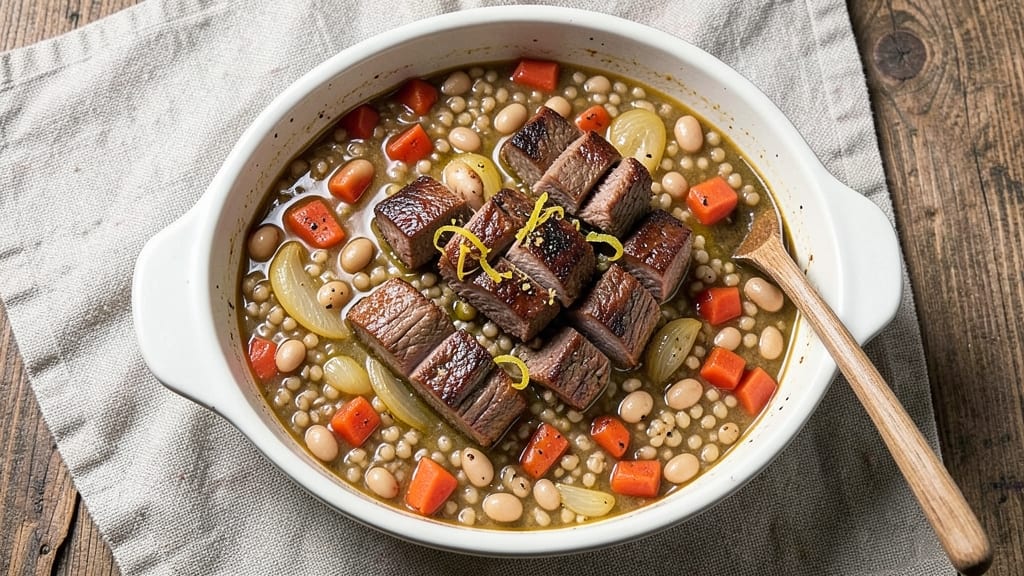
This beef barley and bean soup recipe transforms humble ingredients into a deeply satisfying winter stew that warms both body and soul.
The secret lies in slow-cooked beef that melts into tender perfection, barley that softens just enough to hold its shape, and beans that absorb every layer of savory broth.
I developed this recipe after years of perfecting the balance between hearty texture and rich, umami-packed flavor—no shortcuts, just deep, comforting results.
The foundation begins with browning beef in a hot pot, creating a flavorful crust that dissolves into the broth as it simmers. Aromatics like onions and carrots caramelize slowly, building depth, while pearl barley and white beans transform into tender yet substantial components.
This isn’t just soup—it’s a foolproof method for a meal that feels like a hug in a bowl, perfect for chilly evenings when you crave something substantial yet comforting.
By the final spoonful, you’ll taste the harmony of tender beef, chewy barley, and creamy beans swimming in a broth so rich it clings to every bite.
The beauty of this recipe is its adaptability—use a pressure cooker for 30 minutes of hands-off cooking or simmer on the stove for hours to develop even deeper flavor. Serve with crusty bread to soak up every last drop of that savory goodness.
Whether you’re feeding a family or meal prepping for the week, this soup delivers restaurant-quality satisfaction without the fuss. The technique is straightforward, but the results are anything but ordinary—think of it as a blank canvas where every ingredient plays its part in creating something truly special.
Ingredients for beef barley bean soup
Sixteen ingredients crafting restaurant-quality beef barley bean soup from humble pantry staples.
| Ingredient | Amount | Notes |
|---|---|---|
| Chuck Roast Beef 🥩 | 1 ½ lb | Cut into 1-inch cubes |
| Yellow Onions 🧅 | 2 whole | Medium size, chopped |
| Carrots 🥕 | 4 whole | Medium size, peeled and sliced |
| Garlic Cloves 🧄 | 4 cloves | Peeled and minced |
| Pearl Barley 🌾 | 1 cup | Rinsed before cooking |
| White Beans 🥫 | 1 ½ cups | Canned, drained and rinsed |
| Beef Broth 💧 | 6 cups | Low-sodium preferred |
| Tomato Paste 🍅 | 2 tbsp | Smooth, for depth |
| Dried Thyme 🌿 | 1 tsp | Or 1 tbsp fresh |
| Bay Leaves 🌿 | 2 whole | Removed before serving |
| Black Peppercorns 🌶️ | 1 tsp | Freshly cracked |
| Olive Oil 🫒 | 2 tbsp | Extra-virgin for browning |
| Salt 🧂 | 1 ½ tsp | Adjust to taste |
| Fresh Parsley 🌿 | ¼ cup | Chopped for garnish |
The chuck roast is non-negotiable for this soup—its marbling ensures tender, flavorful beef that melts into the broth. Costco and Whole Foods carry excellent pre-cut chuck roast, but if buying whole, look for pieces with good marbling. The white beans should be canned, not dried—Great Northern or cannellini work best, and always rinse them well to remove excess sodium. Fresh thyme and bay leaves add aromatic depth, but if you're short on time, dried thyme at one-third the amount will suffice. For the barley, Bob's Red Mill is a reliable brand, and rinsing it before cooking reduces bitterness.
No beef broth? Vegetable broth with an extra tablespoon of soy sauce mimics the umami depth, though purists will notice the difference. Substituting canned tomatoes for tomato paste? One 14.5-ounce can works in a pinch, but you'll lose that concentrated richness. The carrots can be swapped for parsnips if you prefer a slightly nuttier flavor, and if you're avoiding gluten, ensure your pearl barley is certified gluten-free. For a quicker version, swap half the barley for instant rice, though texture will differ. The olive oil should be extra-virgin—it withstands high heat better and adds subtle fruity notes when browning the beef.
This soup tastes even better the next day as flavors meld, so make a double batch if you have room. Store in airtight containers in the fridge for up to 5 days or freeze for 3 months. To reheat, add a splash of broth or water to prevent drying. The fresh parsley should be chopped just before serving—it brightens the dish and adds a pop of color. For meal prep, portion into individual containers with a side of crusty bread for a complete, portable meal.
Why You'll Love This Recipe
- One-Pot Magic: I swear by this—just toss everything in one pot, walk away, and come back to a meal that practically cooks itself. The chuck roast turns tender while the barley soaks up all the rich broth, no stirring required.
- Deep, Savory Richness: That slow-cooked chuck roast? It melts into the soup, giving it a hearty, almost steakhouse-like depth. The onions caramelize just enough to add sweetness, while the garlic and barley bring this earthy, satisfying balance.
- Meal Prep MVP: Between us, this is my go-to for busy weeks. I make a big batch on Sunday, and it keeps well for days—perfect for lunches or reheating when I’m too tired to cook. The barley thickens nicely, so it’s never watery.
- Budget-Friendly Feast: Honestly, this recipe stretches a dollar further than anything else. Chuck roast is affordable, and the barley fills you up without breaking the bank. Plus, the leftovers taste just as good cold the next day—ideal for packed lunches.
Step-by-step instructions for beef barley and bean soup
Master this rich winter stew with tender beef, chewy barley, and hearty beans—every element balanced for maximum depth.
Sear the Beef for Deep Flavor
Heat the 2 tablespoons olive oil in a large Dutch oven over medium-high heat until shimmering. Working in batches if needed, add the 1.5 lb chuck roast beef cut into 1-inch cubes, spreading them in a single layer. Let them sear undisturbed for 3-4 minutes until deeply browned on all sides—this Maillard reaction builds the soup's rich foundation.
Transfer the browned beef to a plate and set aside. If the oil appears dark or smoky, wipe out the pot with a paper towel before proceeding. The goal is to create a flavorful crust without burning the beef—this ensures every spoonful delivers maximum umami.
Build the Aromatic Base
In the same Dutch oven, add the 2 whole yellow onions chopped into ½-inch pieces and the 4 whole carrots sliced into ¼-inch rounds. Cook for 5-6 minutes until the onions soften and the carrots begin to caramelize slightly. Stir occasionally to prevent sticking.
Add the 4 cloves garlic cloves minced and the 2 tablespoons tomato paste, stirring constantly for 1 minute until fragrant. Here's the thing—don't rush this step. The garlic should sizzle gently, not burn, and the tomato paste should meld into the vegetables, creating a rich, concentrated flavor base that will permeate the entire soup.
Simmer the Vegetables and Barley
Pour in the 6 cups beef broth, scraping up any browned bits from the bottom of the pot. Add the 1 cup pearl barley (previously rinsed), 1.5 cups white beans (drained and rinsed), 1 teaspoon dried thyme, 2 whole bay leaves, and 1 teaspoon black peppercorns. Bring to a gentle boil, then reduce heat to low and cover partially.
Let the soup simmer for 30 minutes, stirring occasionally. The barley should begin to soften but not fully cook—this ensures it maintains its satisfying chew. The beans will absorb some of the broth, creating a thick, hearty texture. Taste the broth at this point; if it needs more depth, add another ½ teaspoon salt or a splash of beef broth to balance the seasoning.
Cook the Beef to Tender Perfection
Return the seared beef to the pot and stir gently to combine. Increase heat to medium-low and let the soup simmer uncovered for 1.5 to 2 hours. The beef is done when it easily pulls apart with a fork—this low-and-slow cooking transforms tough chuck roast into melt-in-your-mouth tenderness. Stir occasionally to prevent the barley from sticking to the bottom.
About 30 minutes before the beef is fully tender, check the soup's consistency. If it's too thick, add ½ cup water or beef broth to loosen it. The ideal texture should be thick enough to coat the back of a spoon but still spoonable. This balance ensures each bite delivers both hearty substance and comforting mouthfeel.
Finish and Serve with Fresh Herbs
Remove the 2 whole bay leaves and discard them. Stir in the 1.5 teaspoons salt and adjust the seasoning with additional black peppercorns or salt as needed. Taste the soup again—this is your final chance to balance the flavors before serving. The soup should be rich, savory, and slightly sweet from the caramelized onions and tomatoes.
Ladle the hot soup into bowls and garnish each serving with ¼ cup fresh parsley chopped. The bright green parsley cuts through the richness of the beef and barley, adding a fresh finish. Serve immediately with crusty bread to soak up every last drop of this deeply satisfying stew—each spoonful should deliver layers of beefy depth, chewy barley, and tender beans in perfect harmony.
Pro Tips For Making Beef Barley Bean Soup
- SEAR THE BEEF FIRST: Chuck roast needs a deep, caramelized crust to hold up in long cooking—don’t just toss it in. Use a heavy pot (Dutch oven if you have one) and sear the beef over medium-high heat for 8-10 minutes per side until it’s golden brown. I used to skip this and ended up with mushy, flavorless beef. Trust me, the extra 10 minutes now saves the whole dish later.
- SOAK THE BARLEY (EVEN IF YOU FORGET): Pearl barley absorbs liquid like a sponge, but if you’re in a rush, at least rinse it well first. For best texture, soak it in cold water for 30 minutes before adding to the pot—this cuts cooking time by 20 minutes and keeps it from turning into mush. (Yes, I’ve made the mushy version. Don’t ask.)
- DON’T CROWD THE VEGETABLES: When sautéing onions and carrots, give them space to brown—pack them in, and they’ll steam instead of caramelize. Spread them out in the pot and let them cook undisturbed for 5-7 minutes before stirring. The deeper the color, the richer the soup. I learned this after making a pale, bland version and wondering why my soup tasted like "vegetable water."
- SIMMER LOW AND SLOW (NO EXCUSES): This isn’t a race—cover the pot and simmer at a gentle bubble (you should barely see movement) for at least 2.5 hours. Too much heat, and the barley turns to paste; too little, and the beef stays tough. Set a timer and walk away. (Pro move: Add a bay leaf and a sprig of thyme halfway through—it disappears but makes a difference.)
Pro cooking tips for this dish
Sear Like a Pro
Never skip searing the beef—this step unlocks the soup's depth. Use a large Dutch oven (I love my All-Clad) and heat 2 tbsp olive oil until it shimmers. Work in batches if needed to avoid crowding the pan.
Let the beef brown undisturbed for 3-4 minutes per side—this creates the Maillard reaction that builds rich, meaty flavor. If your oil gets too dark, wipe the pot clean before adding vegetables. 🔥
Layer Flavors Gradually
Build your soup's complexity by cooking aromatics in stages. First, caramelize onions and carrots for 5-6 minutes until golden—this sweetness balances the savory beef. Then add minced garlic and tomato paste, stirring constantly for 1 minute until fragrant.
The key here is patience: don't rush the garlic or it'll burn and turn bitter. This layered approach ensures every spoonful has balanced depth.
Barley Timing Matters
Pearl barley needs 1.5-2 hours to cook properly, but it starts softening immediately. Add it with the broth and simmer for 30 minutes before adding the beef. This staggered approach prevents the barley from overcooking while the beef tenderizes.
For extra insurance, I like to rinse the barley first—it reduces bitterness and speeds up cooking. Check doneness by tasting a grain: it should be tender but still hold its shape.
Low-and-Slow Beef
Chuck roast transforms when cooked slowly. After searing, return the beef to the pot and simmer uncovered for 1.5-2 hours on medium-low heat. The goal is 203°F internal temperature—use a meat thermometer to check.
Stir occasionally to prevent sticking, and add a splash of broth if the soup gets too thick. The beef should fall apart easily with a fork, melting into the broth for maximum richness.
Broth Consistency Tips
Your soup should coat the back of a spoon but remain spoonable. If it's too thick after cooking, add ½ cup water or broth and simmer for 10 minutes. For extra body, mash 2-3 beans with a fork to thicken naturally.
Taste as you go—seasoning builds throughout cooking, so adjust salt gradually. The ideal broth should be rich but not greasy, with visible barley and bean pieces in every bite. ✨
Make-Ahead Magic
This soup tastes even better the next day as flavors meld. Let it cool completely, then store in an airtight container in the fridge for up to 5 days. For freezing, portion into quart-sized bags with 1 inch headspace—this prevents ice crystals from breaking the texture.
Reheat on the stovetop over medium-low heat for 10-15 minutes, stirring occasionally. Add a splash of broth if needed to restore moisture. The leftovers are perfect for quick lunches or meal prep! 💫
Nutrition facts
Frequently asked questions
Can I substitute regular barley for pearl barley in this recipe?
Pearl barley is ideal because it holds its shape better than regular barley, creating a satisfying chew. However, you can substitute with 1 cup regular barley (unhulled) if that's what you have. Just increase cooking time by 15-20 minutes since it takes longer to soften. The texture will be slightly softer but still delicious.
How do I make this soup in a slow cooker?
Use the same ingredients but brown the beef first in a skillet. Transfer everything (including seared beef) to your slow cooker and cook on low for 7-8 hours or high for 4-5 hours. The slow cooker's gentle heat will tenderize the beef perfectly while keeping the barley and beans intact. Stir occasionally to prevent sticking.
What if my soup turns out too thick or too thin?
If too thick, stir in ½ cup water or broth and simmer for 10 minutes to adjust. For extra thickness, mash 2-3 beans with a fork to release starch. If too thin, simmer uncovered for 10-15 minutes to reduce. The ideal consistency coats the back of a spoon but remains spoonable.
Can I make this soup vegetarian?
Yes! Replace the beef with 1.5 cups extra-firm tofu (pressed and cubed) or 1.5 cups mushrooms (sliced). Use vegetable broth and add 1 tbsp soy sauce for umami depth. The barley and beans will still provide hearty texture, though cooking time may reduce slightly to 1 hour for tofu or 1.5 hours for mushrooms.
Why does my barley taste bitter?
Unrinsed barley contains natural compounds that can create bitterness. Always rinse 1 cup pearl barley under cold water before cooking to remove excess starch. If bitterness persists, reduce cooking time by 10 minutes—overcooking intensifies the flavor. For extra insurance, soak the barley in cold water for 30 minutes before cooking.