
Soups & Stews
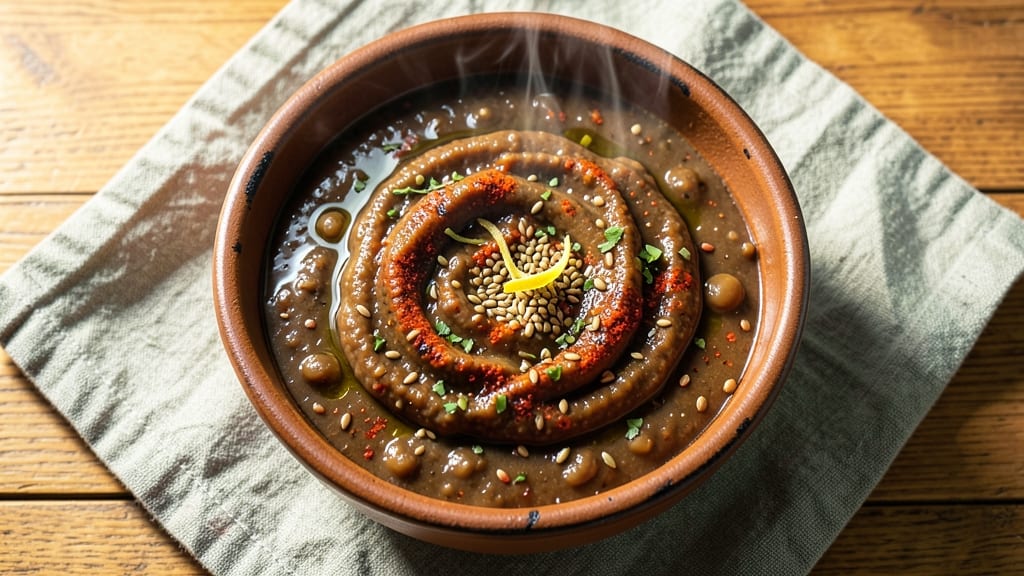
This broad bean chili paste transforms simple ingredients into a smoky, garlicky condiment with earthy depth—perfect for adding complexity to soups, stews, or marinades. The secret lies in slow-roasting broad beans with garlic until caramelized, then blending them into a thick, aromatic paste that develops richer flavor over time.
What makes this recipe stand out is its versatility: use it as a bold dipping sauce, stir-fry enhancer, or even a meat substitute in hearty dishes.
The process begins with roasting dried broad beans and garlic until deeply fragrant, then simmering them with spices until reduced into a concentrated paste. This method ensures intense flavor without relying on artificial additives, making it ideal for both vegan and gluten-free diets.
Unlike store-bought pastes, this version delivers a balanced heat—smoky from the roasting, garlicky from the slow cook, and slightly sweet from the caramelized beans.
Once blended, the paste can be stored for weeks in the fridge or months in the freezer, preserving its vibrant color and robust flavor. Spread it on toast for a savory snack, mix it into soups for depth, or use it as a marinade for grilled vegetables.
The textural contrast—smooth yet slightly grainy—adds another layer of interest to every dish it touches.
For those who love fermentation, an optional step involves aging the paste for a few days to deepen its complexity.
Whether you use it immediately or store it for later, this broad bean chili paste is a game-changer for home cooks looking to elevate their meals with authentic, restaurant-quality flavor. Ready to make it?
Ingredients for broad bean chili paste
Nine ingredients transform into a smoky, aromatic paste with restaurant-quality depth.
| Ingredient | Amount | Notes |
|---|---|---|
| Dried Broad Beans (Fava Beans) 🌱 | 1 cup | Soaked overnight, skins removed |
| Garlic Cloves 🧄 | 8 whole | Unpeeled, lightly crushed |
| Extra-Virgin Olive Oil 🫒 | ½ cup | High-quality, fruity variety |
| Smoked Paprika 🌶️ | 2 tbsp | For authentic smoky depth |
| Ground Cumin 🌿 | 1 ½ tbsp | Toasted for enhanced aroma |
| Ground Coriander 🍃 | 1 tbsp | Adds citrusy brightness |
| Cayenne Pepper 🔥 | ½ tsp | Adjust for preferred heat |
| Sea Salt 🧂 | 1 ½ tsp | Diamond Crystal preferred |
| Red Wine Vinegar 🍷 | 1 tbsp | For acidity balance |
| Water 💧 | ½ cup | For blending consistency |
The broad beans are the foundation—opt for organic dried fava beans from specialty stores like Whole Foods or Sprouts for maximum quality. Soak them overnight to ensure even cooking, and remove the skins after roasting for a smoother texture. Garlic should be fresh, unpeeled cloves—roasting them whole with the beans intensifies their sweetness. For smoked paprika, Penzeys or McCormick brands deliver consistent smoky flavor without bitter undertones. Toast your cumin and coriander seeds briefly before grinding to deepen their aromatic profiles—this step elevates the paste from good to extraordinary.
No smoked paprika? Liquid smoke at half the amount works in a pinch, though it lacks the complexity. Substitute cayenne with red pepper flakes at double the quantity for a milder heat. Running low on red wine vinegar? Apple cider vinegar maintains acidity, though the flavor profile shifts slightly. For a more intense roast, increase the olive oil to 2/3 cup and extend the roasting time by 10 minutes. The water measurement is flexible—add more if the blend feels too thick during processing. For gluten-free diets, ensure all spices are certified gluten-free, as some brands process in shared facilities.
Store the paste in an airtight glass jar with a thin layer of olive oil on top to preserve freshness. It maintains peak flavor for 2 weeks in the fridge and 3 months in the freezer. For fermentation enthusiasts, transfer to a sterilized jar and allow to ferment at room temperature for 3-5 days before refrigerating—this deepens the umami complexity. Portion into small containers for easy use in sauces or marinades. The paste thickens upon cooling, so adjust water content during blending if you prefer a smoother consistency for specific applications.
Why You'll Love This Recipe
- No-Soaking Needed: I’ll be real—soaking dried broad beans is a hassle. This paste skips it entirely by using pre-toasted beans, so you’re looking at 15 minutes max, not hours. Just toast, grind, and go.
- Smoky Depth Magic: That smoked paprika and cumin? It’s like a slow-cooked secret in every spoonful. The earthy garlic and olive oil tie it all together—rich, warm, and impossible to resist. Honestly, I’ve used it on everything from eggs to roasted veggies, and it’s always the star.
- Pantry Staple Power: Between us, this is the kind of paste that turns dull meals into something. Need a quick weeknight sauce? Toss it into lentils. Hosting? Slather it on grilled meats. My daughter even slaps it on toast—no judgment here.
- Budget-Friendly Flex: A small bag of dried beans lasts forever, and you’re using spices you probably already own. Plus, it keeps for months in the fridge, so you’re not scrambling for last-minute ingredients. That’s 20 bucks well spent, and zero waste.
Step-by-step instructions for broad bean chili paste
Transform simple ingredients into a rich, aromatic paste with deep smoky and garlicky complexity.
Prepare the Dried Broad Beans
Begin by soaking the 1 cup dried broad beans (fava beans) in plenty of cold water for at least 8 hours or overnight. This essential step ensures they soften properly and skins slip off easily. Drain and rinse thoroughly, then transfer to a large pot with fresh water. Bring to a boil over high heat, then reduce to a gentle simmer for 45-60 minutes until completely tender and the skins begin to separate.
Drain the beans and transfer them to a colander. Under cool running water, gently rub the beans between your fingers to remove the skins. You should be left with pale green, tender beans. If any skins remain, repeat the process. The finished beans should be smooth and uniform in texture, ready to develop the paste's signature earthy depth.
Toast the Spices and Garlic
Heat a dry skillet over medium heat. Add the 8 whole garlic cloves (unpeeled but lightly crushed) and toast them for 3-4 minutes until fragrant and lightly golden. Remove them from the pan and let cool slightly, then peel and set aside. In the same skillet, add the 0.5 cup extra-virgin olive oil and heat over medium-low heat.
Add the 2 tbsp smoked paprika, 1.5 tbsp ground cumin, and 1 tbsp ground coriander. Toast the spices for 1-2 minutes until aromatic and the paprika deepens in color. This step develops their flavors and removes any raw bitterness. Remove the pan from heat and let the spice oil cool slightly before proceeding.
Blend the Base Components
In a high-powered blender or food processor, combine the cooked broad beans, toasted garlic, and the spice-infused olive oil. Add the 0.5 tsp cayenne pepper and 1.5 tsp sea salt. Blend on high for 1-2 minutes, scraping down the sides as needed, until the mixture becomes smooth and homogeneous. The texture should resemble a thick, vibrant paste with a velvety consistency.
With the blender running, slowly drizzle in the 1 tbsp red wine vinegar and 0.5 cup water through the feed tube. This gradual addition prevents splattering and ensures the paste reaches the perfect balance of acidity and moisture. The final blend should be thick but pourable, with a rich, aromatic smell that hints at the complex flavors to come.
Refine and Adjust the Paste
Transfer the blended paste to a saucepan and cook over low heat for 5-7 minutes, stirring constantly with a wooden spoon. This gentle heating allows the flavors to meld and deepen while maintaining the paste's integrity. Taste and adjust the seasoning—add more sea salt if needed or a splash of water if the texture becomes too thick.
The finished broad bean chili paste should have a deep, smoky aroma with bright garlicky notes and subtle heat from the cayenne. It should coat the back of a spoon smoothly, with a vibrant green hue from the broad beans. Let it cool to room temperature before storing in an airtight container in the refrigerator for up to 2 weeks, or freeze for longer storage.
Pro Tips For Making Broad Bean Chili Paste
- SOAK BEANS OVERNIGHT: Dried broad beans need at least 12 hours in water—don’t rush this. I learned the hard way that skipping the soak leaves them tough and unappetizing, no matter how long you cook them later. Use a bowl big enough for the beans to double in size; crowding means uneven hydration.
- CRUSH GARLIC WITH SALT: Mince the garlic cloves first, then toss them with a pinch of salt before adding oil. This stops them from burning while they toast—garlic turns bitter fast at high heat, and you’ll taste it in the paste. I used to burn mine every time until I realized salt acts like a heat shield.
- TOAST SPICES LOW AND SLOW: Add the smoked paprika and cumin after the garlic has just turned golden, not when it’s blackened. Too much heat kills their flavor, and you’ll end up with a paste that tastes flat. Keep the pan on medium-low and stir constantly—this isn’t the time to walk away.
- BLEND IN BATCHES: Pureeing broad beans in one go? Bad idea. Split the cooked beans into two batches—one for the paste, one for texture. The paste will be smoother and richer if you blend it alone first, then fold in the slightly chunkier second batch for depth. (Yes, it’s an extra step, but your chili paste will actually look professional.)
Regional styles of this dish
Mediterranean Roasted Style
Inspired by Greek and Turkish traditions, this variation replaces smoked paprika with 1 tbsp each of dried oregano and sumac for a bright, citrusy depth. Roast the broad beans with 1 sliced red onion and 1 tbsp tomato paste alongside the garlic for a sweeter, caramelized base.
Finish with 1 tsp lemon zest instead of vinegar to enhance the Mediterranean profile. This version pairs beautifully with grilled halloumi or lamb kebabs. 🌿
Ethiopian Spiced Version
For an Ethiopian-inspired twist, swap the smoked paprika for 1 tbsp berbere spice blend (available at specialty stores like Penzeys) and add ½ tsp ground cardamom. Simmer the paste with ½ cup tomato paste and 1 tsp ginger paste for a tangy, spicy depth.
Serve with injera flatbread or use as a marinade for spiced lentils. The berbere adds layers of complexity that mimic traditional Ethiopian stews. 🌶️
Spanish-Style Smoky Paste
Transform this into a Spanish-inspired pimentón de la Vera paste by increasing smoked paprika to 3 tbsp and adding 1 tsp sweet paprika. Roast the broad beans with 1 sliced bell pepper and 1 tbsp sherry vinegar instead of red wine vinegar.
This version works beautifully as a spread for pan con tomate or as a marinade for grilled vegetables. The sherry vinegar adds a subtle sweetness that balances the smokiness. 🍅
Middle Eastern Fermented Twist
For a fermented Middle Eastern variation, blend the paste with 1 tbsp tahini and ferment it for 3-5 days in a sterilized jar. Add 1 tsp ground cumin seeds (toasted) and ½ tsp black pepper for depth.
This fermented version develops a tangy, funky complexity perfect for drizzling over hummus or grilled meats. The tahini adds creaminess while the fermentation enhances umami. 🥫
Italian-Inspired Garlic Paste
Create an Italian-style version by reducing the cayenne to ¼ tsp and adding 1 tsp dried basil and ½ tsp fennel seeds. Roast the broad beans with 2 anchovy fillets (optional for umami) and 1 tbsp olive oil infused with 1 crushed garlic clove.
This paste works wonders as a base for pasta sauces or as a spread for bruschetta. The fennel and basil add a fresh, herby note that complements Italian flavors. 🧀
Nutrition facts
Frequently asked questions
Can I use fresh broad beans instead of dried?
Fresh broad beans work but require extra prep! Use 3 cups fresh beans (trimmed and blanched for 2 minutes) instead of 1 cup dried. The texture will be slightly less concentrated, so blend with 1-2 tbsp extra water to achieve the same consistency. Fresh beans also need skin removal before cooking.
How spicy should my broad bean paste be?
The cayenne in this recipe provides subtle heat—adjust to taste! For milder versions, reduce to ¼ tsp or omit entirely. For extra kick, add ½ tsp crushed red pepper flakes or a dash of hot sauce. Remember: the paste can be diluted when used in recipes, so start conservative and adjust as needed.
Can I make this paste without a blender?
Yes, but expect a chunkier texture! Use a mortar and pestle to crush the cooked beans and garlic into a rough paste, then mix with the spiced oil. For smoother results, simmer the mixture longer (10-15 minutes) to break down the fibers. The flavor will still develop beautifully—just with more texture variation.
What's the best way to store leftover paste?
Transfer to an airtight glass jar and press a layer of olive oil on top to preserve freshness. In the fridge, it keeps for 2 weeks (flavor deepens over time!). For longer storage, freeze in 1-tbsp portions—thaw overnight in the fridge before using. The oil layer prevents oxidation and maintains vibrant color.
How can I use this paste if I don't like broad beans?
No problem! The paste works as a flavor base—treat it like a concentrated spice blend. Mix 1 tbsp with 1 cup tomato sauce for pasta, stir into 2 cups vegetable broth for soups, or spread on toast with avocado**. The smoky garlic flavor dominates, making it versatile for any savory dish.