
Side Dishes
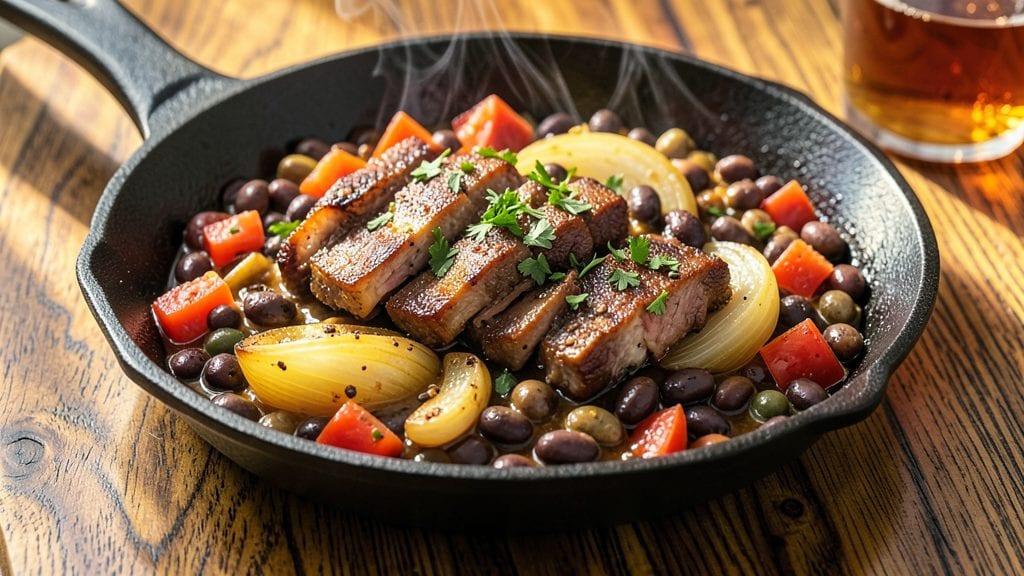
This Grandma's Calico Beans recipe brings the soul-warming flavors of Southern tradition to your kitchen in one comforting pot. The name comes from the colorful mix of ingredients—pork, beans, tomatoes, and spices—that create a dish as rich in heritage as it is in taste.
I first learned this recipe from my grandmother, who swore by the slow-simmered method that develops deep, smoky flavors over hours.
The beauty of this one-pot tradition lies in its simplicity and versatility.
With just a few pantry staples—dried navy beans, smoked ham hock, tomatoes, and a blend of spices like mustard and thyme—you can create a dish that’s hearty enough for a family dinner but simple enough for a weeknight meal.
The key is patience, letting the flavors meld together as the beans tenderize and the broth reduces into a rich, savory sauce.
What you’ll end up with is a steaming pot of smoky, spiced beans with tender pork, perfectly softened beans, and a sauce that’s both tangy and sweet.
The aroma alone will bring back memories of Sunday suppers, and the taste will remind you why this dish has been a staple in Southern kitchens for generations. It’s the kind of meal that feels like a hug in a bowl.
Serve it alongside cornbread or over rice, and don’t forget to save some for leftovers—if there are any. This recipe is as much about tradition as it is about taste, and it’s a dish that only gets better with time. Let’s get cooking!
Ingredients for grandma's calico beans
Pantry staples plus one special ingredient—smoked ham hock—that bring Grandma's flavors to life.
| Ingredient | Amount | Notes |
|---|---|---|
| Dried Navy Beans 🌾 | 2 cups | Unsoaked, no need to soak |
| Smoked Ham Hock 🥓 | 1 lb | Bone-in for extra flavor |
| Diced Tomatoes 🍅 | 2 cans | 15 oz each, no-salt-added preferred |
| Yellow Onion 🧅 | 1 whole | Medium size, chopped |
| Garlic Cloves 🧄 | 4 cloves | Fresh, minced |
| Dried Mustard 🌶️ | 1 tbsp | Ground, not powdered |
| Dried Thyme 🌿 | 1 tsp | Or 1 tbsp fresh |
| Bay Leaves 🍃 | 2 whole | Fresh if possible |
| Salt 🧂 | 1 ½ tsp | Kosher or sea salt |
| Black Pepper 🌶️ | ½ tsp | Freshly ground |
| Apple Cider Vinegar 🍎 | 1 tbsp | For tangy brightness |
| Olive Oil 🫒 | 2 tbsp | For initial searing |
| Brown Sugar 🍚 | 1 tbsp | Light or dark |
The ham hock is non-negotiable here—it's what gives those deep, smoky notes. Butcher shops often have them pre-cut, but the whole bone-in version adds more flavor. If you can't find one, smoked bacon or ham steak works in a pinch, but it won't be exactly the same. For the tomatoes, no-salt-added cans are best—you control the saltiness. I always grab Muir Glen at the store; they're consistent and affordable. The navy beans? Any dried bean will work, but navy beans hold their shape best during the long cooking time. Soak them overnight if you're short on time, but honestly, the unsoaked method works just fine—it just takes longer.
No dried mustard? Dijon mustard at half the amount gets you close, but the flavor will be slightly different. Fresh thyme is ideal, but dried works at one-third the amount. If you've got apple juice concentrate instead of vinegar, use the same amount—it adds a nice sweetness. The brown sugar is optional but worth it for that subtle caramel note. For the onions, yellow or red work best—white gets bitter when cooked low and slow. And if you're worried about the beans being tough, don't be—they'll turn out perfect with the right amount of time.
This tastes even better the next day, so make extra. Store in the fridge for up to 5 days—the flavors keep developing. Freezes beautifully for 3 months, and it reheats like a dream. I always portion it into containers so I can grab a ready-made lunch. The ham hock will fall apart easily after cooking, so remove it before storing if you want to keep it intact for sandwiches later. Trust me, you'll want leftovers.
Why You'll Love This Recipe
- No-Soak Necessity: Honestly, I love that these navy beans don’t need pre-soaking. Just dump them in—no overnight soaking, no stress. The ham hock’s smoky richness and the caramelized onions do all the heavy lifting, soaking the beans in flavor as they cook. That’s the kind of lazy genius I can get behind.
- Smoky, Sweet, Tangy Perfection: Between the crispy ham hock, the bright kick of apple cider vinegar, and just a whisper of brown sugar, these beans hit every note. The dried thyme and mustard add warmth, while the garlic and bay leaves keep it complex. It’s the kind of dish where every bite feels like a hug—savory, slightly sweet, and just a little bit funky in the best way.
- Fridge Goldmine: The flavors keep getting better over time, so these beans are basically a freezer or fridge hack. Make a big batch on Sunday, and you’ve got a meal ready to go all week. Freeze half if you’re feeling extra, and reheat it straight from the bag—no soggy beans, just rich, smoky goodness. My go-to for when I’m too exhausted to think about dinner.
Step-by-step instructions for Grandma's calico beans
Here's how to make this smoky, spiced one-pot masterpiece that tastes like home.
Sear the Ham Hock and Onion
Heat a large Dutch oven over medium-high heat. Add the 2 tablespoons olive oil and let it get hot for about 2 minutes. Place the 1 lb smoked ham hock fat-side down in the pot and let it sear for 5-6 minutes until the fat starts to render and the skin turns golden brown.
Remove the ham hock and set it aside. In the same pot, add the chopped 1 whole yellow onion and cook for 5-7 minutes, stirring occasionally, until the onions soften and begin to caramelize slightly. This step builds deep flavor that's the foundation of your beans.
Add Beans and Seasonings
Return the ham hock to the Dutch oven. Add the 2 cups dried navy beans, 2 cans diced tomatoes (with juices), minced 4 cloves garlic, 1 tablespoon dried mustard, 1 teaspoon dried thyme, 2 whole bay leaves, 1.5 teaspoons salt, and 0.5 teaspoon black pepper. Stir everything together to combine.
Pour in 8 cups of water (or enough to cover the beans by about 2 inches). Bring the mixture to a boil over high heat, then immediately reduce the heat to low. Here's the thing - you want just enough water to cover the beans but not so much that it dilutes the flavor. The beans will expand as they cook.
Simmer Until Tender
Cover the Dutch oven and let the beans simmer gently for 1 hour. After the initial hour, check the water level - you may need to add 1-2 cups more hot water if the beans aren't covered. Stir occasionally to prevent sticking, but don't worry if some browned bits form at the bottom - that's flavor.
Continue simmering for a total of 2-2.5 hours, until the beans are fork-tender. You'll know they're done when they easily mash between your fingers but still hold their shape. The ham hock should also be falling off the bone at this point.
Finish with Sweet and Tangy Flavor
Once the beans are tender, remove the ham hock and shred the meat, discarding any large bones. Return the shredded meat to the pot. Stir in the 1 tablespoon apple cider vinegar and 1 tablespoon brown sugar. The vinegar adds brightness while the sugar helps balance the smokiness from the ham hock.
Let the beans simmer uncovered for an additional 10-15 minutes. This final step allows the flavors to meld together and the liquid to reduce slightly, creating that perfect thick, smoky consistency that makes these beans so special. Taste and adjust seasoning if needed - you might want to add a pinch more salt or a splash more vinegar.
Rest and Serve
Remove the bay leaves and let the beans rest for 10 minutes before serving. This resting period lets all the flavors settle and the beans absorb all that delicious liquid. Serve the beans hot, straight from the pot, with crusty bread to soak up every last bit of that smoky, spiced goodness.
Real talk: these beans taste even better the next day as the flavors continue to develop. The ham hock adds rich depth, the vinegar gives a nice tang, and that touch of brown sugar makes everything come together perfectly. It's the kind of dish that gets better with time.
Pro Tips For Making Grandma'S Calico Beans
- Soak Overnight (or at least 8 hours): Dried navy beans are stubborn—don’t skip soaking. I tried rushing it once and ended up with mushy, undercooked beans that tasted like they’d been sitting in water for days. Soak them overnight in cold water (or at least 8 hours) with a splash of vinegar to soften them and cut down on cooking time. Drain and rinse before cooking—this isn’t just folklore, it actually makes a difference.
- Brown the Ham Hock: That ham hock isn’t just for flavor—it’s for texture. After soaking the beans, dry the hock off with paper towels, then sear it in the pot over medium-high heat until the skin turns deep golden and the fat renders. This step adds layers of smoky richness that you won’t get if you just toss it in cold. (Yes, even if the pot gets a little messy—worth it.)
- Salt the Water Generously: Navy beans absorb salt like sponges, but most people underdo it. My grandmother always said, “If it tastes bland now, it’ll taste even worse when done.” Add at least 2 tablespoons of salt to the soaking water (if soaking) and another 1.5 tablespoons to the cooking pot. Taste as you go—you’ll adjust, but start bold. The beans will soften into that salty, creamy perfection.
- Simmer Low and Cover Tight: High heat = split beans. After adding the onion, garlic, tomatoes, and hock, bring it to a boil, then immediately reduce to a gentle simmer. Keep the lid on tight (or cover with foil) and resist the urge to peek. I used to lift the lid to check every 10 minutes, and guess what? The beans got tougher, not softer. Let it bubble quietly for 1.5–2 hours—it’ll know when it’s done.
Regional styles of these flavors
Deep South Tradition
This version stays true to the Southern roots where calico beans originated, often served at family gatherings and church potlucks. I remember my great-aunt adding a pinch of hot sauce to her version—just ½ tsp of Crystal or Tabasco—for a subtle kick.
The beans are simmered longer here, up to 3 hours, to achieve that velvety texture. Serve it with buttery cornbread and a side of fried okra for the full Southern experience. 🌟
Midwest Simplicity
In the Midwest, calico beans often skip the ham hock entirely and use smoked turkey neck or pork shoulder instead. I’ve seen versions where ½ cup corn kernels are mixed in for extra sweetness.
The cooking time stays around 2.5 hours, but they tend to use dried black-eyed peas instead of navy beans for a slightly nuttier flavor. This version is all about hearty, no-frills comfort. 💛
Appalachian Twist
Appalachian cooks often add a splash of molasses—about 1 tbsp—alongside the brown sugar for a deeper caramel note. Some even include sliced smoked sausage like Andouille for extra richness.
The beans simmer uncovered for the last 30 minutes to thicken the broth, creating a dish that’s almost like a stew. This version feels like a hug in every bite. ✨
Louisiana Cajun Fusion
Down in Louisiana, calico beans get a Cajun flair with 1 tsp cayenne and 1 tsp smoked paprika stirred in during the final 15 minutes of cooking. Some add ¼ cup chopped celery and ¼ cup chopped bell pepper for a tricolored trio.
The result is a spicy, smoky twist that still keeps the Southern soul. This version is perfect for those who love a little heat. 🔥
Modern Vegetarian Adaptation
For a plant-based twist, swap the ham hock for 1 cup smoked tofu or ½ cup liquid smoke mixed with 1 tbsp soy sauce. Add 1 tbsp nutritional yeast for a cheesy depth and ½ cup mushrooms for umami.
The cooking time stays the same, but the flavor profile becomes earthier and more robust. This version proves tradition can adapt without losing its soul. 🌱
Nutrition facts
Frequently asked questions
Why do these beans need such a long cooking time?
The long simmering—up to 2.5 hours—is what unlocks the deep, smoky flavors from the ham hock and tenderizes the dried navy beans. This slow process transforms tough beans into creamy, melt-in-your-mouth perfection while letting the spices like thyme and mustard infuse fully. Patience here is key to that iconic Southern texture!
Can I skip the ham hock and still get the same flavor?
Yes, but you’ll lose that signature smoky depth. Swap for smoked turkey neck or ½ cup liquid smoke mixed with 1 tbsp soy sauce to mimic the richness. The beans will still be delicious, just with a slightly milder profile. Your taste buds might miss that ham hock magic!
What if my beans aren’t tender after 2 hours?
Check the water level—add 1-2 cups hot water if needed, then simmer uncovered for another 30-60 minutes. Stir occasionally to prevent sticking, and don’t worry about the browned bits at the bottom—they’re flavor gold! If they’re still firm, they’ll soften as they cool.
How do I store leftovers without drying them out?
Store in an airtight container in the fridge for up to 5 days, or freeze for 3 months. For best texture, let them cool completely before storing. Reheat gently on the stove with a splash of water or broth to restore moisture. Leftovers taste even better the next day!
Can I make this dish vegetarian?
Replace the ham hock with 1 cup smoked tofu or ½ cup liquid smoke + 1 tbsp soy sauce, and add 1 tbsp nutritional yeast for cheesiness. The beans will still soak up all those savory spices—just swap the pork for plant-based umami!