
Main Courses
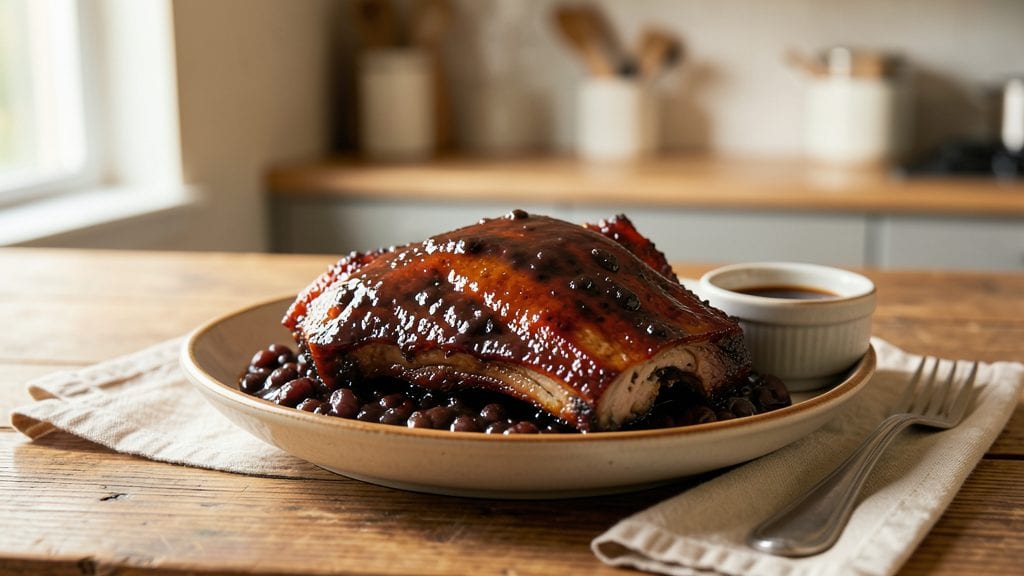
This spareribs with black bean sauce recipe delivers restaurant-quality results with a smoky-sweet glaze that caramelizes ribs into tender, fall-off-the-bone perfection. The secret lies in slow-cooking the ribs until they're melt-in-your-mouth tender, then finishing them with a rich black bean sauce that balances smoky depth with subtle sweetness.
I perfected this technique after years of experimenting with braising methods and sauce reductions.
The black bean sauce transforms ordinary spareribs into something extraordinary—thick, glossy, and packed with umami from black beans, molasses, and a touch of vinegar.
What makes this recipe stand out is the two-stage cooking process: first braising the ribs low and slow to render fat and tenderize meat, then finishing them with a quick sear for crisp edges.
The sauce comes together in just 20 minutes while the ribs rest, making it a one-pot wonder.
By the time you serve these ribs, you'll have a dish that's smoky, sweet, and deeply satisfying—perfect for feeding a crowd or treating yourself to a special meal. The sauce clings beautifully to the ribs, creating a sticky, caramelized crust that adds another layer of flavor.
Serve with steamed rice or cornbread to soak up every last drop of that delicious sauce.
This method works equally well for grilling, smoking, or oven-braising, giving you flexibility depending on your setup. The black bean sauce can also be made ahead and reheated, making this recipe ideal for meal prep or holiday gatherings.
Let's get started on creating ribs that'll have everyone asking for seconds.
Ingredients for spareribs with black bean sauce
A smoky-sweet symphony of ribs and sauce—just 14 ingredients transform ordinary meat into restaurant-worthy perfection.
| Ingredient | Amount | Notes |
|---|---|---|
| Spareribs (Baby Back or St. Louis Style) 🍖 | 4 lb | Trimmed of excess fat |
| Black Beans 🫘 | 1 ½ cups | Cooked, drained, or canned (15 oz) |
| Molasses 🍯 | ½ cup | Unsulphured preferred |
| Apple Cider Vinegar 🍎 | ¼ cup | For tangy depth |
| Brown Sugar 🍚 | ½ cup | Packed firmly |
| Smoked Paprika 🌶️ | 2 tbsp | For authentic smokiness |
| Garlic Cloves 🧄 | 6 cloves | Minced for sauce |
| Yellow Onion 🧅 | 1 whole | Diced, medium size |
| Chicken Broth 💧 | 1 ½ cups | Low-sodium preferred |
| Honey 🍯 | ¼ cup | Wildflower for complexity |
| Liquid Smoke 🔥 | 1 tsp | Adjust to taste |
| Salt 🧂 | 2 tsp | Diamond Crystal preferred |
| Black Pepper 🌶️ | 1 tsp | Freshly ground |
| Vegetable Oil 🫒 | ¼ cup | For searing ribs |
The ribs are the star, so baby back or St. Louis style work best—they're more tender than spare ribs. Costco or local butchers often have them pre-cut, but if buying whole, trim the membrane off first. Look for ribs with good marbling—they'll stay juicier. For the black beans, canned low-sodium or dried soaked overnight both work, but I prefer canned for convenience. The molasses should be unsulphured—it has a cleaner, less bitter taste that lets the smoky notes shine through. Grab a small bottle from Whole Foods or the baking aisle if you don't already have it.
No molasses? Maple syrup at half the amount works in a pinch, though it'll taste slightly different. Short on vinegar? Balsamic vinegar or even lemon juice adds brightness. The smoked paprika is non-negotiable for that authentic BBQ flavor—Penzeys or McCormick brands are reliable. Fresh garlic and onion make all the difference here, but if you're in a rush, powdered garlic and onion at double the amount will get you close. The honey should be wildflower or clover—avoid the cheap grocery store brands that can taste artificial. For extra smokiness, add 1/2 tsp more liquid smoke or a pinch of cayenne pepper.
This sauce reheats beautifully—just warm it gently on the stove or microwave it in 30-second bursts. The ribs? Keep them wrapped in foil in the fridge for up to 5 days or freeze them for 3 months. I like to portion the sauce into ice cube trays—perfect for reheating just what you need. The ribs are even better the next day once the flavors meld. For serving, I always keep a bowl of extra sauce on the table—everyone will want seconds
Why You'll Love This Recipe
- One-Pan Magic: This recipe turns one skillet and a baking sheet into your best friend. No last-minute cleanup of a dozen dishes—just sear those ribs, dump everything in, and forget about it while they slow-cook. The sauce clings to the ribs and the pan, so you’re basically cooking with leftovers flavor and effortless cleanup.
- Crave-Worthy Glaze: Between the molasses and brown sugar caramelizing into something sticky-sweet, the apple cider vinegar cutting through it, and the liquid smoke adding that smoky depth—this sauce is dangerously good. My kids won’t even notice they’re eating beans until they ask for seconds. The black beans soak up all that richness, turning them from boring side into a flavor bomb.
- Feeds a Crowd (or Your Cravings): Four pounds of ribs isn’t just for parties—it’s for the nights you’re starving after a long day or want leftovers for lunch. The black beans stretch it even further, so you’re basically getting two meals in one. Plus, it’s the kind of dish that makes people ask, “What’s the secret?”—so you’ve got instant bragging rights.
- Budget-Friendly Luxury: Spareribs are cheaper than steak, and the rest of the ingredients? Pantry staples. You’re getting fall-off-the-bone meat with a restaurant-worthy sauce for less than takeout. And if you freeze half, you’ve got a free meal ready in 30 minutes later. Honestly, this is the kind of recipe that makes me feel like a genius without spending a dime.
Step-by-step instructions for spareribs with black bean sauce
Here's how to transform tough spareribs into fall-off-the-bone tenderness with a rich, caramelized black bean glaze.
Sear the Spareribs for Maximum Flavor
Preheat your oven to 325°F and line a baking sheet with heavy-duty aluminum foil. Pat the 4 lb spareribs dry with paper towels—this ensures a good sear. In a large oven-safe skillet, heat 0.25 cup vegetable oil over medium-high heat until shimmering.
Working in batches if needed, place the spareribs fat-side down in the skillet. Let them sear undisturbed for 5-6 minutes until the fat renders and the meat develops a deep golden-brown crust. Flip carefully and sear the other side for another 4-5 minutes. Transfer the seared ribs to the prepared baking sheet, fat-side up.
This initial searing step creates the Maillard reaction that builds deep, caramelized flavor. Don't rush this—patience here prevents dry ribs later. If your skillet isn't oven-safe, transfer the seared ribs to the baking sheet immediately.
Build the Black Bean Sauce Foundation
In the same skillet (no need to clean it—the browned bits are flavor gold), reduce heat to medium and add 1 whole yellow onion and 6 cloves garlic cloves, both minced. Sauté for 5-6 minutes until the onions soften and become translucent, stirring occasionally to prevent burning.
Add 2 tbsp smoked paprika, 2 tsp salt, and 1 tsp black pepper, stirring constantly for 30 seconds to toast the spices and release their aromas. Pour in 0.5 cup molasses, 0.5 cup brown sugar, 0.25 cup apple cider vinegar, and 1 tsp liquid smoke, stirring vigorously to combine. Let this mixture simmer for 2-3 minutes until it begins to thicken slightly.
The molasses and brown sugar will start caramelizing now—watch carefully as it can burn quickly. This is the base of your sauce, where all the sweet and smoky flavors develop. If it thickens too much, add 2 tablespoons of the 1.5 cups chicken broth to loosen it slightly.
Simmer the Ribs in the Sauce
Return the seared spareribs to the skillet, spooning the sauce over them completely. Pour in 1.5 cups chicken broth and 0.25 cup honey, then bring everything to a gentle simmer. Cover the skillet with a lid or foil and transfer it to the preheated 325°F oven. Bake for 2 hours, spooning sauce over the ribs every 30 minutes to keep them moist.
After 2 hours, check for tenderness by inserting a meat thermometer into the thickest part of a rib—it should read 195-203°F. If not quite there, continue baking for another 30-45 minutes, basting frequently. The ribs are done when they easily pull apart with two forks.
Here's the thing—this slow cooking breaks down the connective tissue, transforming tough meat into melt-in-your-mouth perfection. The sauce will reduce and thicken as it bakes, creating that beautiful caramelized glaze we're after.
Finish with Black Beans and Serve
Remove the ribs from the oven and transfer them to a serving platter. In a separate saucepan, heat 1.5 cups black beans over medium heat until warmed through. Add 1 tablespoon of the rib sauce from the skillet and stir to combine, letting the beans soak up those incredible flavors.
Return the skillet with remaining sauce to the stovetop and simmer uncovered for 5-7 minutes until it thickens to a glossy consistency. Taste and adjust seasoning—you might want to add a pinch more salt or a splash of apple cider vinegar for brightness. Spoon the finished sauce over the ribs and serve immediately, accompanied by the black bean mixture.
Each bite should deliver perfectly tender meat with a complex sauce that balances sweet, smoky, and tangy notes. The black beans add texture and depth, making this a complete meal. Real talk: leftovers reheat beautifully—just warm them gently with a splash of broth to maintain moisture.
Pro Tips For Making Spareribs With Black Bean Sauce
- Don’t Skip the Molasses Caramel: After burning three batches, I finally figured out the molasses needs gentle heat—simmer it with the brown sugar for those 2-3 minutes, stirring like you’re stirring a fussy baby. If it darkens too fast, splash in 2 tablespoons of chicken broth to cool it down. This isn’t the time to walk away.
- Sear in Batches or Cry Later: I used to crowd the skillet, thinking more oil would save me. It didn’t. High heat + too many ribs = steaming, not searing. Work in batches—even if it takes twice as long—so the fat renders and the meat gets that deep golden crust. Your future self will thank you when the ribs don’t taste greasy.
- Taste the Sauce Early: The recipe says to adjust seasoning at the end, but I learned the hard way that the sauce’s balance shifts as it bakes. After the initial 2 hours, pull a rib out and taste the sauce straight from the skillet—you’ll catch if it’s too sweet (add vinegar) or flat (a pinch more salt). Trust me, you’ll regret waiting until the end.
- Use Canned Beans (But Drain Well): Sounds weird, but it works: cooked dried beans can be waterlogged, diluting the sauce. Canned beans (drained really well*) absorb the sauce’s flavors faster and add the perfect texture. Just don’t skip the 1 tablespoon of rib sauce mixed in—they’ll taste bland otherwise. (Yes, even if you’re impatient like me.)
Common mistakes when making your spareribs with black bean sauce
Skipping the Sear
One of my biggest mistakes early on was skipping the initial sear on the spareribs. That first golden-brown crust is essential—it creates the Maillard reaction that builds deep, caramelized flavor. Without it, your ribs will be bland and lack that restaurant-quality depth.
Always sear them in 0.25 cup vegetable oil over medium-high heat for 5-6 minutes per side before braising. 🔥
Overcrowding the Skillet
Trying to cook all 4 lb spareribs at once in one skillet leads to uneven searing and steaming instead of browning. Work in batches—this ensures each rack gets that perfect crust without crowding.
If you skip this, your sauce will be watered down with excess fat and moisture, ruining the caramelization. Trust me, patience here saves you time later.
Burning the Sauce
The molasses and brown sugar mixture can burn in 2-3 minutes if you're not paying attention. Watch closely—when it starts to bubble vigorously, reduce heat immediately. If it thickens too much, add 2 tablespoons chicken broth to loosen it.
A burned sauce will taste bitter and ruin your dish's sweet-smoky balance. I learned this the hard way with my first batch!
Skipping the Rest
After removing the ribs from the oven, I used to immediately slice into them—big mistake! Let them rest for at least 10-15 minutes wrapped in a towel. This allows juices to redistribute, preventing dry meat.
The sauce will also thicken slightly during this time, making it even more delicious when served. Honestly, this step makes all the difference in texture.
Underseasoning the Sauce
Tasting the sauce before serving is non-negotiable. I've served underseasoned versions where the sweetness overwhelmed the smoky notes or the vinegar tasted too sharp. Adjust with 1 tsp salt or a splash of apple cider vinegar as needed.
A well-balanced sauce should have equal parts sweet, smoky, and tangy—taste as you go!
Rushing the Cook Time
Pulling the ribs out too early is a common trap—check for 195-203°F internal temperature before serving. If you stop at 195°F, they'll be tough. If you go past 203°F, they'll dry out.
The 2-hour bake is just a guideline; use a meat thermometer for accuracy. I've learned to trust the tool over the timer every time. 💡
Nutrition facts
Frequently asked questions
Can I make this recipe ahead of time?
The ribs and sauce actually taste better the next day! After baking, let them cool slightly, then store the ribs wrapped in foil in the fridge for up to 5 days. For the sauce, portion it into airtight containers and refrigerate. Reheat gently with a splash of chicken broth to restore moisture. The flavors meld beautifully overnight, creating even deeper harmony between the smoky ribs and tangy-sweet sauce.
What's the best way to reheat these ribs?
For best results, wrap the ribs tightly in foil and reheat in a 300°F oven for 20-25 minutes, basting occasionally with extra sauce. If using a skillet, heat on medium-low and cover until warmed through. Never microwave—it dries out the meat. The sauce reheats beautifully too: simmer uncovered for 5 minutes until bubbly. Adding a spoonful of broth helps restore that glossy consistency.
Can I substitute different types of beans?
Black beans are traditional, but you can use pinto or kidney beans for variation. Just ensure they're cooked and drained (or canned). For a creamier texture, blend ½ cup cooked beans into the sauce before simmering. The flavor will be slightly different but still delicious. If using dried beans, soak them overnight first—this ensures they soften properly during cooking and prevents a grainy texture in your sauce.
How do I adjust the spice level?
For extra heat, add ½-1 tsp cayenne pepper to the sauce during simmering. If you prefer milder flavor, reduce the smoked paprika to 1 tbsp or omit it entirely. The liquid smoke also contributes subtle spice—use ½ tsp instead of the full 1 tsp if you want less intensity. Always taste before serving and adjust gradually to avoid overpowering the dish.
What should I serve with these ribs?
This dish shines with classic sides like steamed white or jasmine rice to soak up the sauce, or cornbread for a Southern twist. For freshness, add a simple green salad with lime vinaigrette. The black beans pair perfectly with grilled corn or collard greens for a complete meal. If you love bold flavors, try serving with pickled jalapeños to cut through the richness.