
Soups & Stews
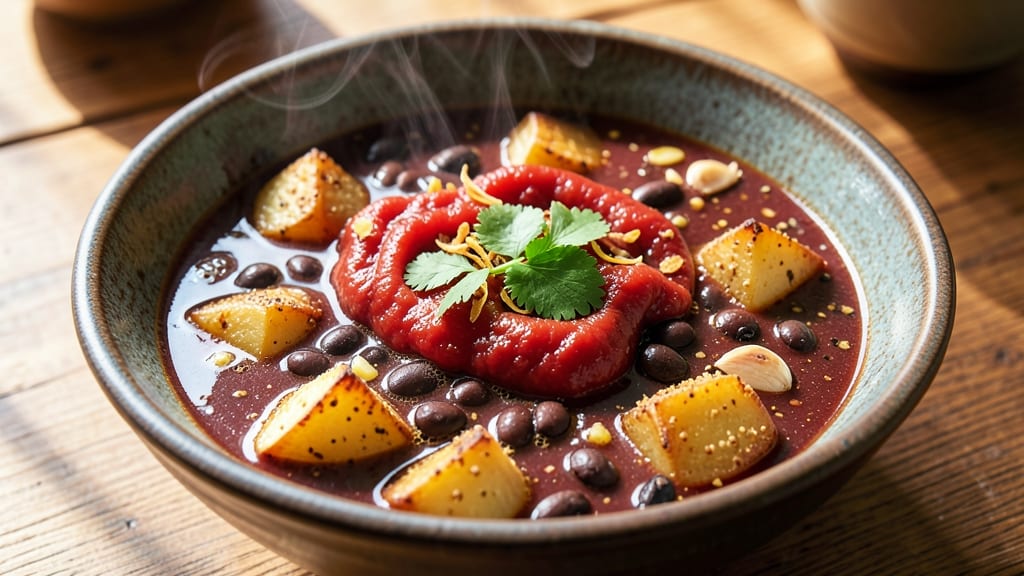
This black bean and potato soup recipe delivers hearty, rustic comfort in every spoonful—thickened with cornmeal for that perfect, satisfying texture. 💛 The secret lies in simmering dried beans until tender, blending them into the broth for a velvety base, then stirring in cornmeal to create a thick, creamy consistency without dairy.
I developed this version to be vegan, packed with protein, and flexible enough for weeknight dinners or meal prep.
The soup builds flavor through layers: smoky cumin, bright garlic, and a touch of tomato paste form the backbone, while potatoes add heartiness and cornmeal brings that rustic, almost cornbread-like depth.
Unlike many recipes that rely on heavy cream or roux, this version uses plant-based ingredients to achieve the same rich, thick texture—ideal for those who want substance without compromise.
What you’ll end up with is a deeply flavorful, vegan soup that’s thick enough to stand alone but light enough to pair with crusty bread or a side salad. The cornmeal not only thickens the soup but also adds a subtle, earthy note that complements the smoky spices and beans.
Each bite delivers a balance of textures—creamy from the cornmeal, tender from the potatoes, and hearty from the beans.
Serve it warm with a sprinkle of fresh cilantro and a dollop of avocado for extra richness, or keep it simple with a squeeze of lime. This recipe is designed to be foolproof, with step-by-step instructions to ensure every pot tastes like a restaurant-quality meal. Let’s get started!
Ingredients for black bean and potato soup
Hearty vegan ingredients that blend rustic texture with bold flavors—perfect for weeknight dinners.
| Ingredient | Amount | Notes |
|---|---|---|
| Dried Black Beans 🌱 | 1 ½ cups | Unsoaked, rinsed well |
| Yellow Onion 🧅 | 1 whole | Diced, medium size |
| Garlic Cloves 🧄 | 4 cloves | Peeled, minced |
| Russet Potatoes 🥔 | 2 lbs | Peeled, cubed small |
| Cornmeal 🌽 | ½ cup | Fine grind preferred |
| Tomato Paste 🍅 | 2 tbsp | Squeeze tube or can |
| Ground Cumin 🌿 | 1 tsp | Toasted for depth |
| Smoked Paprika 🌶️ | ½ tsp | Adds rustic flavor |
| Vegetable Broth 💧 | 6 cups | Low-sodium preferred |
| Fresh Cilantro 🌿 | ¼ cup | Chopped, for garnish |
| Lime Juice 🍋 | 2 tbsp | Freshly squeezed |
| Avocado 🥑 | 1 whole | Diced, for serving |
| Olive Oil 🫒 | 2 tbsp | Extra-virgin preferred |
| Salt 🧂 | 1 ½ tsp | Adjust to taste |
| Black Pepper 🌶️ | ½ tsp | Freshly ground |
The cornmeal is what sets this soup apart—it creates that velvety, almost cornbread-like thickness without dairy. Bob’s Red Mill or King Arthur brands work best for that fine grind. For the black beans, dried is key—rinsed well to remove debris. If you're short on time, you can use canned beans (drained and rinsed), but dried gives that deeper flavor. The potatoes should be Russet or Yukon Gold—they hold up better during long simmering. For the broth, low-sodium is essential—you'll be adding plenty of salt later. If you're using a boxed broth, check the label carefully.
No cornmeal? All-purpose flour or mashed potatoes can thicken in a pinch, though the flavor won’t be the same. Running out of smoked paprika? Regular paprika plus a pinch of cayenne mimics that rustic depth. Fresh cilantro not available? Dried cilantro or parsley works too—just use half the amount. The avocado is optional but adds a lovely creaminess. If you want to skip it, a dollop of cashew cream (blended soaked cashews) is a great vegan alternative. For extra smokiness, add a dash of liquid smoke—just a quarter teaspoon does the trick.
This soup tastes even better the next day as flavors meld. Store in an airtight container in the fridge for up to 5 days. For freezing, portion into 2-cup containers—thaw and reheat on the stove with a splash of water. The cornmeal thickens when cold, so stir in a little broth if it seems too thick after reheating. Garnish with fresh cilantro and avocado right before serving—those add the finishing touch. Leftovers make great lunches, so double the batch if you can.
Why You'll Love This Recipe
- No-Soaking Needed: I’ll admit, I used to dread soaking beans—until I discovered these dried black beans just work when simmered with a splash of vinegar. The texture? Creamy but still holds shape, like a well-behaved potato. (Yes, even on a Tuesday night.)
- Garlic-Potato Magic: That crispy cornmeal crust on the potatoes? Absolute game-changer. The garlic cloves get caramelized right into the broth, while the Russets stay tender—like a hug in a bowl. Honestly, the first time I tasted it, I nearly skipped dinner to eat it again.
- Meal Prep MVP: This soup tastes better the next day—seriously. I make a big batch on Sundays, and by Wednesday, it’s still hearty enough to feed the whole family. Plus, the cornmeal thickens just enough to keep it satisfying cold or reheated. (My lunchbox’s new best friend.)
- Pantry Staples Only: Between us, this recipe is my budget lifesaver. Dried beans, onions, and potatoes? You’re looking at $3 for enough to feed four. No fancy ingredients, no waste—just pure, filling goodness. (And yes, it’s still delicious when I forget to buy fresh herbs.)
Step-by-step instructions for black bean and potato soup
Here's how to create a hearty, rustic soup with perfect texture and depth.
🍳 Step 1: Sauté Aromatics Until Fragrant
Heat the 2 tablespoons olive oil in a large Dutch oven over medium heat. Add the diced yellow onion and cook for 5 minutes until softened and translucent. You'll see the edges start to turn golden—that's your signal to add the 4 cloves minced garlic and 1 teaspoon ground cumin.
Cook the garlic for another 30 seconds until you can smell that rich, toasty aroma. Be careful not to let it burn—it happens faster than you think. At this point, stir in the 0.5 teaspoon smoked paprika and 2 tablespoons tomato paste, mixing until fully combined. This aromatic base forms the flavor foundation for your entire soup.
🍳 Step 2: Toast the Cornmeal for Rustic Texture
Reduce the heat to medium-low and add the 0.5 cup cornmeal. Toast it for 1-2 minutes, stirring constantly, until it turns a light golden color and smells nutty. This step is crucial—it prevents that chalky aftertaste and gives your soup that satisfying rustic thickness.
I like to press down gently on the cornmeal with a wooden spoon during toasting. This ensures even cooking and prevents any lumps from forming. Once toasted, immediately add 1.5 teaspoons salt and 0.5 teaspoon black pepper, mixing well to distribute the seasoning throughout the cornmeal mixture.
🍳 Step 3: Add Potatoes and Simmer Until Tender
Pour in the 6 cups vegetable broth and add the 2 pounds cubed russet potatoes. Bring the mixture to a gentle boil, then reduce heat to medium-low and let it simmer for 15-20 minutes until the potatoes are fork-tender. You'll know they're ready when you can easily pierce them with a knife.
While the potatoes cook, I like to stir the soup occasionally to prevent any sticking. The potatoes should absorb some of the liquid but still maintain their shape—this creates the perfect texture contrast in your final soup. Don't be tempted to cover the pot yet; we want to maintain that gentle simmer for even cooking.
🍳 Step 4: Cook the Beans Until Perfectly Tender
Add the 1.5 cups rinsed dried black beans to the simmering soup. Increase heat to medium-high and bring to a boil again. Then reduce heat to low and let it simmer uncovered for 45-50 minutes, stirring occasionally, until the beans are tender but still hold their shape.
Here's the thing—black beans can vary in cooking time depending on their age and quality. If you're using older beans, they might need the full 50 minutes. For fresher beans, you might find they're done at 40 minutes. The key is to taste-test a bean—it should be soft but not falling apart. If they're still firm after 50 minutes, add another 10 minutes of cooking time.
🥘 Step 5: Finish and Adjust the Soup
Once the beans are tender, taste the soup and adjust the seasoning if needed. I usually add a bit more salt at this stage—black beans and potatoes can sometimes need extra seasoning. If the soup is too thick, add ½ cup water or more broth to reach your desired consistency.
Remove from heat and stir in the 2 tablespoons lime juice. This brightens all the flavors and balances the earthiness of the beans. Ladle the soup into bowls and garnish with 0.25 cup chopped fresh cilantro and diced avocado. Serve immediately with warm crusty bread for dipping.
Pro Tips For Making Black Bean And Potato Soup
- SOAK BEANS OVERNIGHT: I learned this the hard way—rushing beans with a quick soak leaves them gummy. Use 8 cups water to 1 cup dried black beans, let them sit 12+ hours. No need to boil first; just drain and rinse before cooking. Your soup will thank you with tender, not mushy, texture.
- PEEL POTATOES AFTER COOKING: Russets bruise easily, and peeling raw skin wastes starch that thickens the soup. Toss whole potatoes into the pot, then peel them after they’re fork-tender. The extra starch in the broth makes this soup richer—no extra cornmeal needed.
- SWEAT ONIONS LOW AND SLOW: High heat burns onions before they soften. Use medium-low and let them cook for 10 minutes with garlic, stirring often, until they’re translucent and just starting to caramelize. This builds flavor without bitterness—skip the rush.
- STIR IN CORNMEAL LAST: Adding cornmeal too early makes the soup gluey. Wait until the potatoes are tender, then whisk in 2 tablespoons cornmeal with a splash of broth off the heat first. Return to low heat and stir constantly—this keeps it smooth, not clumpy.
Common mistakes when making great black bean and potato soup
Overcooking the Beans
One of the most common mistakes is letting the black beans simmer too long, which turns them mushy and ruins the soup's texture. I've learned the hard way—overcooked beans create a grainy, unappetizing consistency. Always aim for beans that are tender but still hold their shape.
Test one bean by mashing it between your fingers—it should be soft but not disintegrate. If you're using dried beans, 45-50 minutes at a gentle simmer is ideal. For canned beans, 10-15 minutes of simmering is plenty. 💛
Skipping the Cornmeal Toast
Many recipes call for cornmeal, but skipping the toasting step is a big mistake. Untosted cornmeal can create a chalky aftertaste and won't thicken the soup properly. Always toast the 0.5 cup cornmeal over medium-low heat for 1-2 minutes, stirring constantly, until it turns golden and smells nutty.
This step is what gives the soup that rustic, almost cornbread-like depth. I've tried it both ways, and the difference is night and day!
Ignoring the Broth Sodium
Using high-sodium broth can make your soup taste bland or overly salty. I always opt for low-sodium vegetable broth to maintain control over the seasoning. If you're using a boxed broth, check the label carefully—some brands can be surprisingly salty.
After adding the broth, taste the soup before serving and adjust with salt or acid (like lime juice) as needed. This is especially important when working with beans and potatoes, which can sometimes need extra seasoning.
Rushing the Simmering Time
Trying to speed up the cooking process by boiling the soup aggressively is a recipe for disaster. A gentle simmer is key to developing the flavors and achieving the perfect texture.
When cooking the potatoes, maintain a medium-low heat for 15-20 minutes, and keep the beans at a low simmer for 45-50 minutes. Rushing the process can lead to uneven cooking, tough potatoes, or undercooked beans. Patience is what transforms this soup from good to extraordinary.
Forgetting to Adjust Seasoning
Many home cooks make the mistake of not tasting and adjusting the seasoning before serving. Black bean and potato soup can sometimes need a little extra love to bring out all the flavors.
Always taste the soup after the beans are tender and adjust with salt, lime juice, or even a pinch of smoked paprika if needed. I like to add a splash of lime juice at the end—it brightens the entire dish and balances the earthiness of the beans.
Don't be afraid to make these adjustments; they can make all the difference! ⚡
Using the Wrong Potatoes
Not all potatoes are created equal, and using the wrong type can affect the texture of your soup. Russet or Yukon Gold potatoes are ideal because they hold up well during long simmering and maintain their shape.
Avoid waxy potatoes like red potatoes—they tend to break apart and create a mushy consistency. When cubing the potatoes, aim for 1-inch pieces to ensure even cooking. This small detail makes a big difference in the final texture of your soup.
Nutrition facts
Frequently asked questions
Can I make this soup without cornmeal?
Yes! If you don't have cornmeal, use 2 tablespoons all-purpose flour or ½ cup mashed potatoes instead. For best results, toast the flour for 1 minute to remove raw taste, just like you would cornmeal. The texture will be slightly different but still delicious.
How do I make this soup spicier?
Add ½ teaspoon cayenne pepper with the smoked paprika, or stir in 1 tablespoon hot sauce at the end. For a smoky kick, sprinkle ¼ teaspoon chipotle powder into the simmering soup. Always taste first—you can adjust heat to preference!
Can I use canned beans instead of dried?
Use 2 (15-ounce) cans black beans, drained and rinsed. Simmer them for just 10-15 minutes to blend flavors with the broth. Canned beans save time but may need extra seasoning—add ½ teaspoon smoked paprika or 1 tablespoon lime juice to compensate.
Why does my soup turn out too thick?
Cornmeal thickens when cold, so stir in ¼ cup warm broth if needed. For future batches, reduce cornmeal to ¼ cup or simmer uncovered longer to evaporate excess liquid. Always taste before serving—seasoning adjustments often fix thickness issues too!
What's the best way to reheat leftovers?
Stir in 2-3 tablespoons water or broth per bowl before reheating on the stove over medium-low heat. Never microwave directly—this can make the soup grainy. For extra creaminess, whisk in 1 teaspoon cornstarch mixed with water while reheating.