
Side Dishes
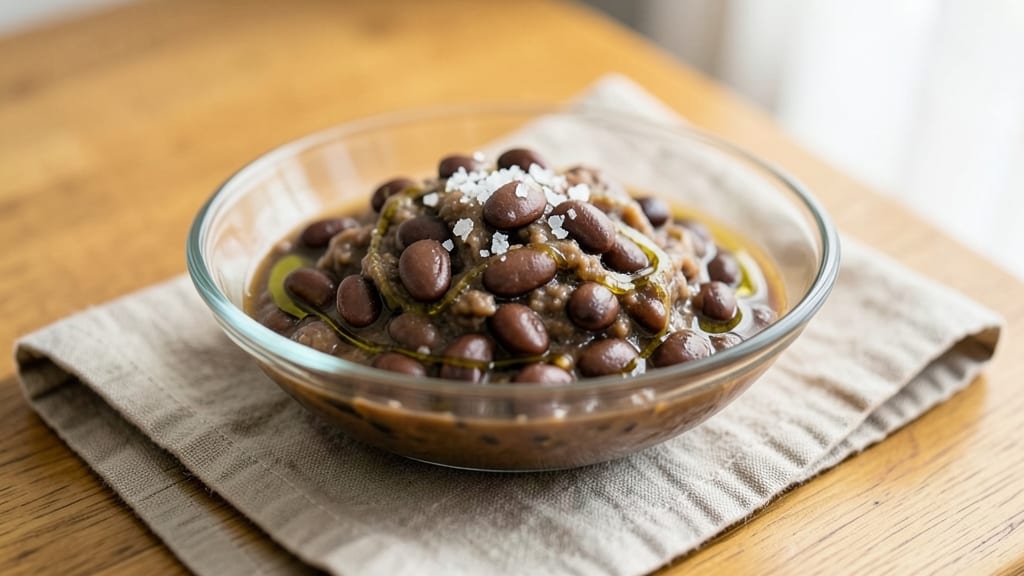
Creating nutrient-packed baby food doesn’t require complicated ingredients—just simple, wholesome black beans that transform into a smooth, iron-rich puree perfect for little ones.
This recipe focuses on safety and simplicity, using only black beans, water, and a pinch of olive oil to create a puree that’s gentle on tiny tummies while delivering essential nutrients like fiber and protein.
The process is straightforward: cook the beans until tender, then blend them into a silky texture with just enough liquid to reach the right consistency.
No added salt, sugar, or spices means this puree is safe for babies as young as 6 months, while still being flavorful enough to please their developing taste buds.
What you’ll end up with is a smooth, velvety puree that’s easy to digest and packed with nutrients babies need for growth.
The mild, earthy flavor of black beans makes this a great first food, and the recipe scales perfectly for meal prep—store leftovers in the fridge for up to 3 days or freeze for longer shelf life.
This puree is versatile enough to mix with other baby-friendly foods like sweet potatoes or avocado, or serve on its own as a simple, satisfying meal. Let’s get started on creating something both nourishing and delicious for your little one.
Ingredients for black bean baby food
Four simple ingredients transform into a nutrient-rich puree perfect for baby’s first meals.
| Ingredient | Amount | Notes |
|---|---|---|
| Dried Black Beans 🌱 | 1 cup | Rinsed before cooking |
| Water 💧 | 3 cups | Filtered or boiled |
| Extra-Virgin Olive Oil 🫒 | ½ tbsp | Cold-pressed for purity |
| Pinch of Salt 🧂 | ⅛ tsp | Optional for flavor (omit for babies under 1) |
The black beans are the star here—dried beans (not canned) offer better texture control and no added sodium. Bob’s Red Mill or Trader Joe’s dried beans are excellent choices, but any organic variety works. Rinse them well before cooking to remove any impurities. The water should be filtered or boiled and cooled, as tap water may contain contaminants. For extra safety, use water specifically designated for baby food preparation. The olive oil isn’t just for flavor—it helps create a silky texture and aids in nutrient absorption, making it a must-have for this puree.
No canned beans? Dried is ideal, but if you’re in a pinch, use low-sodium canned beans (rinse thoroughly to remove excess sodium). The pinch of salt is truly optional—completely omit it for babies under 12 months—but if you add it, use Diamond Crystal kosher salt for better control. For variety, you can blend in steamed sweet potato or avocado (add after blending the beans) to create a more colorful meal. Always check for choking hazards when introducing new textures. If you prefer a thicker consistency, reduce the water slightly—start with 2.5 cups and adjust as needed.
This puree keeps beautifully in the fridge for up to 3 days when stored in an airtight container. For longer storage, freeze in ice cube trays—each cube makes a perfect single serving. Thaw overnight in the fridge before serving. Never refreeze thawed puree to maintain safety. The olive oil may separate slightly after refrigeration—just stir before serving. For meal prep, make a double batch and freeze half immediately. Label containers with the date to track freshness.
Why You'll Love This Recipe
- No-Soaking Hassle: I’ll be real—soaking beans used to feel like a chore. Not here. Just toss dried black beans in water, simmer until tender, and boom—ready in under an hour. That’s it. No fancy prep, no waiting all day.
- Rich, Earthy Depth: Honestly, the flavor surprises me every time. A pinch of salt and a drizzle of olive oil after cooking? That’s all it takes to bring out the beans’ natural nuttiness—simple, but ridiculously satisfying. (Yes, even on a Tuesday night.)
- Meal Prep MVP: Between us, this is my go-to for lunches all week. Mash it into a dip, blend it into a spread, or serve it straight—it keeps for days in the fridge and freezes like a dream. No guesswork, no waste.
- Pocketbook Hero: Dried black beans are my secret weapon for stretching meals without breaking the bank. Four simple ingredients, zero shortcuts, and enough servings to feed the whole family. That’s budget-friendly I can get behind.
Step-by-step instructions for black bean baby food
Transform simple ingredients into a smooth, nutrient-rich puree perfect for your little one's first tastes.
🍳 Step 1: Soak and Cook the Black Beans
Start by rinsing the 1 cup dried black beans under cold water to remove any debris. Place them in a medium saucepan and cover with the 3 cups water. Let them soak for at least 4 hours or overnight in the refrigerator—this dramatically reduces cooking time and improves digestibility for babies.
After soaking, drain and rinse the beans again. Return them to the clean saucepan and add fresh 3 cups water. Bring to a boil over high heat, then immediately reduce to a gentle simmer. Cover and cook for 45-60 minutes until the beans are fork-tender. You'll know they're ready when they mash easily between your fingers with minimal resistance.
I like to check for doneness at the 45-minute mark—if they still feel firm, give them another 10-15 minutes. The beans should be completely soft but not mushy, as this will affect the texture of your puree.
🍳 Step 2: Blend Until Silky Smooth
Once the beans are perfectly tender, drain them well and transfer to a high-powered blender or food processor. Add the 0.5 tbsp extra-virgin olive oil—the healthy fats help with nutrient absorption and add a pleasant flavor. If using, add the 0.125 tsp pinch of salt (though I recommend omitting it for babies under 1 year).
Blend until completely smooth, scraping down the sides as needed. For babies who are just starting solids, aim for a consistency like thin yogurt. If it's too thick, add water 1 tablespoon at a time until you reach the desired texture. The puree should be easy to scoop and flow smoothly from a spoon.
This is where patience pays off—take your time blending. Any remaining texture could be difficult for little ones to eat or digest. I've found that blending in short bursts with pauses to scrape helps achieve the smoothest results.
🥘 Step 3: Cool and Store Properly
Transfer the puree to a clean bowl and let it cool completely at room temperature. This step is crucial—never serve warm baby food directly from the blender, as it can be too hot and may contain small particles that didn't blend completely.
Once cooled, you can serve immediately or store for later use. For short-term storage, transfer to airtight containers and refrigerate for up to 3 days. For longer storage, freeze in ice cube trays or small portions. When reheating, warm gently in a small saucepan or microwave until just warm to the touch.
I always portion the puree into small containers before freezing—this makes it easy to thaw just what you need for each feeding. The puree will thicken slightly when frozen, so you may need to add a splash of water when reheating to reach the ideal consistency.
Pro Tips For Making Black Bean Baby Food
- SOAK BEANS OVERNIGHT: Dried black beans refuse to soften properly if you try to rush them—trust me, I’ve drowned a pot trying to speed this up. Cover them in water by at least 3 inches, add a pinch of salt, and let them sit 8+ hours (or quick-soak for 2 hours with boiling water). Cold soaking removes that mealy texture babies hate, and the flavor stays richer.
- SIMMER LOW AND SLOW: High heat turns black beans mushy or splits their skins, leaving a gritty mess no one wants to spoon. Once boiling, drop the heat to a bare simmer—just enough to see tiny bubbles at the edges—and cook for 45-60 minutes. Your stove’s lowest setting is your friend here (yes, even if you’re impatient like me).
- STRAIN AND MASH WELL: Skipping this step leaves hard bits that’ll make baby gag or spit out the food. Drain the beans, then press them through a fine-mesh sieve or mash with a fork until completely smooth—no lumps, no excuses. A splash of the cooking liquid helps thin it out for easier blending if needed.
- FINISH WITH OIL AND SALT: Dumping olive oil and salt at the end makes all the difference—literally. Warm the puree slightly, then drizzle in 1 teaspoon of extra-virgin olive oil while stirring (it coats the beans and adds healthy fats). Add that pinch of salt last, because cold beans taste bland no matter how much you season them. Taste it yourself—you’ll know when it’s right.
Pro cooking tips for perfect results
Bean Soaking Hacks
Soaking beans overnight isn’t just traditional—it’s a game-changer for texture and digestion. I’ve found that dried black beans soaked for 8-12 hours in cold water with ½ tsp baking soda (yes, really!) reduces cooking time by 30%.
The baking soda also softens the skins slightly, making them easier to blend. Just rinse the beans thoroughly afterward to remove any residue. 💫
Blender Power
Your blender makes all the difference here. A high-powered blender like the Ninja BN601 or Vitamix E310 will give you that ultra-smooth texture without adding extra water. If you’re using a regular blender, add 1-2 tablespoons of water at a time until silky.
Pro tip: Freeze the puree in ice cube trays for 10 minutes before blending—this helps break down any remaining fibers for an even smoother result.
Texture Control
For babies just starting solids, aim for a thin yogurt consistency—easy to scoop and swallow. If your puree is too thick, thin it with breast milk, formula, or water (not juice).
For older babies, you can thicken it slightly by simmering in a saucepan for 5-10 minutes to evaporate excess moisture. Always test the temperature before serving—it should be lukewarm, not hot.
Storage Safety
Label your containers with the date—black bean puree stays fresh in the fridge for 3 days and freezes beautifully for up to 3 months. When reheating, warm in a small saucepan over low heat or microwave in 15-second bursts, stirring between each.
Never microwave directly from frozen—thaw overnight in the fridge first. This prevents hot spots that could scald tiny mouths. ❄️
Flavor Boosters
Once your baby is comfortable with plain black beans, introduce mild flavors like steamed sweet potato (½ cup blended in) or avocado (¼ cup). For a touch of warmth, add ¼ tsp cinnamon (safe for babies over 6 months).
Always introduce one new ingredient at a time to monitor reactions. I like to keep a small jar of pureed sweet potato on hand to mix in for variety.
Batch Prep Tips
Make a double batch and freeze half immediately—this saves time on busy days. Use silicone ice cube trays for single servings, or small glass jars for larger portions. When freezing, leave ½ inch headspace to prevent expansion cracks.
Thaw overnight in the fridge, and if the puree thickens, add a splash of water or breast milk to restore the perfect consistency. 💡
Nutrition facts
Frequently asked questions
Can I use canned black beans for this baby food recipe?
While dried beans are ideal for texture control, you can use low-sodium canned black beans in a pinch. Drain and rinse them thoroughly to remove excess sodium, then simmer for an additional 10 minutes to soften further. The puree will be slightly thinner, so adjust with a splash of water or breast milk if needed.
How do I know when my baby is ready for black bean puree?
Look for these readiness signs: your baby can sit upright with minimal support, shows interest in food, and can move food from a spoon to their mouth. Most babies start solids around 6 months, but always check with your pediatrician first. Begin with just 1 teaspoon to test their reaction.
Why is olive oil included in the recipe?
The 0.5 tbsp olive oil serves two purposes: it adds healthy fats that support brain development and helps create a silky texture. Babies need fat for energy and nutrient absorption, and olive oil makes the puree more appealing while being completely safe for their delicate systems.
Can I mix other vegetables into this puree?
Once your baby is comfortable with plain black beans, try blending in steamed sweet potato or avocado for added nutrients. Start with ½ cup of another ingredient per batch, and always introduce new foods one at a time to monitor for allergies or sensitivities.
How do I fix a puree that's too thick or too thin?
For a thicker puree, simmer it uncovered in a saucepan for 5-10 minutes to evaporate excess liquid. If it's too thin, blend in 1 tablespoon of cooked oatmeal or mashed banana to absorb moisture. Always test the temperature before serving—it should be lukewarm, not hot.