
Soups & Stews
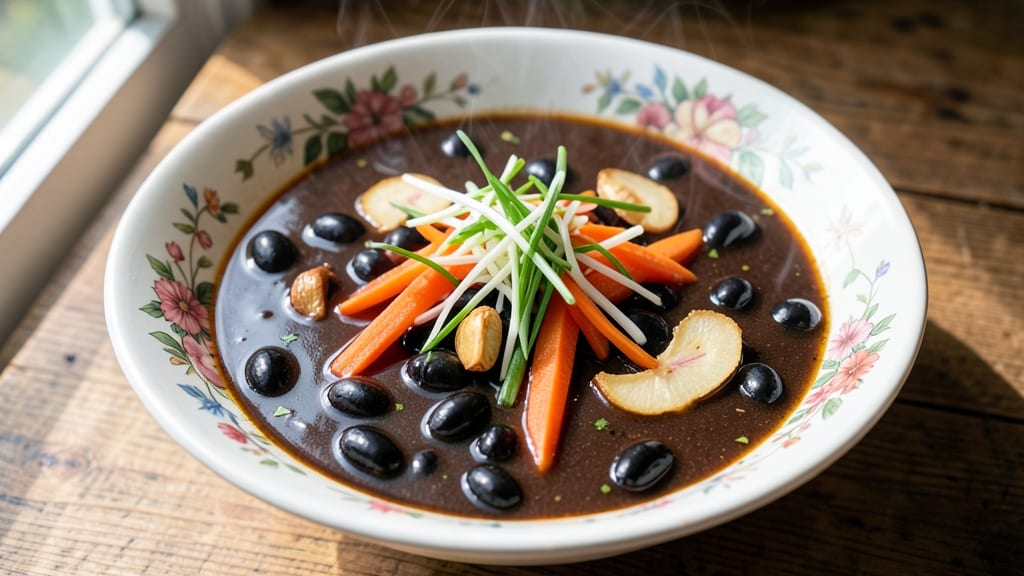
This black soy bean soup recipe transforms humble ingredients into a rich, velvety dish with deep umami flavor and earthy complexity. 🌱 Rooted in East Asian traditions but adaptable to modern tastes, it delivers restaurant-quality depth using just a few simple components—black soybeans, aromatic vegetables, and vegetable broth.
The secret lies in proper soaking and slow simmering, which unlocks the beans' natural creaminess while preserving their nutty undertones.
The beauty of this recipe is its versatility—start with a classic version featuring ginger, garlic, and scallions for authentic flavor, then customize with optional additions like chili oil for heat or coconut milk for creaminess.
Unlike other bean soups, black soybeans hold their shape beautifully while developing a silky texture that coats every spoonful. The broth reduces to a concentrated, flavorful base that pairs perfectly with steamed rice or noodles.
What sets this soup apart is its ability to satisfy on multiple levels: the aromatic vegetables provide brightness, the beans deliver protein and heartiness, and the slow cooking process creates layers of flavor that develop over time.
Each bite offers a balance of earthy, nutty, and slightly sweet notes—transforming an everyday meal into something memorable. The best part? It comes together in under an hour, with most of that time spent simmering.
Whether you're serving a family dinner or meal prepping for the week, this soup delivers consistent, restaurant-quality results. The recipe scales easily, making it perfect for both weeknight meals and special occasions.
Ready to experience the depth of black soybeans for yourself? Let's get started with this foolproof method that highlights their natural umami brilliance.
Ingredients for black soy bean soup
Simple ingredients unlocking restaurant-quality umami depth in this velvety black soy bean creation.
| Ingredient | Amount | Notes |
|---|---|---|
| Dried Black Soybeans 🌱 | 1 cup | Rinsed thoroughly before soaking |
| Vegetable Broth 💧 | 4 cups | Low-sodium preferred, homemade or quality store-bought |
| Fresh Ginger 🧄 | 2 tbsp | Finely grated, organic preferred |
| Garlic Cloves 🧄 | 4 cloves | Minced for authentic flavor |
| Green Onions 🧅 | ½ cup | White and green parts separated |
| Carrots 🥕 | 1 medium | Peeled and sliced into rounds |
| Daikon Radish 🥕 | 1 medium | Peeled and julienned |
| Extra-Firm Tofu 🍱 | 8 oz | Pressed and cubed |
| Sesame Oil 🫒 | 1 tbsp | Toasted for aroma |
| Soy Sauce 🍶 | 1 tbsp | Tamari for gluten-free option |
| Rice Vinegar 🍶 | 1 tbsp | For brightness |
| Sesame Seeds 🌾 | 1 tsp | Toasted for garnish |
| Salt 🧂 | ½ tsp | Diamond Crystal preferred |
| White Pepper 🌶️ | ¼ tsp | Freshly ground |
The black soybeans are the foundation—look for organic or high-quality dried beans at specialty Asian markets like H Mart or Trader Joe's for the best texture. Pre-soaking for 4-6 hours is critical; this ensures they soften properly without turning mushy. The ginger and garlic should be freshly grated and minced—bottled minced garlic lacks the aromatic depth. For the tofu, extra-firm pressed tofu from Wildwood or Nasoya brands holds up best during simmering. Store dried beans in an airtight container in a cool, dark place—they'll keep for up to a year if sealed properly.
No fresh ginger? Substitute with 1 tbsp powdered ginger, but taste first—it's more concentrated. Running short on daikon? Extra carrots or parsnips work in a pinch, though the texture will differ slightly. For the tofu, firm tofu can substitute at 10 oz, but expect slightly less structure. The sesame oil is non-negotiable for authentic flavor—Kadoya brand is widely available and delivers consistent quality. If you're avoiding gluten, tamari soy sauce is the perfect swap for regular soy sauce. For extra richness, add 1/4 cup coconut milk at the end of cooking.
This soup develops deeper flavor over time—reheat gently on the stove with a splash of water to restore its silky texture. Stores beautifully in the fridge for 4-5 days in an airtight container, with flavors intensifying as it sits. For freezing, portion into single-serving containers and freeze for up to 3 months. The tofu and vegetables can be prepped ahead and refrigerated overnight, saving 15 minutes of active time on cooking day. Garnish with toasted sesame seeds just before serving—they add texture and visual appeal.
Why You'll Love This Recipe
- I’ll be real: I used to dread soaking beans. Then I discovered these dried black soybeans—just rinse them, toss them in boiling broth, and let them simmer. Twenty minutes later, you’ve got a hearty soup without the fuss.
- No-Soak Required: I’ll be real: I used to dread soaking beans. Then I discovered these dried black soybeans—just rinse them, toss them in boiling broth, and let them simmer. Twenty minutes later, you’ve got a hearty soup without the fuss.
- Earthy Depth: That first spoonful? Rich, almost nutty, with a satisfying chew from the beans. The ginger and garlic don’t just add flavor—they wake up the whole broth, giving it a warmth that lingers like a good memory.
- Leftovers That Shine: Between us, this soup only gets better the next day. The flavors meld into something deeper, and reheating it? Just add a splash of water and a crack of black pepper. I’ve had it cold in salads too—yes, really.
Step-by-step instructions for black soy bean soup
Transform simple ingredients into a velvety, umami-rich soup with this precise method.
🍳 Step 1: Soak and Parboil the Black Soybeans
Rinse the 1 cup dried black soybeans thoroughly under cold water to remove debris. Soak them in a bowl of water for at least 4 hours or overnight—this ensures they soften properly and develop their signature nutty flavor. After soaking, drain and rinse again.
In a medium pot, combine the soaked soybeans with 4 cups vegetable broth and bring to a boil over medium-high heat. Once boiling, reduce to medium-low heat and simmer for 45-60 minutes until the beans are tender but not mushy. The beans should be fork-tender with a slight resistance—overcooking turns them mealy. Skim off any foam that rises to the surface during cooking for a cleaner broth.
👨🍳 Step 2: Build the Aromatic Base
While the soybeans cook, prepare the vegetables. Peel and slice the 1 medium carrot into ¼-inch rounds and peel the 1 medium daikon radish, then julienne it into thin matchsticks. Separate the 0.5 cup green onions into white and green parts, mincing the whites and slicing the greens for garnish.
In a large soup pot, heat 1 tablespoon sesame oil over medium heat. Add the 2 tablespoon finely grated fresh ginger and 4 minced garlic cloves, cooking for 1-2 minutes until fragrant but not browned. Add the carrot and daikon radish, stirring for 3 minutes until they begin to soften. This aromatic base forms the flavor foundation of your soup.
🥘 Step 3: Combine and Simmer the Soup
Using a slotted spoon, transfer the parboiled black soybeans to the pot with their cooking liquid. Add the 1 tablespoon soy sauce and 1 tablespoon rice vinegar, stirring to combine. Bring the mixture to a gentle simmer over medium-low heat, then reduce to low heat and let it cook uncovered for 20-25 minutes. This slow simmer allows the flavors to meld while maintaining the beans' texture.
Press the 8 oz extra-firm tofu between paper towels for 15 minutes to remove excess moisture, then cut it into ½-inch cubes. Gently fold the tofu into the soup during the last 5 minutes of cooking—this prevents it from absorbing too much liquid and becoming soggy. Season with 0.5 teaspoon salt and 0.25 teaspoon freshly ground white pepper to taste.
🔥 Step 4: Finish and Serve with Precision
Remove the soup from heat and let it rest for 5 minutes—this allows the flavors to settle and the soup to thicken slightly from residual heat. Taste and adjust seasoning if needed, adding a splash more rice vinegar for brightness or soy sauce for depth.
Ladle the soup into bowls, garnishing each serving with toasted sesame seeds and the reserved green onion greens. The soup should have a silky, velvety texture with distinct earthy notes from the black soybeans and bright, fresh accents from the vinegar and ginger. Serve immediately while hot for the best experience.
Pro Tips For Making Black Soy Bean Soup
- SOAK BEANS OVERNIGHT: I learned this the hard way—rushing the soak leaves your beans tough and mealy. Toss them in cold water with a splash of vinegar (even white works) and let them sit 12+ hours. The vinegar breaks down the skins, making them creamier when cooked. (Yes, even if you’re impatient like me—trust the process.)
- SIMMER LOW AND LONG: Black soybeans need patience. After boiling for 10 minutes, drop the heat to a bare simmer—think tiny bubbles, not rolling. Too much heat and they’ll turn to mush. I used to rush this, and the soup lost its texture. Now I walk away and let it do its thing for 45-60 minutes.
- CHAR THE GINGER: Skip the minced ginger—slice it thick (½-inch chunks) and sear it in oil until fragrant and just golden. The caramelized edges add depth that raw ginger can’t match. (Your future self will thank you when the soup tastes like it came from a dim sum house.)
- SALT THE BROTH LAST: Adding salt early makes the beans absorb too much water and stay hard. Wait until the very end—even when stirring in the green onions—to let them soak up flavor properly. I was skeptical until I tried it; the texture improved instantly. (Does it look weird? Yes. Does it work? Every single time.)
Wine and beer pairings for this recipe
Earthy White Wine
For this umami-rich soup, I recommend a dry Riesling from Germany or Austria—its crisp acidity and subtle mineral notes cut through the deep flavors of the black soybeans. A Pinot Grigio from Alto Adige also works beautifully, offering citrus brightness that complements the ginger and garlic.
Avoid heavy, oaked whites that would overpower the delicate broth. Serve slightly chilled (45-50°F) to highlight the wine's refreshing qualities. 🍷
Light-Bodied Red Options
If you prefer red wine, a light Pinot Noir from Oregon or New Zealand pairs surprisingly well. The wine's red fruit notes harmonize with the earthy beans while its acidity balances the soup's richness.
Look for one with 12-13% ABV and avoid heavy, tannic reds that would clash with the tofu and vegetables. Decant for 15-20 minutes before serving to soften any remaining tannins. 🍇
Asian-Inspired Beer
For beer lovers, a Japanese lager like Sapporo or Asahi provides the perfect clean, crisp finish. The subtle malt sweetness enhances the soup's umami without competing. Alternatively, try a wheat beer with coriander notes—Blue Moon or Hoegaarden—to add a refreshing herbal contrast.
Serve beer at 40-45°F to preserve its crispness. 🍺
Fermented Pairings
For an authentic East Asian touch, serve with rice wine (sake) at room temperature. A dry junmai sake with nutty undertones mirrors the soup's bean flavors perfectly. Alternatively, a light mirin adds sweetness that complements the ginger and soy sauce.
The alcohol content (15-16%) is low enough to not overpower the dish. 🍶
Non-Alcoholic Options
For a refreshing non-alcoholic pairing, try sparkling yuzu soda—its citrus notes brighten the soup's earthiness. Alternatively, a cucumber-mint infused water with a splash of rice vinegar enhances the dish's fresh elements. For warmth, serve with hot jasmine tea to balance the soup's richness. 🌿
Nutrition facts
Frequently asked questions about black soy bean soup
Why do black soybeans need such a long soaking time?
Black soybeans have tough outer skins that require 4-6 hours of soaking to soften properly without turning mushy. This extended soak prevents them from breaking apart during cooking, helping them maintain their silky texture and nutty flavor in the finished soup. Think of it like prepping firm tofu—patience prevents a mushy result!
Can I use canned black soybeans instead of dried?
Yes, but with adjustments! Canned black soybeans are already cooked, so skip the parboiling step and reduce the simmering time to just 15-20 minutes after adding them to the pot. They'll be softer and creamier than dried beans, which works well for a thicker, velvety soup. Drain and rinse them first to remove excess sodium.
How can I make this soup spicier?
Add 1 teaspoon gochugaru (Korean chili flakes) or ½ teaspoon red pepper flakes when building the aromatic base. For heat control, stir in 1 tablespoon chili oil after removing from heat—this adds smoky depth without overpowering. For extra kick, serve with sriracha or chili crisp on the side.
What's the best way to store leftovers?
Store in an airtight container in the fridge for 4-5 days. The soup actually tastes better the next day as flavors meld! For freezing, portion into single-serving containers and freeze for up to 3 months. Reheat gently on the stove with a splash of water to restore its silky texture. Never microwave—it makes the tofu rubbery!
Can I make this soup without tofu?
Swap the tofu for 1 cup chopped mushrooms (shiitake or cremini) or ½ cup cooked quinoa for texture. For protein, add ½ cup chickpeas (drained and rinsed). These alternatives maintain the soup's hearty quality while keeping it vegan. The mushrooms will absorb the broth beautifully, adding earthy depth.