
Soups & Stews
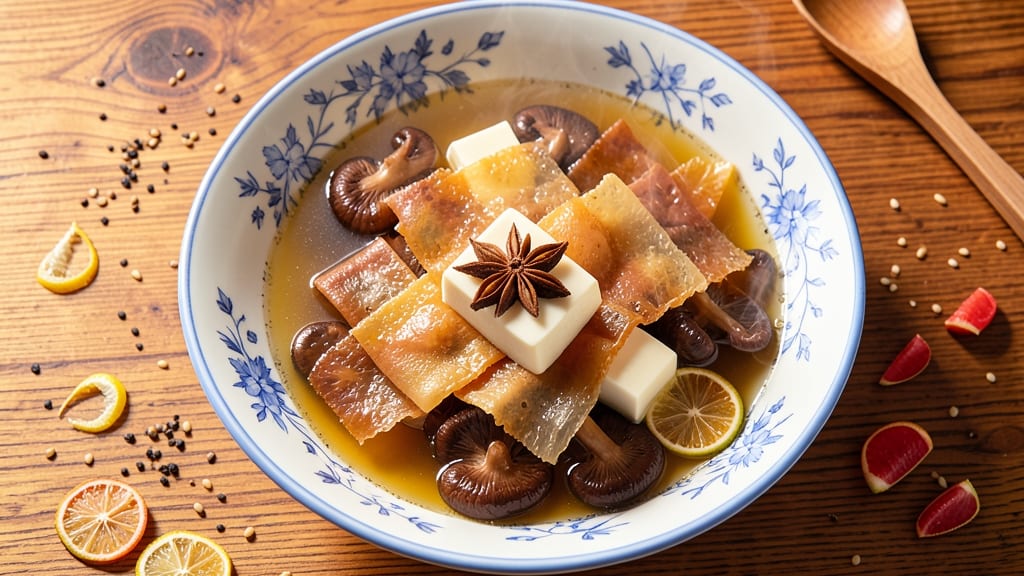
This bean curd skin soup recipe transforms delicate, translucent bean curd skins into silky edible clouds that melt in your mouth with every spoonful. 💛 The secret lies in proper soaking to restore their original texture, followed by gentle simmering in a fragrant broth infused with mushrooms, ginger, and star anise.
What begins as a simple ingredient becomes the star of this dish—its delicate yet sturdy nature absorbing flavors while maintaining an elegant, almost ethereal quality.
The beauty of this soup is in its balance: the bean curd skins provide a delicate, almost jelly-like texture that contrasts perfectly with the hearty umami depth of the broth.
Traditional East Asian techniques ensure the skins remain tender without dissolving, while complementary ingredients like shiitake mushrooms and tofu add layers of flavor and substance. This isn't just a soup—it's a culinary experience that highlights how simple ingredients can create something truly extraordinary.
What you'll end up with is a bowl of soup that's both comforting and refined, with each spoonful offering a harmonious blend of textures and flavors.
The bean curd skins transform from their dried state into delicate, translucent strands that dissolve gently on the tongue, while the broth carries rich, savory notes that make every bite satisfying. Whether served as a light appetizer or a nourishing main course, this soup delivers restaurant-quality results at home.
Perfect for vegan diets or as a vegetarian centerpiece, this recipe also works beautifully as a meal prep option—simmer the broth ahead and add the skins just before serving to maintain their delicate texture.
The versatility of this dish makes it ideal for any occasion, from casual weeknight dinners to special gatherings where you want to impress without complexity.
Ingredients for bean curd skin soup
Transform delicate bean curd skins into ethereal clouds with these umami-rich ingredients.
| Ingredient | Amount | Notes |
|---|---|---|
| Dried Bean Curd Skins 🥬 | ½ oz | High-quality, translucent sheets |
| Dried Shiitake Mushrooms 🍄 | ¼ lb | For deep umami flavor |
| Silken Tofu 🧀 | 8 oz | Soft, unpressed texture |
| Fresh Ginger 🧄 | 1 inch | Thinly sliced, peeled |
| Star Anise Pods 🌟 | 2 whole | Whole pods for infusion |
| Dried Reishi Mushrooms 🍄 | 1 piece | For earthy depth |
| Dried Dried Shiitake Stems 🍄 | ¼ cup | Crushed for broth |
| Low-Sodium Soy Sauce 🍶 | 2 tbsp | For umami balance |
| Rice Vinegar 🍶 | 1 tbsp | For brightness |
| Sesame Oil 🌿 | 1 tsp | Toasted for aroma |
| Green Onions 🧅 | 3 whole | Thinly sliced, for garnish |
| Vegetable Broth 💧 | 6 cups | Homemade or low-sodium |
| White Miso Paste 🧈 | 1 tbsp | For fermented depth |
| Sesame Seeds 🌾 | 1 tsp | Toasted for crunch |
| Sea Salt 🧂 | 1 tsp | Diamond Crystal preferred |
The bean curd skins are the star here—look for high-quality, translucent sheets at Asian markets or specialty stores. Hojicha or dried tofu skins work too if you can't find them. Fresh ginger should be firm and aromatic; organic ginger from Whole Foods or Trader Joe's is ideal. For mushrooms, dried shiitake and reishi from bulk bins add unmatched depth. The silken tofu needs to be unpressed—Natto or house brands work best for this delicate texture. Star anise and dried shiitake stems are non-negotiable for that authentic umami profile.
No dried shiitake stems? Substitute with extra dried shiitake caps or a splash of mushroom powder. Fresh ginger too spicy? Reduced amount by half and add a pinch of sugar. The white miso paste can be swapped for red miso at half the quantity—just remember it'll be more intense. For the vegetable broth, homemade is best, but low-sodium store-bought works in a pinch. The bean curd skins need a 12-hour soak in cold water to rehydrate properly—don't skip this step. Green onions can be subbed with scallions or chives if that's what you have.
Store the dried ingredients like shiitake and reishi in airtight containers away from light—they'll keep for 6-12 months. The soaking water for bean curd skins can be saved and used as broth. This soup reheats beautifully—simmer gently to maintain the delicate texture of the skins. For meal prep, store the broth separately and add skins just before serving. The miso and soy sauce can be pre-mixed and stored for 1 week in the fridge, but add them fresh for optimal flavor.
Why You'll Love This Recipe
- No-Chop Needed: I swear by this—just soak the dried bean curd skins and shiitakes overnight, then dump everything into a pot. No knife skills required, just simmer until the star anise perfume fills your kitchen. That’s it.
- Umami Bomb: The dried shiitakes melt into the broth like a secret weapon, while the bean curd skins add a satisfying chew. Add a slice of fresh ginger and a pod of star anise, and suddenly, you’ve got restaurant-quality depth without the fuss.
- Meal Prep Hero: This soup tastes even better the next day—perfect for batch cooking. I make a big pot on Sundays, and by Wednesday, it’s the only thing standing between me and a sad desk lunch. (Spoiler: it wins every time.)
- Pantry Goldmine: Star anise and dried shiitakes? Those are the ingredients that never go bad. A few dollars’ worth of them stretches into weeks of soup, and the silken tofu adds protein without breaking the bank. Budget-friendly doesn’t mean boring—this is proof.
Step-by-step instructions for bean curd skin soup
Transform delicate bean curd skins into silky, edible clouds with this methodical approach.
👨🍳 Step 1: Rehydrate and Prepare the Base Ingredients
Begin by soaking the 0.5 oz dried bean curd skins and 0.25 lb dried shiitake mushrooms in separate bowls of hot water for 20 minutes. The bean curd skins should become translucent and pliable, while the shiitake mushrooms should soften significantly. Drain and set aside, reserving the soaking liquid for later use.
While these soak, crush the 0.25 cup dried dried shiitake stems into a coarse powder using a mortar and pestle or rolling pin. This will infuse the broth with concentrated umami flavor. Thinly slice the 1 inch fresh ginger and peel the 1 piece dried reishi mushrooms by gently scraping off any impurities with a paring knife.
🥘 Step 2: Build the Umami-Rich Broth
In a clean pot, combine the 6 cups vegetable broth, crushed shiitake stems, sliced ginger, star anise pods, and 1 tsp sea salt. Bring to a gentle simmer over medium heat and cook for 15 minutes, allowing the flavors to meld. The broth should develop a deep, aromatic quality with subtle earthy notes from the reishi and shiitake stems.
Strain the broth through a fine-mesh sieve into a clean pot, pressing gently on the solids to extract maximum flavor. Discard the solids and return the strained broth to the pot. Add the 1 tbsp white miso paste and stir until fully dissolved. This step creates the foundational umami depth that defines the soup.
🍳 Step 3: Infuse and Simmer the Soup
Add the drained dried shiitake mushrooms and rehydrated bean curd skins to the broth. Bring to a gentle simmer over low heat and cook for 8-10 minutes, until the bean curd skins become fully translucent and the mushrooms are tender. Be careful not to boil vigorously—this could cause the delicate bean curd skins to break apart.
In a small bowl, whisk together the 2 tbsp low-sodium soy sauce and 1 tbsp rice vinegar with 1 tsp sesame oil. Slowly ladle this mixture into the simmering broth while stirring gently to distribute the flavors evenly. The soup should now have a balanced combination of umami, brightness, and aromatic depth.
⏰ Step 4: Finish and Garnish
Reduce heat to low and gently fold in the 8 oz silken tofu using a silicone spatula. The tofu should warm through without breaking apart, maintaining its delicate texture. Cook for an additional 3-4 minutes until the soup reaches 195°F at its hottest point.
Divide the soup among four bowls and garnish each serving with 1 tsp toasted sesame seeds and 3 thinly sliced green onions. Drizzle with an additional ½ teaspoon sesame oil per bowl for extra aroma. Serve immediately while the bean curd skins maintain their silky, cloud-like texture.
Pro Tips For Making Bean Curd Skin Soup
- SOAK SKINS SEPARATELY: Dried bean curd skins stick like glue if soaked together—trust me, I’ve fished them out of the strainer more times than I’d admit. Use two bowls: one for the skins (10 minutes in hot water) and another for shiitakes (20 minutes). The skins soften fast but won’t over-absorb if you give them their own space.
- SIMMER LOW AFTER BOIL: I used to blast this soup on high, thinking it’d hurry things along. Wrong. Once everything’s in—skins, mushrooms, ginger—drop the heat to a gentle simmer. You’re not racing; you’re coaxing flavor. Let it bubble quietly for 20 minutes, or the skins turn mushy and the broth stays bland.
- SLICE GINGER THIN: Thick ginger chunks? Overkill. Thinly slice that root—about 1/8-inch—so every spoonful of broth gets that bright, peppery punch. If you’re lazy and just grate it, use 1 teaspoon instead of the 2 the recipe calls for. (Yes, I’ve done that too.)
- STAR ANISE EARLY: Add the star anise with the ginger, not at the end. I learned this after my first batch tasted like "mildly interesting" instead of "deeply aromatic." Let it steep for the full 15 minutes—remove it before serving, or you’ll deal with a chewy surprise. (Your teeth will thank you.)
Essential equipment for this dish
Soaking Essentials
Start with a large glass bowl to soak your 0.5 oz dried bean curd skins—they need plenty of room to expand. Use hot (not boiling) water in a 1:10 ratio (e.g., 1 oz skins to 10 cups water) for optimal rehydration.
A fine-mesh strainer from OXO Good Grips works perfectly for draining without tearing the delicate skins. 🥬
Broth Infusion Tools
A mortar and pestle (like Kuhn Rikon) is ideal for crushing dried shiitake stems into a fine powder—this extracts maximum umami. For straining broth, a cheesecloth-lined sieve or fine-mesh tamis ensures no gritty particles remain.
I keep a dedicated stainless steel pot (like All-Clad D500) for broth-making to prevent flavor transfer.
Temperature Control
Precision matters when simmering—use a digital thermometer (like Thermoworks Thermapen) to maintain 195°F for the final broth. A slow cooker on "low" is my go-to for gentle heat control, especially when adding the bean curd skins.
For stovetop cooking, a heavy-bottomed pot (like Le Creuset) prevents hot spots that could overcook the delicate ingredients.
Garnish Prep Station
Toast sesame seeds in a small dry skillet over medium heat for 2-3 minutes—they should smell nutty and turn golden. A sharp chef's knife (like Wüsthof) makes quick work of slicing green onions into thin strips. Keep garnishes in a small bowl until serving to preserve freshness.
Serving Essentials
Use wide, shallow bowls (like Japanese lacquerware) to showcase the soup's delicate texture. A ladle with a long handle (like Kai Brand) helps portion soup evenly without disturbing the garnishes. For extra presentation, add a small drizzle of sesame oil using a fine-mist squeeze bottle** right before serving.
Nutrition facts
Frequently asked questions
Why do bean curd skins need soaking before using?
Soaking rehydrates the delicate skins, restoring their original silky texture and preventing them from dissolving into the broth. A 12-hour cold soak in 1:10 ratio water (skins to water) ensures they become plump and translucent. Skipping this step results in tough, rubbery pieces that won't melt beautifully in your soup.
Can I substitute dried bean curd skins with fresh tofu?
No—bean curd skins have a completely different texture that transforms into delicate, jelly-like strands when cooked properly. For a similar effect, try hojicha (roasted green tea) or dried tofu skins from Asian markets. Fresh tofu will turn mushy and won't provide that signature "edible cloud" experience.
How do I prevent the bean curd skins from breaking apart?
Keep the heat low and gentle—never boil vigorously. Use a wide pot to prevent overcrowding, and stir occasionally with a silicone spatula. The skins should simmer for 8-10 minutes max at 195°F. Adding them to the broth when it's already simmering (not boiling) is key.
What's the best way to store leftover bean curd skin soup?
Store the broth separately in an airtight container for up to 3 days in the fridge. Reheat gently on low heat and add the bean curd skins back just before serving to maintain their delicate texture. For longer storage, freeze the broth (without skins) for up to 1 month—thaw overnight in the fridge.
Can I make this soup spicier?
Add ½ tsp chili flakes or 1 thinly sliced red chili when simmering the broth. For heat lovers, stir in 1 tsp gochujang (Korean chili paste) with the soy sauce and vinegar mixture. Start with small amounts—you can always add more, but removing heat is impossible!