
Main Courses
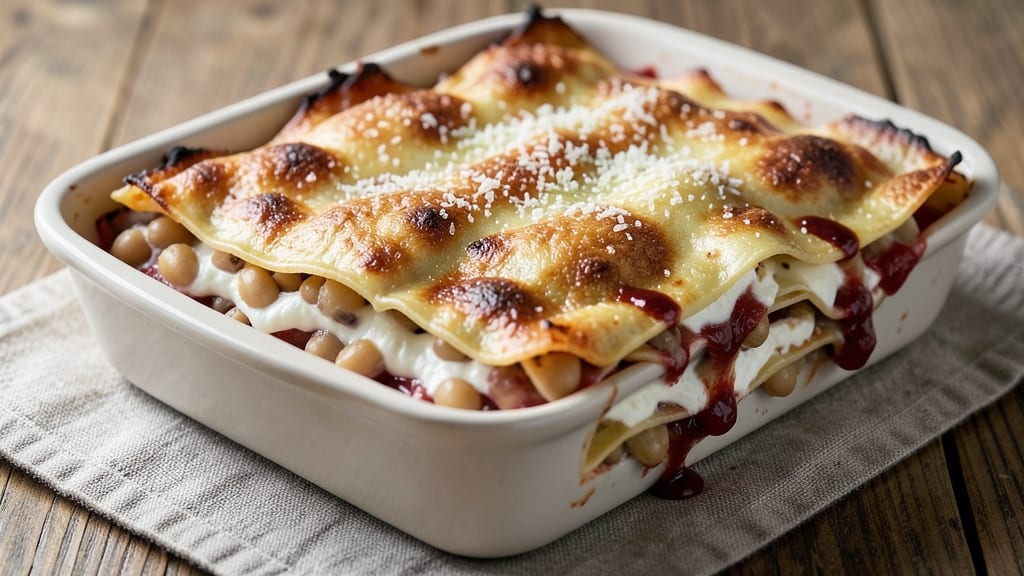
This bean lasagne recipe transforms hearty white beans into a restaurant-quality vegetarian main course with layers of rich tomato sauce, creamy ricotta, and melty cheese that rivals traditional meat lasagnes. 🌟 The secret lies in pre-cooking the beans for perfect texture and building each layer carefully—no soggy noodles here.
This dish delivers comfort food satisfaction with plant-based protein, making it ideal for vegetarians or anyone craving a hearty, cheesy bake.
The beauty of this recipe is its flexibility—use traditional ricotta or swap for vegan alternatives, and adjust cheese blends to your preference. I’ve perfected the technique of assembling layers in a specific order (sauce, noodles, beans, cheese) to ensure every bite is packed with flavor.
The result? A golden-brown top crust with tender pasta, creamy bean filling, and a sauce so rich it’ll have everyone asking for seconds.
What sets this lasagne apart is the textural balance—al dente noodles, velvety beans, and a crispy breadcrumb topping that adds crunch. It’s the kind of dish that feels indulgent yet satisfies with plant-powered nutrition.
Whether you’re feeding a family or meal prepping for the week, this recipe delivers foolproof results every time.
Ready in just under an hour (including prep), this lasagne is perfect for weeknight dinners or special occasions. The aroma alone will fill your kitchen with warmth, and the first forkful? Pure, cheesy, tomato-infused bliss. Let’s get layering!
Ingredients for bean lasagne
Six layers of restaurant-quality vegetarian lasagne await with these premium ingredients.
| Ingredient | Amount | Notes |
|---|---|---|
| Large Eggs 🥚 | 4 whole | Large size for binding layers |
| Unsalted Butter 🧈 | ½ cup | Cold, cubed for crispy topping |
| All-Purpose Flour 🌾 | 1 cup | For breadcrumb topping |
| Parmesan Cheese 🧀 | ½ cup | Freshly grated, for topping |
| Ricotta Cheese 🧀 | 2 cups | Full-fat for creaminess |
| Canned Cannellini Beans 🌱 | 2 cups | Drained, rinsed, pre-cooked |
| Lasagne Noodles 🍝 | 12 pieces | No-boil or pre-cooked |
| Marinara Sauce 🍅 | 2 ½ cups | Homemade or high-quality jarred |
| Mozzarella Cheese 🧀 | 2 cups | Shredded, part-skim preferred |
| Garlic Cloves 🧄 | 4 cloves | Minced for sauce enhancement |
| Fresh Basil Leaves 🌿 | ¼ cup | Chopped, for sauce garnish |
| Olive Oil 🫒 | ¼ cup | Extra-virgin for topping |
| Salt 🧂 | 1 ½ tsp | Diamond Crystal preferred |
| Black Pepper 🌶️ | ½ tsp | Freshly ground for heat |
| Nutritional Yeast 🍃 | 2 tbsp | For umami depth in beans |
The beans are the foundation—cannellini for their buttery texture and mild flavor. Whole Foods or Trader Joe's carry the best canned varieties, but any high-quality canned beans work. Drain and rinse thoroughly to remove excess starch, which can make your lasagne gummy. For extra richness, mash half of the beans with a fork before layering. The ricotta should be full-fat for that authentic creaminess—BelGioioso or Galbani are my go-tos, but any brand works if it's fresh. Pre-grate your own Parmesan and mozzarella; pre-shredded contains anti-caking agents that prevent proper melting.
No ricotta? Cottage cheese blended with olive oil works in a pinch, though the texture won't be identical. Short on mozzarella? Provolone or fontina add wonderful depth. For the sauce, Rao's or Muir Glen are my top picks for jarred options, but homemade is always better—simmer canned San Marzano tomatoes with garlic, basil, and a pinch of sugar for natural sweetness. The lasagne noodles? No-boil is a game-changer, but if using regular, boil them just one minute less than package instructions to keep them al dente. Fresh basil can be swapped for dried at one-third the amount, but the flavor won't be the same—worth grabbing a bunch if you're at the market.
Assemble the lasagne up to 24 hours ahead—it actually tastes better after resting. Cover tightly with foil and refrigerate. Bake straight from the fridge for even cooking. Leftovers keep for 4 days in the fridge, but reheating is an art: cover with foil and bake at 375°F until bubbly. For meal prep, portion into individual servings before baking—freeze for up to 3 months. The breadcrumb topping stays crispy if you toast the butter and flour mixture in the oven for 3-4 minutes before adding to the lasagne. Trust me on this—it makes all the difference.
Why You'll Love This Recipe
- No-Fuss Layers: This lasagne builds itself—just alternate baked beans, that creamy ricotta-egg mix, and a sprinkle of Parmesan. No fancy folding or stressing over alignment. (Yes, even when I’m exhausted after work.)
- Cheesy Creamy Magic: That ricotta-bechamel blend? It’s the star—silky, slightly tangy, and the Parmesan on top turns every bite into a little flavor explosion. Honestly, I’ve never met a lasagne I liked more.
- Weeknight to Potluck: Make it once, eat it three times—freezes like a dream, reheats perfectly, and still tastes fresh. Bring it to a dinner party or toss it in the fridge for a lazy Sunday. (Pro tip: The beans hold up better than you’d think.)
- Budget-Friendly Luxury: Eggs, butter, and pantry staples do all the heavy lifting here. No pricey meat or specialty cheeses—just rich, satisfying layers that feel fancy without breaking the bank. My wallet and taste buds thank me.
Step-by-step instructions for building layers of rich tomato and cheese
This bean lasagne delivers restaurant-quality texture with precise layering and proper cooking techniques.
👨🍳 Step 1: Prepare the Bean-Ricotta Mixture
In a large bowl, combine the 2 cups of drained cannellini beans with the 2 cups of ricotta cheese and 2 tablespoons of nutritional yeast. The yeast adds that savory umami depth that makes this lasagne truly special. Use a fork to mash the beans slightly—just enough to break them down but still leave some texture. This creates a thick, spreadable base that will hold together beautifully.
Add 1.5 teaspoons of salt, 0.5 teaspoon of black pepper, and the 4 cloves of minced garlic. Mix thoroughly until the flavors are evenly distributed. The garlic should be completely incorporated but not overpowered—just enough to enhance the beans' natural flavor. Set this mixture aside while you prepare the other components. This step is crucial for that authentic Italian taste without overpowering the dish.
🥘 Step 2: Assemble the Lasagne Layers
Preheat your oven to 375°F while you work. In a 9x13-inch baking dish, begin by spreading 1 cup of marinara sauce evenly on the bottom. This creates a flavorful base that prevents the lasagne from sticking. Next, arrange 4 uncooked lasagne noodles horizontally, slightly overlapping them if needed to cover the bottom completely. Spread half of the bean-ricotta mixture evenly over the noodles.
Sprinkle 1 cup of mozzarella cheese over the ricotta layer, followed by another 1 cup of marinara sauce. Repeat the process with another layer of 4 lasagne noodles, the remaining bean-ricotta mixture, 1 cup of mozzarella, and the final 1 cup of marinara sauce. The key here is even distribution—press down gently on each layer to eliminate air pockets. This ensures every bite has that perfect combination of creamy beans, rich tomato sauce, and melty cheese.
🔥 Step 3: Create the Crispy Topping and Bake
In a small bowl, combine the 1 cup of all-purpose flour, 0.5 cup of grated parmesan cheese, and the 0.25 cup of olive oil. Mix until it forms a coarse crumb texture. This topping will give your lasagne that coveted crispy crust while adding depth of flavor. Sprinkle the crumb mixture evenly over the top layer of lasagne, pressing down gently to adhere it to the cheese.
Cut the 0.5 cup of cold cubed unsalted butter into small pieces and scatter them over the crumb topping. This butter will melt during baking, creating an extra layer of richness and helping to create that golden-brown crust. Bake uncovered for 40-45 minutes until the top is deep golden brown and the edges are bubbling. The lasagne is done when the center is hot and the cheese is fully melted. Let it rest for 10-15 minutes before serving—this allows the layers to set and makes slicing much easier.
🍽️ Step 4: Garnish and Serve with Fresh Basil
While the lasagne rests, chop the 0.25 cup of fresh basil leaves into small pieces. The bright, fresh flavor of basil will cut through the richness of the cheese and beans, adding a vibrant finish to each bite. Spoon the chopped basil over the top of each serving, allowing the colors to contrast beautifully against the golden crust.
Slice the lasagne into 6 equal portions (about 2 slices per serving) and serve immediately. The combination of creamy beans, tender lasagne noodles, rich tomato sauce, and crispy topping creates a textural experience that's truly satisfying. For an extra touch, serve with a simple arugula salad dressed with lemon vinaigrette to complement the hearty lasagne.
Pro Tips For Making Bean Lasagne
- Preheat Like a Pro: Get that oven screaming hot—425°F (220°C)—before the first layer goes in. I learned this the hard way: a lukewarm oven means a soggy middle and a half-baked top. Trust me, the extra 10 minutes waiting pays off.
- Drain Beans Right: Rinse those canned beans twice under cold water, then pat them dry with a towel. The starchy water makes the lasagne gluey, and nobody wants a mushy texture. (Yes, even if you’re impatient like me.)
- Whisk Ricotta Smooth: Beat the ricotta with eggs and Parmesan until it’s silky, not lumpy. Use a fork first, then a whisk—this keeps the texture light and prevents a dense, heavy top layer. I skip this step sometimes, and the difference is noticeable.
- Layer Thin, Even: Spread the bean mixture in an even ¼-inch layer—no globs, no gaps. Packing it too thick means the center stays undercooked, while thin layers bake through perfectly. Use a spatula to smooth it out like frosting a cake.
Common mistakes when making perfect results
Over-Mixing the Beans
Don’t turn your bean-ricotta mixture into a puree—over-mashing creates a gluey texture that makes your lasagne dense and unappetizing. I’ve learned the hard way that even pressure with a fork is key: just break down the beans enough to create a spreadable consistency while keeping some texture.
Think of it like mashed potatoes—lumpy but not liquid. 🥄
Skipping Pre-Cooked Noodles
Raw lasagne noodles turn mushy when baked, ruining the texture. Even if using "no-boil" noodles, I recommend pre-cooking them for 1-2 minutes less than package instructions. For traditional noodles, boil until al dente (about 8 minutes), then drain well.
This ensures they stay firm through baking. Skipping this step is the fastest way to end up with a soggy mess.
Uneven Layer Distribution
Lasagne fails when layers aren’t even—this creates dry spots or gummy sections. I measure everything precisely and use a spatula to spread each component (sauce, beans, cheese) in ¼-inch-thick layers.
Press down gently with the back of a spoon to eliminate air pockets. The goal? Every forkful should have sauce, beans, noodles, and cheese in perfect harmony.
Baking Without Resting
Cutting into lasagne immediately after baking causes it to fall apart. The layers need 10-15 minutes to set—this lets the cheeses firm up and the noodles absorb flavors.
I cover it loosely with foil during resting to keep it warm. Patience here makes the difference between a cohesive slice and a collapsed disaster. ⏳
Overloading the Cheese
Too much cheese (especially mozzarella) makes lasagne greasy and sloppy. Stick to the 2 cups total called for—this ensures melty perfection without excess. For extra flavor, I mix in Parmesan into the breadcrumb topping instead of piling it on top.
This keeps the texture crisp while adding depth without overwhelming the dish.
Ignoring the Breadcrumb Topping
The crispy topping isn’t just decorative—it’s essential for texture contrast. I toast the butter and flour mixture in the oven for 3-4 minutes before adding it to the lasagne.
This creates a golden, crunchy crust that prevents the cheese from getting too soft. Without it, your lasagne loses that satisfying bite and becomes one big cheesy blob.
Nutrition facts
Frequently asked questions
Can I make this bean lasagne vegan?
Swap the ricotta for cashew cream (soaked cashews blended with lemon juice and salt) and use vegan mozzarella or nutritional yeast for cheesiness. For the breadcrumb topping, replace butter with vegan butter or olive oil. The flavor will still be rich and satisfying—just plant-powered.
How do I prevent soggy noodles in my lasagne?
Pre-cook your noodles 1-2 minutes less than package instructions for al dente texture, then drain well. For extra insurance, spread a thin layer of marinara sauce on the bottom of your baking dish before adding the first noodle layer. This creates a moisture barrier that keeps them firm.
Can I use different types of beans?
Yes! While cannellini beans work perfectly, you can substitute with white beans or chickpeas for variety. Just adjust the seasoning—chickpeas benefit from extra garlic and lemon zest. For texture, try mixing half cannellini with half butter beans for extra creaminess.
How far ahead can I assemble this lasagne?
You can assemble it up to 24 hours ahead—just cover tightly with foil and refrigerate. Bake straight from the fridge for even cooking. The flavors actually deepen as it rests! For freezing, assemble completely (including topping), cover tightly, and bake from frozen at 375°F for 50-55 minutes.
What's the best way to reheat leftovers?
Cover with foil and bake at 350°F until bubbly (about 20-25 minutes). For extra crispiness, broil for 2-3 minutes at the end. Microwaving works in a pinch, but it makes the topping soggy. To revive texture, sprinkle with extra breadcrumbs and broil briefly after reheating.