
Side Dishes
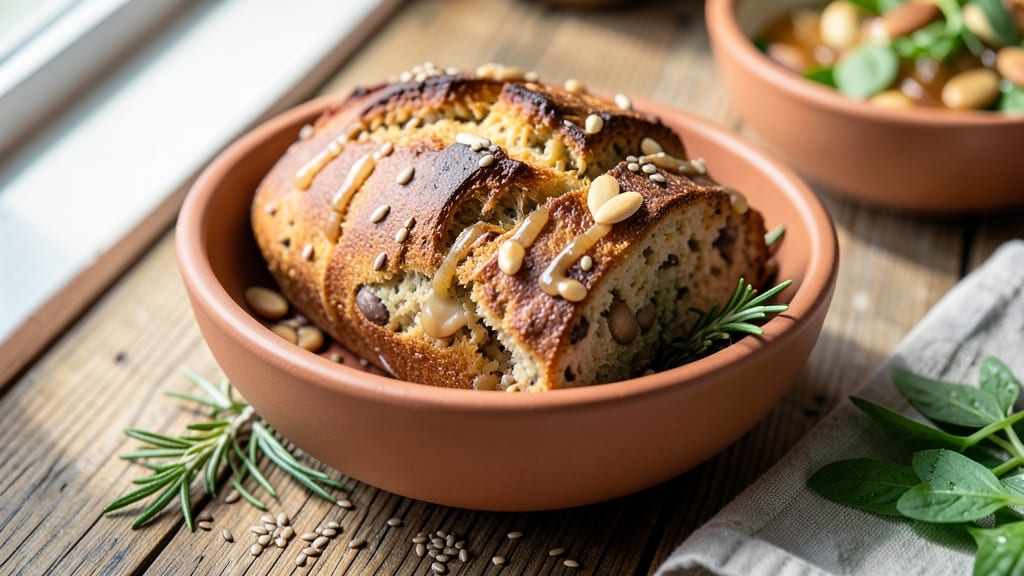
This gluten-free bean bread recipe transforms simple pantry staples into a hearty, flour-free loaf with satisfying crunch and nutty depth. The secret lies in blending cooked beans until smooth, then binding them with flaxseed and baking until golden—no flour required.
I developed this after realizing how often we overlook beans' potential as a bread base, and the results are surprisingly substantial and flavorful.
The beauty of this recipe is its versatility and simplicity: just beans, flaxseed, baking powder, and a few pantry staples come together to create a loaf with a satisfying texture. Unlike traditional bread, this version stays fresh for days and absorbs flavors beautifully when toasted or used for sandwiches.
The key is controlling hydration and baking until the edges are crisp but the center remains tender.
What you'll end up with is a gluten-free loaf that holds its shape when sliced, toasts up perfectly, and pairs well with soups, spreads, or as a base for open-faced sandwiches.
The nutty flavor from the beans adds depth without overpowering, making it a great alternative for those avoiding gluten or grains. This recipe proves that flour isn't the only path to a satisfying bread experience.
The best part? It requires no special equipment—just a blender, mixing bowl, and oven. Whether you're baking for dietary restrictions or simply exploring new textures, this bean bread delivers on both nutrition and taste. Let's get started with the full recipe.
Ingredients for bean bread recipe no flour
Pantry staples transform into a gluten-free loaf with nutty depth and satisfying crunch—no flour required.
| Ingredient | Amount | Notes |
|---|---|---|
| Cooked Cannellini Beans 🌱 | 2 ½ cups | Drained, rinsed, and blended smooth |
| Ground Flaxseed 🌾 | ½ cup | For flaxseed meal binding |
| Unsweetened Almond Milk 🥛 | ¾ cup | For hydration and binding |
| Almond Flour 🌰 | ½ cup | For added structure and crunch |
| Baking Powder 🍞 | 2 tsp | Diamond Crystal preferred |
| Salt 🧂 | 1 tsp | Kosher or sea salt |
| Ground Cinnamon 🌿 | 1 tsp | For subtle warmth |
| Apple Cider Vinegar 🍏 | 1 tbsp | For rise activation |
| Olive Oil 🫒 | 2 tbsp | Extra-virgin for richness |
| Nutritional Yeast 🧀 | 2 tbsp | For cheesy flavor depth |
| Sesame Seeds 🌻 | 2 tbsp | For topping crunch |
The cannellini beans form the bread's foundation, so choose dry beans (like those from Whole Foods or Trader Joe's) for superior texture. Cook them until creamy—blending them smooth eliminates grittiness. For optimal flavor, soak overnight if using dry beans, or opt for canned beans (low-sodium preferred) if short on time. The almond flour adds structure, while the ground flaxseed acts as the gluten substitute, binding everything together. Bob's Red Mill flaxseed is a reliable choice, but any high-quality brand works.
No almond milk? Oat milk or soy milk function similarly, though texture may vary slightly. Substituting chia seeds for flaxseed (1:1 ratio) works in a pinch, though flaxseed provides better binding. For added crunch, sunflower seeds replace sesame seeds equally well. The apple cider vinegar activates the baking powder—white vinegar is a direct substitute if unavailable. Nutritional yeast is non-negotiable for that cheesy depth, though miso paste (1 tbsp) can mimic umami if needed. Prefer a sweeter loaf? Add 1 tbsp maple syrup to the wet ingredients.
This loaf stays fresh for 4-5 days when wrapped in a beeswax wrap or stored in an airtight container. For longer storage, freeze slices for up to 3 months—reheat in a toaster or oven for crispiness. The bread absorbs flavors beautifully, so toast with avocado or marmalade for extra richness. Leftovers? Pulse in a food processor and use as breadcrumbs for coating or meatballs. No need to refrigerate—room temperature is ideal.
Why You'll Love This Recipe
- No Fuss Mixing: I swear, this comes together with one bowl—just mash those beans, toss in the flaxseed and almond milk, and stir. Honestly, my lazy Sundays love this: no kneading, no waiting for dough to rise, just a quick whisk and bake.
- Unexpected Richness: That blend of creamy cannellini beans and toasted almond flour gives it a nutty, hearty texture—like a cross between focaccia and a dense, satisfying flatbread. The baking powder keeps it light enough to eat as toast or a sandwich base.
- Weeknight Workhorse: I keep a batch in the fridge for days—great with hummus for dipping, as a side for soups, or even as a quick breakfast with almond butter. Between us, it’s the only bread I make when I’m too tired to bake.
- Pantry-Friendly Magic: No flour? No problem. This uses what you’ve got: dried beans, almond milk, and a few basics. I’ve made it with pantry staples when grocery shopping felt impossible—still comes out ridiculously good without costing a fortune.
Step-by-step instructions for gluten-free bean bread
Transform pantry staples into a moist, hearty loaf with this precise gluten-free method.
Blend the Bean Base to Perfection
Begin by draining and rinsing the 2.5 cups cooked cannellini beans thoroughly to remove excess starch. Transfer them to a high-speed blender and blend until completely smooth, scraping down the sides as needed. This creates the foundation for our bread's texture—you're aiming for a consistency similar to hummus, with no visible chunks.
The reason we blend so thoroughly is that the beans' natural starches will bind the ingredients together without needing traditional flour. If you encounter any resistance, add 1-2 tablespoons of unsweetened almond milk to help the blending process. The mixture should be silky and uniform, with a slightly thick, paste-like texture that coats the back of a spoon.
Combine Wet Ingredients for Optimal Texture
In a large mixing bowl, combine the blended bean mixture with the 0.75 cup unsweetened almond milk, 2 tbsp olive oil, 1 tbsp apple cider vinegar, and 2 tbsp nutritional yeast. Whisk vigorously for 2-3 minutes until fully incorporated and the mixture becomes slightly frothy. The vinegar will activate the baking powder later, while the nutritional yeast adds that cheesy depth we're after.
Here's where the science matters: the olive oil adds moisture and richness, while the vinegar creates a gentle chemical reaction with the baking powder. You'll notice the mixture lightens slightly as you whisk—this indicates proper aeration. If it looks too thick, add 1-2 tablespoons more almond milk to achieve a batter consistency similar to pancake batter.
Incorporate Dry Ingredients for Structure
In a separate bowl, sift together the 0.5 cup almond flour, 2 tsp baking powder, 1 tsp salt, and 1 tsp ground cinnamon. The almond flour provides structure while keeping the bread gluten-free, and the cinnamon adds subtle warmth that complements the beans' earthiness. Gradually add this dry mixture to your wet ingredients while folding gently with a spatula—overmixing develops gluten-like proteins in the almond flour, which we want to avoid.
Next, stir in the 0.5 cup ground flaxseed. This acts as our egg substitute, providing binding properties and adding a pleasant nutty flavor. The mixture should be thick but pourable—similar to thick cake batter. If it's too stiff to fold easily, add 1 tablespoon more almond milk to reach the perfect consistency. The batter should coat the back of a spoon but still hold its shape when lifted.
Prepare and Bake the Loaf
Preheat your oven to 350°F and grease a 9x5-inch loaf pan thoroughly with olive oil or line it with parchment paper. Pour the batter into the prepared pan and smooth the top with a spatula. Sprinkle the 2 tbsp sesame seeds evenly over the surface—they'll add texture and a nutty crunch when toasted.
Bake for 45-50 minutes until the top is golden brown and a toothpick inserted in the center comes out clean. The bread should pull away slightly from the sides of the pan and have a firm yet tender crumb. If the top browns too quickly, tent loosely with foil after 30 minutes to prevent over-browning while ensuring even cooking throughout.
Rest and Serve for Optimal Texture
Allow the loaf to cool in the pan for 10 minutes before transferring it to a wire rack to cool completely. This resting period is crucial—it lets the internal structure set properly, preventing a crumbly texture. The bread should have a dense yet moist interior with a slightly crisp exterior from the sesame seeds.
Slice when completely cool for clean cuts. Each serving should reveal a tender crumb with visible flecks of sesame seeds throughout. This bread pairs beautifully with soups, spreads, or simply toasted with a smear of almond butter. Store leftovers wrapped tightly at room temperature for up to 3 days, or freeze for longer storage.
Pro Tips For Making Bean Bread Recipe No Flour
- Mash Beans Thoroughly: I learned this the hard way—skipping the food processor for the beans leaves you with a dense, crumbly loaf. Hit those cannellinis with a fork first, then pulse in batches until it looks like hummus, not chopped beans. The smoother the base, the lighter the final texture.
- Mix Flaxseed First: Ground flaxseed turns gummy if you add it last. Stir it into the almond milk and let it sit for 5 minutes before mixing into the batter—this gives it time to thicken properly. No waiting? Just add an extra teaspoon; it makes a real difference in holding the bread together.
- Don’t Overmix the Batter: After adding baking powder, fold just until combined—overmixing triggers the leavening too early, and your bread will sink like a stone. Stop when there’s a few streaks of white batter left; it’s okay if it looks uneven at this stage.
- Bake at 350°F, Not Higher: I was skeptical until I tried it: 375°F makes the outside burn before the center sets. Stick to 350°F for 30–35 minutes, and tent with foil if the top browns too fast. The center should pull away cleanly when you test with a skewer—no guesswork.
Best sauces and condiments for this bean bread recipe no flour
Creamy Avocado Spread
This bean bread absorbs flavors beautifully, so a creamy avocado spread is a perfect match. Blend 1 ripe avocado, 2 tbsp Greek yogurt, 1 tbsp lemon juice, ½ tsp garlic powder, and salt to taste until smooth.
The healthy fats complement the bread's nutty texture while adding a velvety contrast. Serve immediately for freshness or store in an airtight container for up to 2 days. 🥑
Spicy Harissa
For heat lovers, harissa paste (like Burlap & Barrel) transforms this bread into a bold, spicy snack. Mix 2 tbsp harissa with 1 tbsp olive oil and a pinch of smoked paprika for depth.
Spread on toasted slices or drizzle over the top before baking. The smoky, fiery flavors contrast the bread's earthy base perfectly. Store leftover harissa in the fridge for up to 1 month. 🌶️
Sweet Almond Butter
Rich almond butter (like Almond Breeze) adds natural sweetness and creaminess. Warm the bread slightly in the oven for 5 minutes at 300°F2 tbsp almond butter.
Top with sliced banana or a drizzle of honey for a breakfast-worthy treat. The nutty flavors harmonize with the bread's bean base, creating a satisfying balance. 🍌
Smoky Chipotle Mayo
For a smoky kick, blend ½ cup vegan mayo, 1 tbsp chipotle powder, 1 tsp lime juice, and ½ tsp cumin until smooth. Spread on toasted slices or use as a dip for bean bread cubes.
The smoky heat elevates the bread's earthy notes, making it ideal for hearty meals. Store in the fridge for up to 1 week. 🔥
Fresh Herb Compote
Brighten up your bean bread with a herb compote made from ¼ cup chopped parsley, 2 tbsp chopped dill, 1 tbsp lemon zest, and 1 tbsp olive oil. Mix and let sit for 10 minutes to infuse flavors.
Spoon over sliced bread or use as a sandwich filling. The fresh herbs cut through the bread's richness, adding a vibrant finish. 🌿
Nutrition facts
Frequently asked questions
Why does this bean bread need almond flour if it's already flour-free?
Almond flour provides the structural support that traditional flour would, while keeping the bread gluten-free. It adds a pleasant nutty flavor and helps create that satisfying crunch when toasted. Without it, the loaf would be too dense and crumbly. Think of it as the "glue" that holds everything together while maintaining texture.
Can I use any type of bean for this recipe?
Cannellini beans work best because of their mild flavor and creamy texture, but you can experiment with chickpeas or black beans. Avoid kidney beans—they're too firm when blended. For a stronger flavor, try lentils, but they'll make the bread denser. Always blend until completely smooth for the best results.
What if my bean bread turns out too dense or crumbly?
This usually happens from overmixing or insufficient binding. For next time, blend the beans extra smooth and ensure you've incorporated all the flaxseed properly. If it's too dry, add 1 tablespoon more almond milk to the batter. The key is gentle folding when combining ingredients—overworking develops gluten-like properties in the almond flour.
How can I make this bread sweeter for toast or breakfast?
Add 1-2 tablespoons maple syrup or agave nectar to the wet ingredients, or sprinkle 1 teaspoon cinnamon on top before baking. For extra richness, mix in ¼ cup chopped dates with the blended beans. The natural sweetness will complement the nutty flavors beautifully.
Is this bread safe for people with nut allergies?
No, this recipe contains almond flour and almond milk, which are common allergens. For a nut-free version, substitute with sunflower seed flour and oat milk. The texture will be slightly different but still delicious. Always check labels to ensure all ingredients are allergy-friendly.